Category Archives: Geshema examinations

The story of a Tibetan Buddhist nun

This is the story of a Tibetan Buddhist nun living in exile in India. In August 2018 she is taking her final set of examinations for the Geshema degree. This highest degree, equivalent to a PhD in Tibetan Buddhism, was until very recently only open to men. To protect this nun’s privacy and the safety of her family still in Tibet, we have not used her name or the some of the details of her home.

I was born in 1968 in a village in eastern Tibet situated on the hillside of a thickly wooded valley. Above our village was our pastureland and further north there are rocky mountains. There were about 25 semi-nomadic families living in our village when I lived there.

tibetan prayer flags, Tibetan Nuns Project, Tibetan nun's story, Tibet, Tibetan, prayer flags, snow mountains

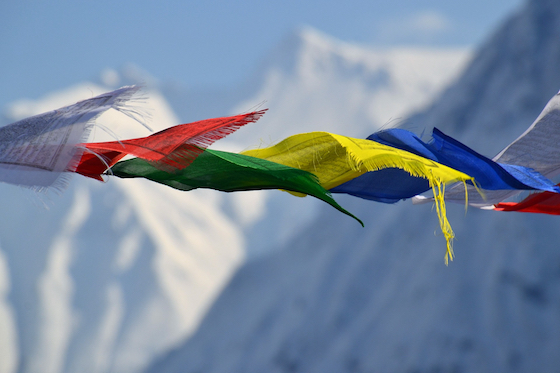
Traditional Tibetan prayer flags flutter in front of snow mountains.

Our winters are very cold, like all the other places in Tibet, but the summer temperatures are quite high. Crops like corn, peas, and wheat grow very well there. Our herd consisted of only yaks and dris (female yaks). We didn’t live on the mountains permanently like the nomads.

During the summer months, we stayed in small yak hair tents called masong pitched on the higher grasslands and, in the winter, we returned to the farm. All the village animals were tended by one designated person during the winter when there wasn’t much work to do. In summer, during the calving season, all the animal owners returned to the mountains and pitched their tents, where they remained for the entire summer.

My parents and three of my brothers still live at our home in Tibet. I am the only daughter. My youngest brother is a monk studying in a monastery in South India. I never went to school in Tibet. I spent my time at home tending the animals. There was work in the village, but I always chose to be up on the mountains with the animals.

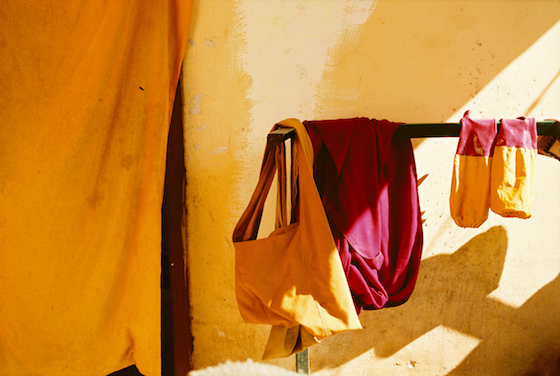
Nuns bag, nuns robe, Tibetan Nuns Project, Olivier Adam, Tibetan Buddhist nun

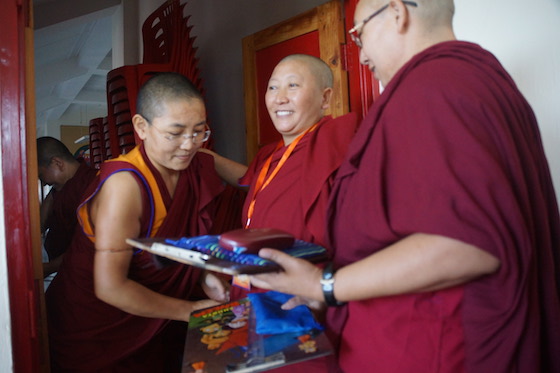
Nun’s bag and robe. Photo courtesy of Olivier Adam

At age 18, I became a nun. In 1989, I joined a group of pilgrims from Lithang who were doing a prostration pilgrimage from Lithang to Lhasa to see the holy temple called the Jokhang.

[Note: A prostration pilgrimage is a form a Tibetan Buddhist worship in which the person stretches out full length on the ground, marks the spot where her or his fingertips reach, and stands and steps forward to that spot, then prostrates again. Through prostrations, Tibetan Buddhists seek to purify the body, speech, and mind, freeing oneself from delusions, negativity, and any bad karma. It is a form of spiritual devotion and mental training that, like other forms of Buddhist practice, was banned by the Chinese during the Cultural Revolution. The large group of over 150 Tibetan Buddhist nuns and monks who undertook this pilgrimage from Lithang to Lhasa performed prostrations for the entire distance – about 1,200-miles. Here’s a short video showing a Tibetan Buddhist nun and a lay person prostrating in Lhasa.]

Lithang is about two days by car from my home. I was with the group from the very beginning of the pilgrimage. We gathered at Lithang and then prostrated eastward to Menyak to see the famous Pai-lhakhang, the temple dedicated to Palden Lhamo, the guardian deity of Tibet.

We returned to Lithang after six months and then made our journey towards Lhasa. The pilgrimage took us almost two years to complete. On the way, I learned to read and write Tibetan. We prostrated during the day and in the evenings we studied by the light of oil lamps and candles. It was a hard pilgrimage. We couldn’t do the whole distance from Lithang to Lhasa by prostrations because the group became too large after a time and it was impossible for such a large group to keep moving. So we would stop at a few places for months, do a number of prostrations, and then move again until we reached Lhasa.

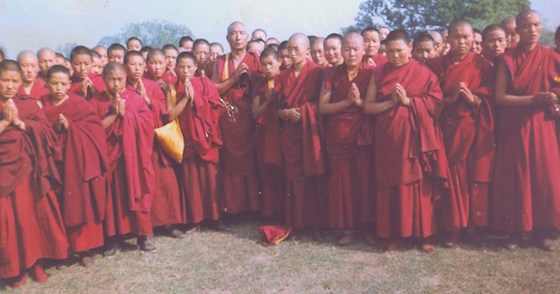
pilgrims from Lithang, Tibetan Buddhist nuns, Tibetan Buddhist nun, Tibetan refugees, escape from Tibet, Tibetans, nuns, Tibetan Nuns Project

This nun was one of this large group of pilgrims from Lithang who did prostrations for over two years. When they escaped from Tibet and arrived in India, there was no space at existing nunneries to accommodate them. The Tibetan Nuns Project cared for them and other nuns and eventually built two new nunneries, Dolma Ling and Shugsep.

At Lhasa, we could not enter the holy city because there was trouble in the Tibetan capital at the time and the Chinese were fearful of the attention such a large group might attract. We were instead diverted to southern Tibet to another holy city, Shigatse. From Shigatse, we went on pilgrimage to Mount Kailash and Lake Manasarovar. At Kailash, Yonton Phuntsok Rinpoche [a lama from Kham and the leader of the pilgrimage] decided to leave for India, and I, along with many other monks and nuns, followed him into exile. He made all the arrangements for our escape and we didn’t have to do much.  We came to Dharamsala via Nepal and have remained in Dharamsala ever since.

 [A note about the escape from Tibet: Like most Tibetans, this group escaped on foot over the Himalayas to Nepal. It took the group 27 or 28 days to make this harrowing journey into exile. The group was ill equipped and was forced to hide during the day and walk at night in order to avoid detection. Once in Nepal, they went to the Tibetan Reception Center at Kathmandu for medical care and to register as refugees. Now the border is heavily patrolled and freedom of movement inside Tibet is severely restricted, so it is virtually impossible for Tibetans to escape.]

The Tibetan Nuns Project took care of us from the very beginning. I saw Dolma Ling Nunnery come alive from barren land into becoming this popular center of learning where people flock to get a place. All the nuns who were with me on the pilgrimage are also at Dolma Ling. The study course here is for 19 years and I have now completed all 19 years of Buddhist philosophical studies.

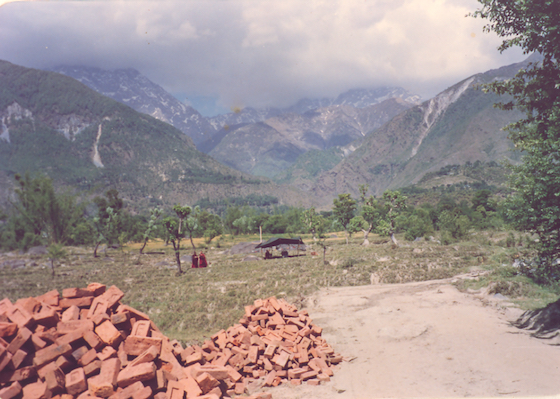
Dolma Ling Nunnery, Tibetan Nuns Project, Tibetan Buddhist nun

Four nuns and a small tent on the empty plot of land where Dolma Ling Nunnery was built. The nunnery is now home to about 250 nuns.

At Dolma Ling we have a computer room. Nuns who received training from overseas volunteers with support from the Tibetan Nuns Project then taught us and there are many nuns who are interested in learning. I have learned basic computer skills for many years now and I feel so proud.

computer training for Tibetan nuns, Tibetan Buddhist nun, Tibetan nuns, Harald Weichhhart, Tibetan Nuns Project, media nuns

Computer training for Tibetan nuns by volunteer, Harald Weichhart, 2009.

I feel so privileged to be a part of this institute, and I am thankful to everyone who made this possible for us. I am happy here, and Dolma Ling will be my home for many years to come.
                       

Send messages of support to Geshema candidates

When you’re facing big challenges, it feels great to know that people are wishing you good luck. You can send a message of support to the Geshema candidates by writing a comment on this blog.

From August 15-26 2018, 45 Tibetan Buddhist nuns will sit various levels of their Geshema exams. To attain the Geshema degree, the nuns must take four years of exams. (Earlier we reported that there were 46 nuns, but one of the nuns taking first-year exams had to postpone and return home to care for her ailing mother.) The Geshema exams take place over 4 years and are the culmination of a rigorous 17-year course of study.

Geshema, Tibetan Buddhism, Geshe, Tibetan Nuns Project, Geshema candidates, Buddhism, nuns, nunnery, Buddhist nuns, Buddhist women, Geshema exams, messages of support Geshema candidates

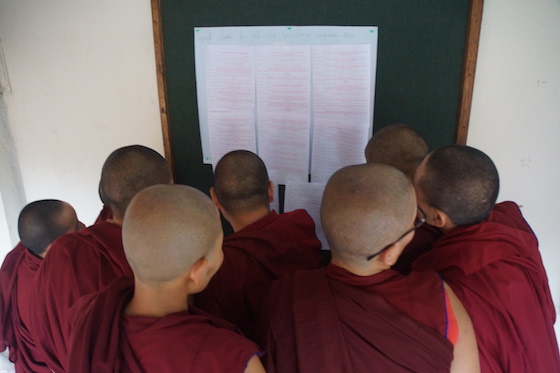
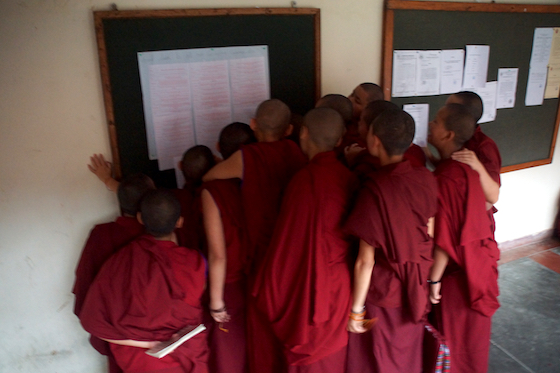
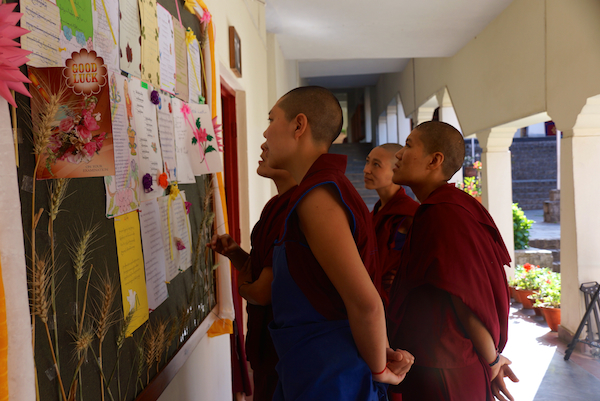
Nuns reading messages of good luck and support from other nuns prior to the 2016 Geshema candidates. We’re collecting messages from support from you and will send them to the nuns taking their exams in August 2018.

The Geshema degree (or Geshe degree for monks) is roughly equivalent to a PhD in Tibetan Buddhism. Until recently, this degree was only open to men. In the last two years, 26 Tibetan Buddhist nuns have made history and earned this degree. Geshes and Geshemas are the most educated monastics, carrying much of the responsibility for preserving the Tibetan religion and culture.

Here’s a little video about the 2018 Geshema exams. [Can’t see the video? Click here.]

The nuns taking their exams this year gathered at Dolma Ling Nunnery and Institute on July 15th to make their final preparations and studies.

In August 2018 there will be:

  • 12 nuns taking their first-year exams
  • 15 nuns doing their 2nd year
  • 8 nuns doing their 3rd year
  • 10 Geshema candidates doing their fourth and final year of exams. All being well, there will be 10 new Geshema graduates this fall.
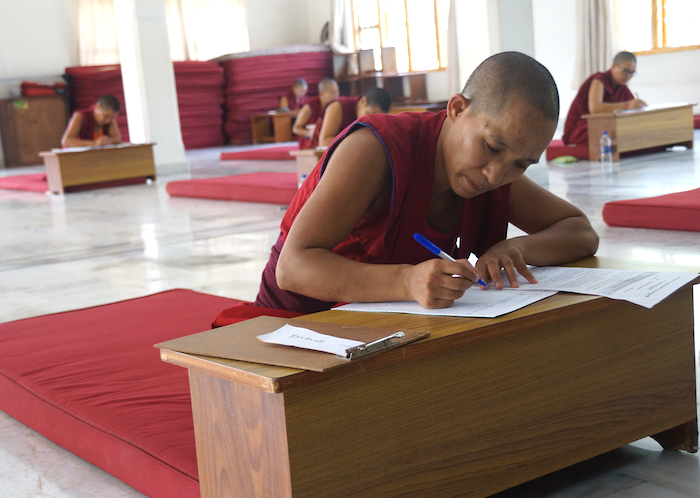
Geshema, geshema exams, 2018 Geshema exams, Geshema candidates, Tibetan Buddhist nuns, Buddhist nuns, Tibetan Buddhism, Tibetan Nuns Project

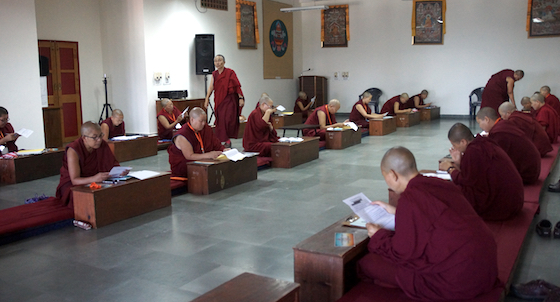
A Tibetan Buddhist nun takes her Geshema exams in 2017. Photo by the Nuns’ Media Team

The Geshemas are paving the way for other nuns to follow in their footsteps. This degree will make them eligible to assume various leadership roles in their monastic and lay communities reserved for degree holders and hence previously not open to women.

On December 22, 2016, His Holiness the Dalai Lama awarded 20 Tibetan Buddhist nuns with Geshema degrees at a special graduation ceremony at Drepung Monastery in Mundgod, South India.

We are seeking donations to help to cover the costs of travel for the Geshema candidates to and from Dolma Ling Nunnery and for their food during their 6-week study and exam period. You can donate here.

In November 2017, another 6 nuns graduated with their Geshema degrees. They received their degrees in a special ceremony on November 5th. The six new Geshemas had the opportunity to join the Geshemas who received their degrees in December 2016 in a groundbreaking new Buddhist tantric studies program. This two-year program at Dolma Ling Nunnery started in November 2017 and is funded by generous supporters through the Tibetan Nuns Project.
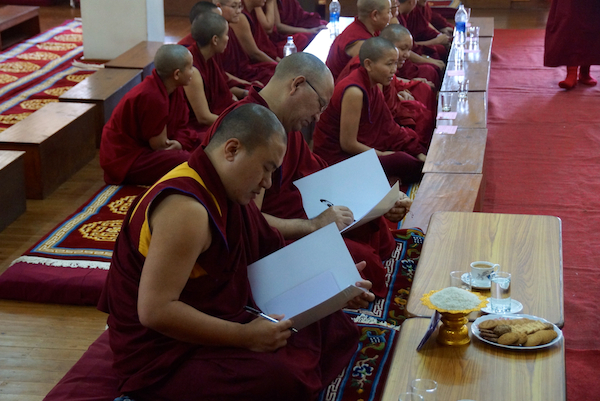
Geshema, geshema exams, Tibetan Buddhist nuns, Geshema candidates, Buddhist nuns, Tibetan Buddhism, Tibetan Nuns Project

Tibetan Buddhist nuns had in their exam papers during the Geshema exams in 2017. Photo by the Nuns’ Media Team

Global good wishes to the Geshema exam nuns

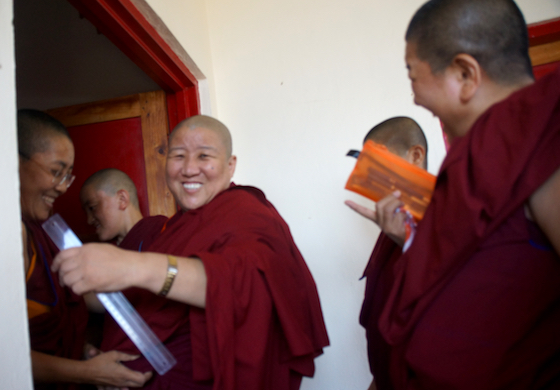
People from around the world have sent messages of good luck and support to the 29 nuns sitting their Geshema exams in India. The exams have taken place over the last two weeks and finish today, May 15th. The exams are the culmination of a rigorous 17-year course of study and are a landmark achievement for Tibetan women.

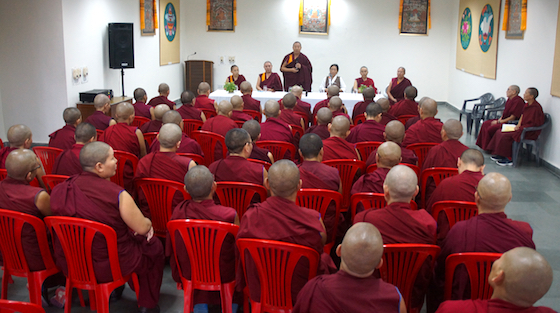
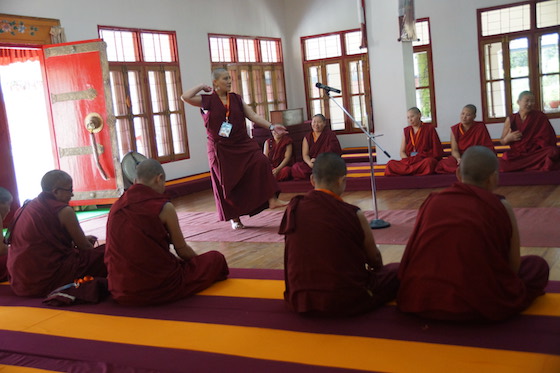
Tibetan Buddhist nuns and their teachers during oral examination Geshema exams 2014

A photograph taken during the oral examinations of the May 2014 Geshema exams for Tibetan Buddhist nuns

Twenty-nine Tibetan Buddhist nuns from various nunneries gathered for 1 month at Dolma Ling Nunnery and Institute in the Kangra Valley, near Dharamsala, northern India. During the last two weeks of April, the nuns took part in an intensive study session and then on May 1st they began their oral and written exams. This is only the second year that Geshema exams for Tibetan nuns have taken place. This year, 23 of the 29 nuns have been sitting Part 2 of the four-part exam, while 6 nuns have been taking Part 1.

Here are some of the many heartfelt messages that the nuns received via the Tibetan Nuns Project Facebook page:

Andrew from Canada wrote, “Good luck, just don’t be very nervous because you have worked so hard and you are wise and virtuous already.”

Rita from USA wrote, “I am so glad this day has come! No need to send you luck for it is your dedication and self-discipline that will bring you the success you deserve. I know you are all masters at meditation so I am confident that your minds will be clear and focused. I celebrate this day with each of you! The Buddha is smiling!
”

Ugyen, a Tibetan woman from Bhutan, said, “Best of luck !!! Very appreciative of His Holiness the Dalai Lama’s advocacy to change the landscape of religious education. Hope to see a lot more Geshemas.”

Colleen in Australia wrote, “Sending blessings to all participating in these exams that they may succeed in passing. Blessings also to all teachers involved with passing on their knowledge. May all children receive blessings of education, and may all beings be free from suffering.”

Barbara from New Mexico, sent this message, “Good luck, and though you are studying hard, be sure to take time to eat and sleep! All of us out here are wishing you the best!”

Marci from the USA sent these words, “We know you will all do well. Many blessings and much gratitude for your efforts, each and every one. May you attain enlightenment for the benefit of all beings.”

If you would like to see all the messages of good luck and support, join the Tibetan Nuns Project Facebook page.

Nuns reading messages of support to the Geshema candidates

Nuns reading messages of support from other nuns to the Geshema candidates

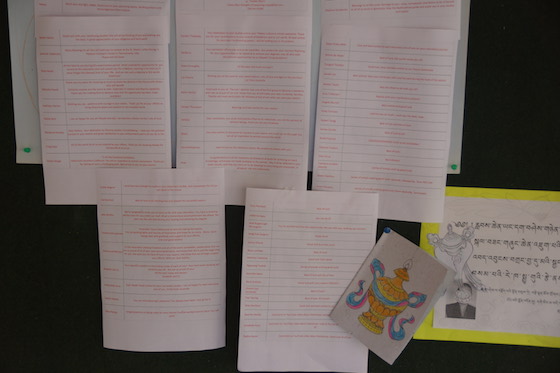
The nuns themselves also wrote and shared letters, poems and messages of support to their sisters writing the exams.

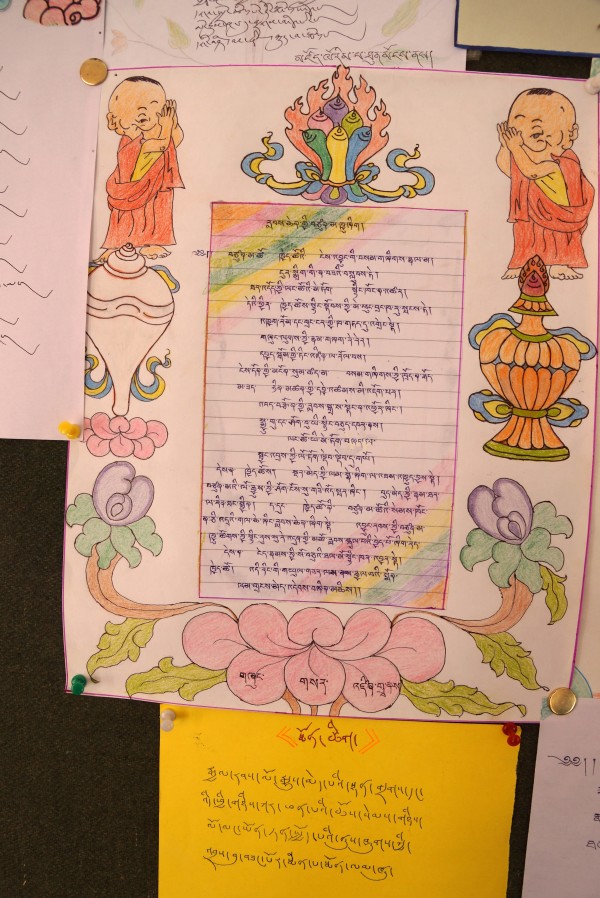
poem of good luck written in Tibetan by a Buddhist nun

A good luck poem written by a fellow nun and posted on the noticeboard of Dolma Ling Nunnery in support of the nuns taking their Geshema exams.