We are delighted to report that the retreat center at Shugsep Nunnery and Institute is built and fully furnished thanks to generous donors. Eight senior nuns have now started their retreats. This big project was launched in the fall of 2022 and completed in the spring of 2026. We are extremely grateful to all the donors who made this dream a reality.
The completed retreat center will elevate aspirations, set higher standards, and strengthen the confidence of the next generation of nuns. Here’s a detailed report with photos, videos, and a special message from the Khenpo or Abbot of Shugsep.
The Shugsep Retreat Center is an important place that supports nuns in deep spiritual learning and long retreats. It follows the Nyingma tradition of Tibetan Buddhism and offers a peaceful space for meditation, rituals, and personal spiritual growth. The nuns express their deep gratitude to the kind and generous donors who helped build and furnish the newly established retreat center.
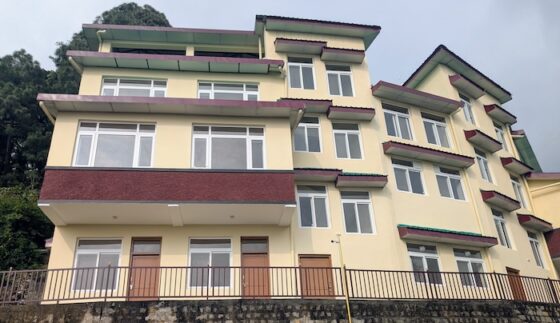
The retreat center makes visible a clear path of progression: from study to retreat to teaching. This opportunity was previously limited because retreats had to be undertaken elsewhere. A lasting impact is the inspiration provided to younger nuns.
Now, for the first time in its history in exile, the nunnery has a purpose-built facility where senior nuns can enter long-term retreat within their own community. This achievement provides continuity for the nuns’ path of teaching while fortifying the belief that their years of rigorous training culminate in meaningful opportunities for spiritual growth and integration.
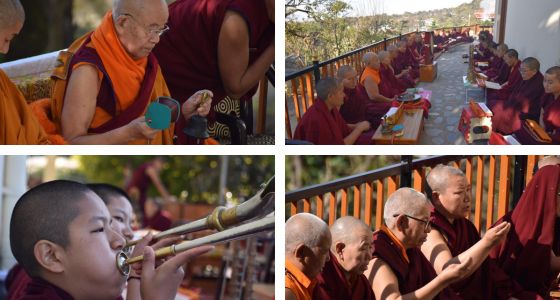
The Shugsep Retreat Centre was formally inaugurated on 18 February 2026, coinciding with the first day of Tibetan Losar. The ceremony was led by Khenchen Pema Sherab Rinpoche.
Eight Nuns Start Retreat
On March 30, 2026, eight nuns began their retreat following an initial ritual ceremony led by Rinpoche Jigme Namgyal from Tso Pema at Rewalsar. He also conducted the first three days of basic teachings on retreat practice for the nuns entering retreat.
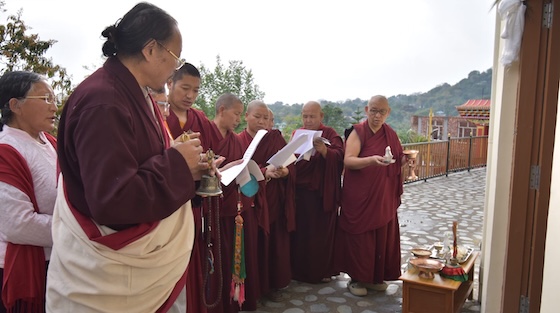
Part of the ceremony for the nuns entering retreat on March 30, 2026 at the new retreat center at Shugsep Nunnery. Until now, the nuns had to travel to Nepal or Tso Pema to practice retreat.
All eight nuns on retreat have previous retreat experience, so they are prepared for long and intensive practice. The initial group of nuns includes six newly enthroned Khenmos and two Lopenmas who are trained teachers and practitioners.
Before entering retreat, one of the Khenmos spoke about her happiness and readiness to begin. She said that, as a retreat continues, she feels more happiness, inner peace, and mental clarity. As the mind settles and distractions fade, practitioners feel a deeper sense of contentment through simplicity, discipline, and steady awareness. She also said that practicing retreat helps turn intellectual understanding into direct experience, giving her and the other nuns the focused, disciplined time needed to truly absorb and apply what they’ve learned. Thus, the retreat is not merely an academic or ritual engagement, but a deeply experiential process aimed at transforming the practitioner’s mind at its core.
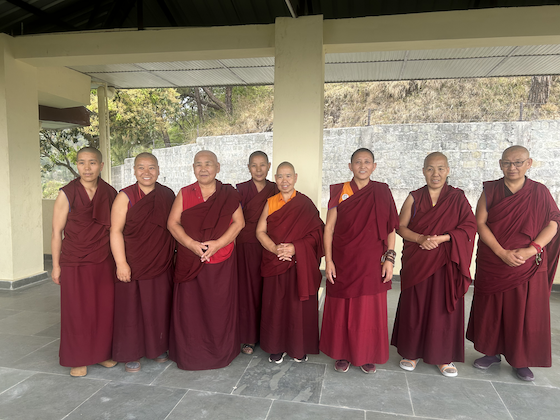
Here are the 8 nuns (6 Khenmos and 2 Lopenmas) who entered retreat on March 30, 2026 – the first to use the new retreat center.
The most enduring benefit is the strengthening of teaching capacity within the nunnery. Many of the nuns who will use the retreat center are holders of the Loponma degree, the highest degree in their tradition. Following their retreats, they will be fully qualified to guide junior nuns and contribute to the wider community. This creates a sustainable cycle of study, retreat, and teaching that secures Shugsep’s role as a respected Nyingma institution.
Here is a video made by the nuns explaining the importance of practicing retreat. If you can’t see the video, click here.
A Special Message from the Khenpo
After spending years learning and contemplating the sutra and tantra texts, one has to gain direct insight by applying the teachings to one’s personal experience. For this, one has to consciously distance oneself from the outer world, which will help retreat from the distractions of the mundane world. Retreat is considered a powerful and essential method for cultivating inner peace, wisdom, and ultimately, liberation.
The example of Buddha himself serves as a powerful illustration; he spent six years in intensive retreat prior to his awakening. Post his liberation, he would periodically retreat into the forest for weeks and months of meditation before returning to continue teaching and guiding others in their practice.
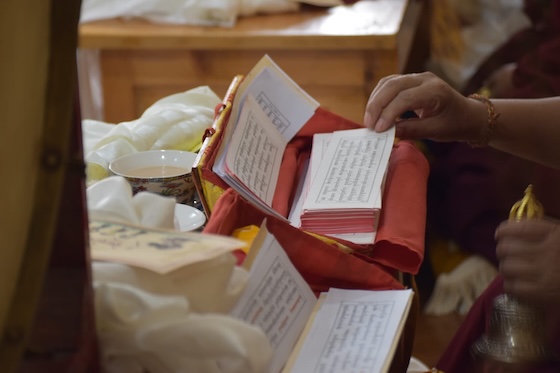
Spiritual retreats are considered essential for the development of one’s personal practice. Generally, after completing their philosophical studies, the nuns will go into retreat to allow sufficient time for reflection, prayer, and meditation to internalize what they have studied.
By closing the door to the external world, practitioners gain uninterrupted time and space for focused practice. This dedicated time allows practitioners to explore deeper spiritual development.
Retreat is not only for personal benefit. The wisdom and compassion deepened in solitude naturally flow outward, allowing practitioners to support and inspire others more meaningfully on their own spiritual path.
We are truly fortunate and deeply grateful to have established a well-equipped retreat center within our nunnery, a milestone that marks a significant and long-awaited development for our community. This is not merely a new building; it is a sacred space dedicated to inner transformation and the deepening of spiritual practice.
In the past, our nuns had to travel all the way to Nepal to undertake long-term retreat, facing the hardships of distance and separation from their home community. Now, that has changed. Our nuns can enter deep, uninterrupted practice within the warmth and familiarity of their own nunnery.
About the New Shugsep Retreat Center
The completed retreat center provides accommodation for up to eight nuns at a time. Each of the eight self-contained rooms has been designed to meet the practical and spiritual needs of the nuns.
They include a private toilet and washroom, storage space, a small kitchenette counter, and sufficient room for both study and prostrations, which are an integral part of their daily practice.
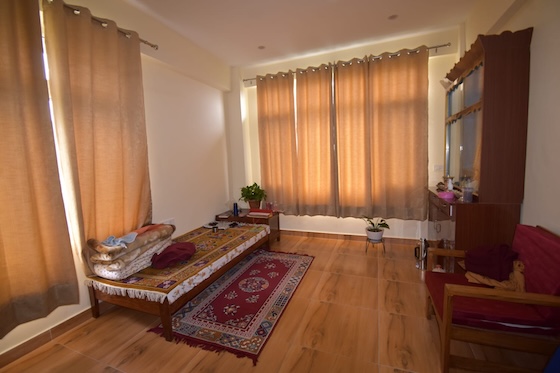
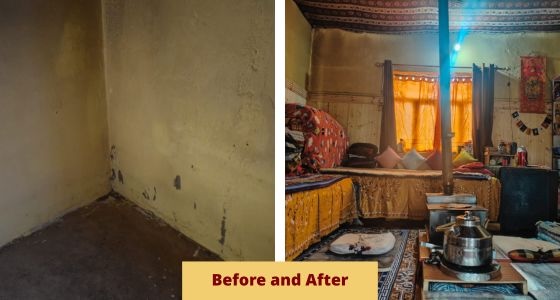
One of the rooms at new Shugsep Retreat Center. Eight senior nuns began their retreats on March 30, 2026, occupying all available retreat rooms. The rooms are spacious enough that the nuns can do prostrations..
Each of the retreat rooms contains:
- A low wooden bed with a simple coconut fibre and memory foam mattress (favoured by the nuns as they are breathable and firm for sitting on) and a low table on which the nuns will place their prayer and study books.
- A large cupboard for storing their clothes and blankets and a shelf unit with lower cupboards to be used as a shrine and bookshelf.
- Curtain rods and good-quality curtains, as well as a woven rug for the floor.
- A chair.
- A small kitchenette with some shelving and storage as well as a few pieces of kitchen equipment.
In addition to the individual retreat rooms, the building contains a communal prayer hall where nuns in retreat can gather periodically for teachings, group prayer, and guidance from visiting teachers.
Not all the nuns’ time will be spent in isolation. Some sessions will be undertaken as a group and the prayer hall is a space where they can receive instructions from an outside teacher, do prayer sessions together, and have the opportunity to talk among themselves to clear away doubts and concerns and to strengthen their practice.
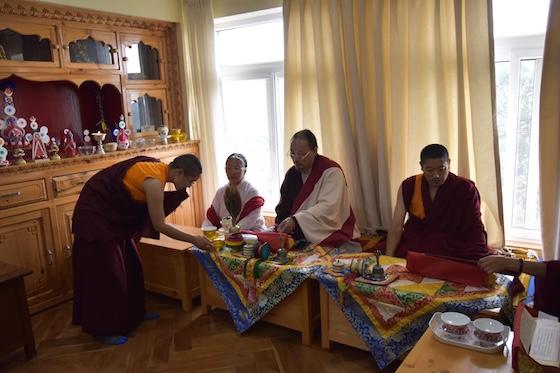
Inside the prayer hall at the official opening of the retreat center.
This prayer room has:
- A wooden floor and a decorative shrine with statues from the nunnery.
- 8 low tables and 4 long sitting mattresses with Tibetan carpets on top.
- A low teachers’ seat with mattress, carpet, and a low table.
- A large bookshelf.
The retreat center also has a shared kitchen/dining room that provides space for nuns to warm food provided by the nunnery kitchen and to make their own light meals and tea. Finally, a dining table and chairs have been provided, thanks to your generosity, allowing the nuns to eat together if they wish. Daily meals will be delivered to their doors by designated nuns to avoid disturbing the nuns’ retreat.
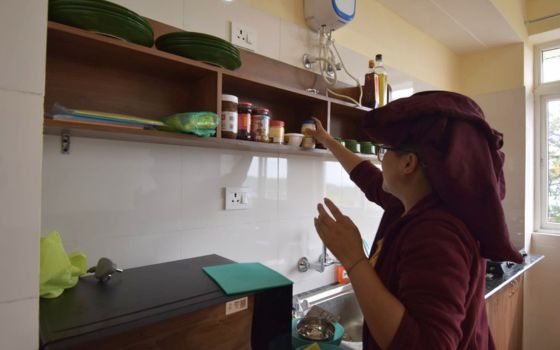
Stocking the shelves of the communal kitchen at the new Shugsep retreat center. The first eight nuns entered retreat on March 30, 2026.
The kitchen/dining room contains:
- 2 large dining tables and 10 chairs.
- Cooking equipment including a simple two-burner gas range, a kettle, and a microwave oven in which to warm up food which will be supplied from the main nunnery kitchen.
- A refrigerator and a washing machine.
- A wooden cupboard and shelving for utensils, crockery, and food items.
- Sundry kitchen equipment such as a drain rack, clothes rack, and waste bins.
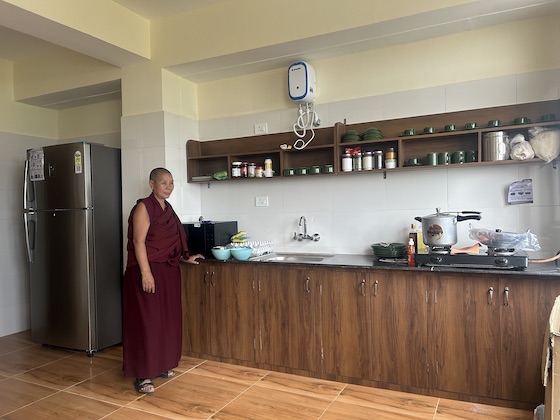
The communal kitchen at the retreat center that the nuns can use. Most of their meals will be supplied by the nunnery kitchen and delivered to their doors by designated nuns so that they are not disturbed on retreat.
Retreat participants bring only what they truly need, such as:
- Basic necessities (clothes, personal items).
- Ritual items for their practices.
- Essential texts for study and recitation.
The Structure and Phases of Retreat
Participants enter the retreat with clear spiritual intentions and long-term aspirations. Beyond individual development, the retreat also prepares practitioners to contribute meaningfully to their communities in the future, whether through teaching, guidance, or continued practice.
The practice begins with about a month of foundational training to build discipline and focus, followed by a main retreat that usually lasts around a year. It then continues with ongoing practices that can extend for three years, depending on the practitioner’s dedication and spiritual progress.
Since the nuns have different levels of prior retreat experience, they continue from where they previously left off. As a result, the duration of the retreat varies among them.
The nuns in retreat start their day at 4 a.m. and end it at 11 p.m. They take short breaks in between and continue their recitation and meditation practices.
Challenges in Building the Retreat Center
Shugsep Nunnery is 5 kilometers below Dharamsala on a 5-acre plot of land. Because of sloping nature of the terraced land, there was very little space left which could be easily built on without overcrowding the buildings.
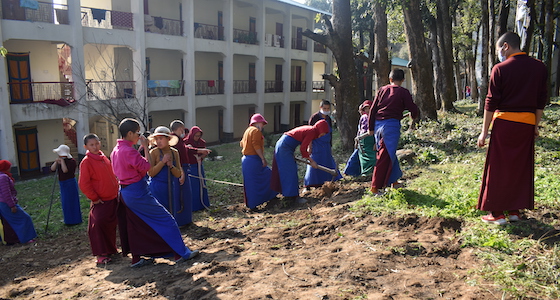
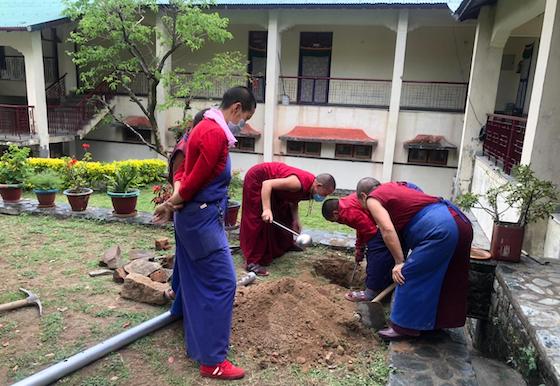
The Shugsep nuns worked hard to clear the steep overgrown land for the retreat center.
The nuns considered finding another plot of land nearby, but land prices and the difficulty in registering the land made them reconsider locating the retreat center within the nunnery grounds. In 2022, the nuns cleared the bushes on the steep overgrown land near the nunnery entrance to see if it would be feasible to construct a retreat center there. They called in a team of local architects who made a detailed survey of the land and came up with plans based on a brief which was discussed with the nuns and the Khenpo who is head of the nunnery.
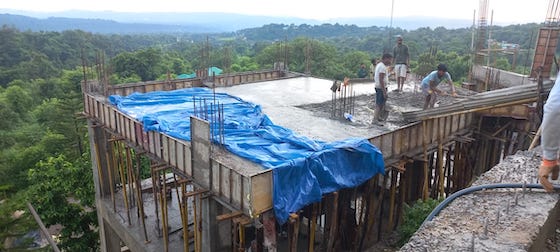
The Tibetan Nuns Project began fundraising for a retreat center in the fall of 2022 and the center opened in the spring of 2026.
An important point of the architects’ brief was that the retreat center should provide seclusion and privacy for the nuns. The nuns confine themselves to this one building for the duration of their retreat and should not be seen by outsiders, except for an occasional visiting teacher. The architects suggested that a sense of seclusion and invisibility could be achieved by raising the building high above the road so that no one can see into the balconies. The land in front and behind was be planted with flowering shrubs screening the building from outside view. To reduce noise so the nuns can meditate peacefully, the windows have double glazing and fly screens.
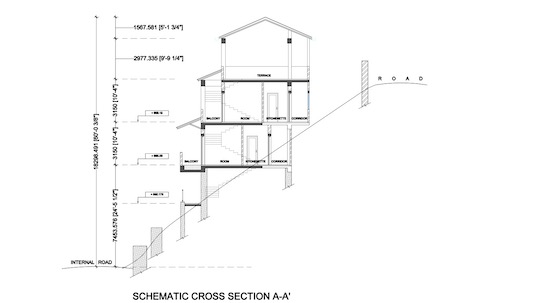
Cross section plan of the retreat center. The size and shape of the land posed restrictions.
The second point was to provide the nuns on retreat with a wide-open view to relieve their minds of tension. In the past in Tibet, retreat centers were located high on mountainsides. The position of the retreat center on the hillside overlooking farm land and the wide valley below provides the nuns with an expansive view.
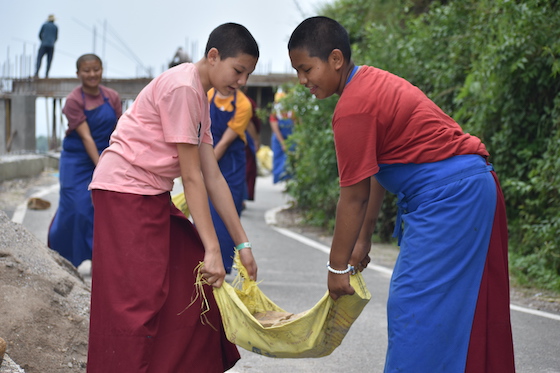
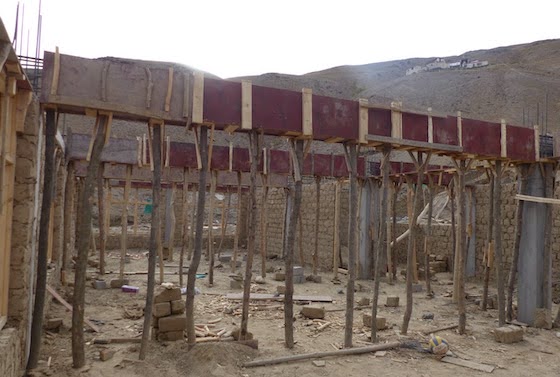
The nuns helped with the construction of the Shugsep Retreat Center.
The size and shape of the land limited the number of individual nuns rooms to 8, two on each floor in two buildings on either side of the central community building. According to the Khenpo, this is sufficient because if all the nuns were to decide to go into retreat at once there would be no one to teach the younger nuns or administer the nunnery. The nuns will rotate who goes into retreat and must agree to a specific duration to allow others the chance to take their place.
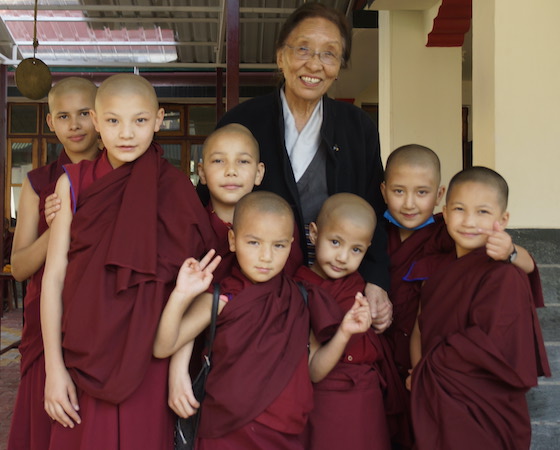
Rinchen Khando Choegyal, the Tibetan Nuns Project Founding Director and Special Advisor, with young Tibetan Buddhist nuns at Shugsep Nunnery. Senior nuns are now teaching at the nunnery and will take turns going on retreat.
About Shugsep Nunnery
A Nyingma nunnery, Shugsep traces its rituals and practice to some of the most illustrious female practitioners in Tibetan history. In the previous century, Shugsep Nunnery was home to one of the most famous teachers of her time, Shugsep Jetsunma.
Following the Cultural Revolution in 1959, Shugsep Nunnery in Tibet was completely destroyed. Although the nunnery was partially rebuilt in the 1980s by the nuns themselves, the nuns there faced frequent harassment by Chinese authorities.
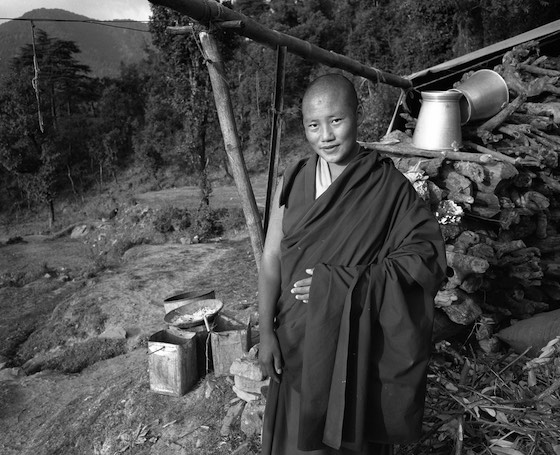
In the late 1980s and 1990s many Tibetan Buddhist nuns escaped from Tibet including a large number of nuns from the original Shugsep Nunnery. They lived for many years in cramped conditions before the Tibetan Nuns Project re-established Shugsep Nunnery. It was inaugurated in 2010. Photo from 1991 by Susan Lirakis
Many of the nuns at Shugsep in India came from the original Shugsep Nunnery in Tibet. They were expelled by Chinese authorities for their political activities on behalf of Tibet and escaped over the Himalayas to practice their religion in India.
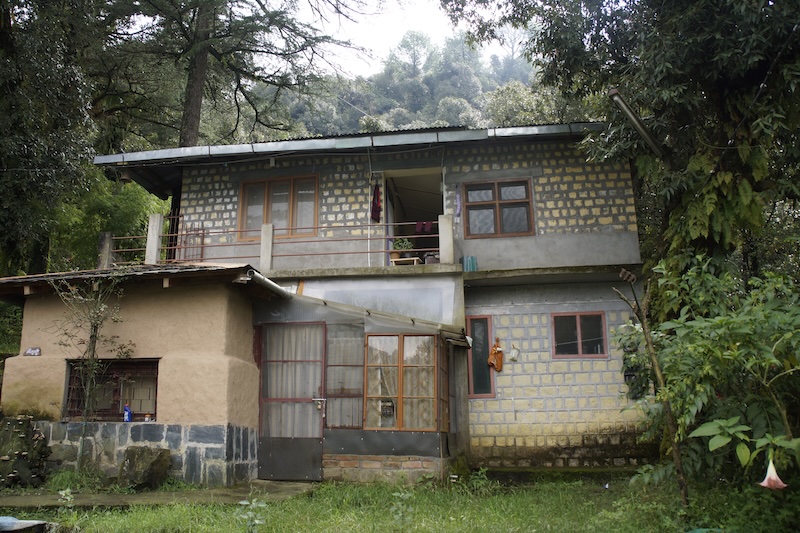
When the nuns first escaped, they lived in this rented house near Dharamsala.
Shugsep Nunnery was re-established in India in 1992 and the newly built nunnery was inaugurated by His Holiness the Dalai Lama in December 2010. It is one of two nunneries built and completely supported by the Tibetan Nuns Project. The other is Dolma Ling.
Here’s a charming video tour of the nunnery made in 2017. If you can’t see the video, click here.