
Description
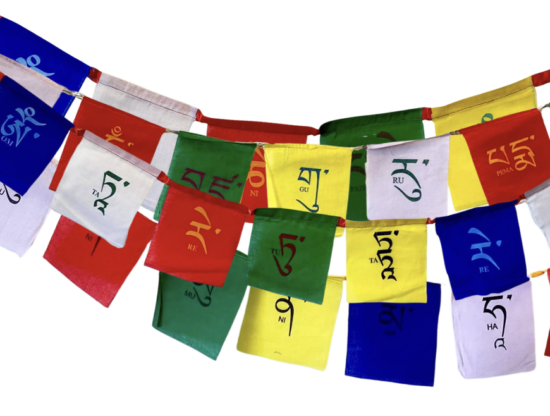
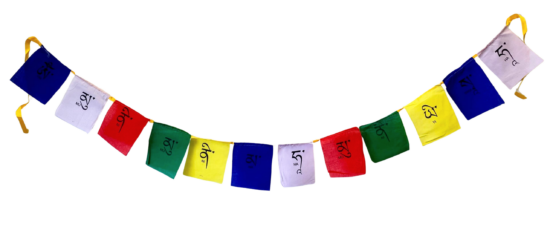
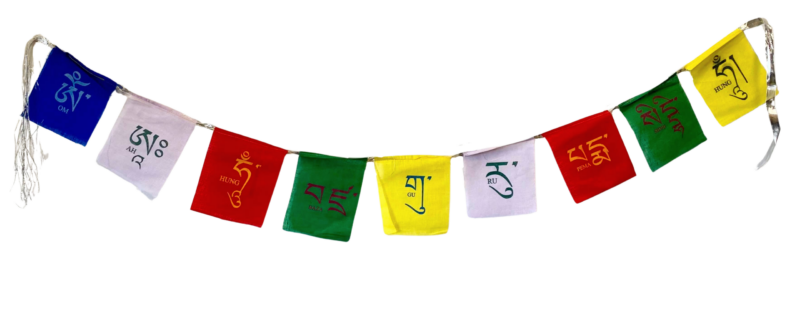
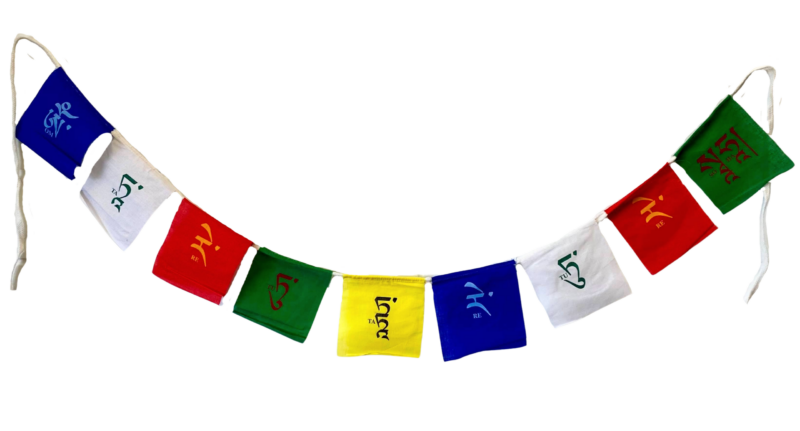
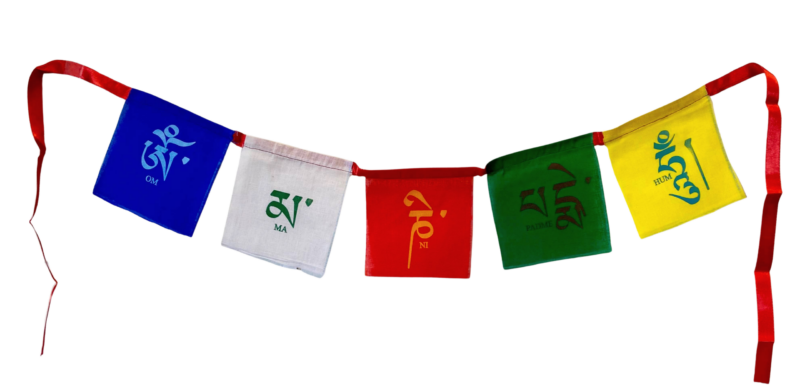
Each set of mantra prayer flags has one or two syllables of the mantra per flag. Mantras are a sequence of words or syllables that are chanted, usually repetitively, as part of Tibetan Buddhist practice.
According to Traditional Tibetan medicine, health and harmony are produced through the balance of the five elements.
- Blue symbolizes the sky and space.
- White symbolizes the air and wind.
- Red symbolizes fire.
- Green symbolizes water.
- Yellow symbolizes earth.
These prayer flags are handmade and blessed by Tibetan Buddhist nuns in India. Your purchase of them helps to provide food, shelter, and education to over 900 nuns.
Specifications
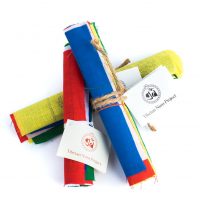
These are handmade so sizes vary slightly. Each flag measures approximately 4″ x 5″ and each set includes between 5 and 12 flags to fit the mantra which include one syllable of the mantra per flag.
The length of the sets measured from the first to the last flag are approx. 4′ for Tara and Vajra Guru, 2′ for Mini Mani and 5′ for Buddha Shakyamuni. with about 1 1/2′ of string on each end.
The symbols and mantras on prayer flags are sacred. Prayer flags should be treated with respect and they should not be placed on the ground. Old prayer flags should be burned. See our blog post on how to hang and dispose of old prayer flags.
Four designs of Mantra Prayer Flags
Mini Mani Mantra Prayer Flags
Om Mani Padme Hum is the six-syllable mantra of Avalokitesvara or Chenrezig in Tibetan. Tibetan Buddhists believe that saying this mantra out loud or silently to oneself invokes the powerful benevolent attention and blessings of Avalokitesvara, a bodhisattva who embodies the compassion of all Buddhas. Even viewing the written form of the mantra is said to have the same effect. This extremely popular and well-known Tibetan mantra is often carved into stones, creating mani stones that are placed for people to see them.
Buddha Shakyamuni Mantra Prayer Flags
Om Muni Muni Maha Muniye Soha is the mantra of Buddha Shakyamuni, the historical Buddha. Also known as Siddhartha Gautama, Shakyanmuni Buddha was born in the 6th or 5th century BCE and founded Buddhism. The name Buddha means the “awakened” or “enlightened” one. Following his enlightenment, Shakyamuni taught a path which others can follow to be awakened to the true nature of reality and to be freed from suffering. Muni means sage and Maha means great. So the mantra means, “Om wise one, wise one, greatly wise one, wise one of the Shakyans, Hail!”
Tara Mantra Prayer Flags
These prayer flags are printed with the ancient Tibetan mantra to Tara, Om Tare Tuttare Ture Soha. Tara is considered to be a Bodhisattva or Buddha of compassion, relieving us of physical, emotional, and spiritual suffering. Tara has 21 major forms, each of which has a different color and spiritual attribute, and this mantra is most associated with Green Tara. Of her 21 forms, two forms of Tara are especially loved by Tibetans – Green Tara, who is associated with abundance and enlightened activity, and White Tara, who is associated with compassion and long life.
Vajra Guru Mantra Prayer Flags
The 12-syllable mantra of Guru Padmasambhava is Om Ah Hung Benza Guru Pema Siddhi Hung. The Vajra Guru Mantra is the heart essence of Padmasambhava who is also know as Guru Rinpoche, the Precious Master. Padmasambhava was an Indian tantric master who played a major role in bringing Vajrayana Buddhism to Tibet in the eighth century and is considered as the founder of Tibetan Buddhism. This mantra is also the mantra of all the masters, buddhas, yidams, dakas, dakinis, and protectors. When you chant it, you are invoking the very embodiment of Padmasambhava.

Reviews
There are no reviews yet.