Tag Archives: Bodh Gaya

The 2025 Geshema Graduation and Inter-Nunnery Debate

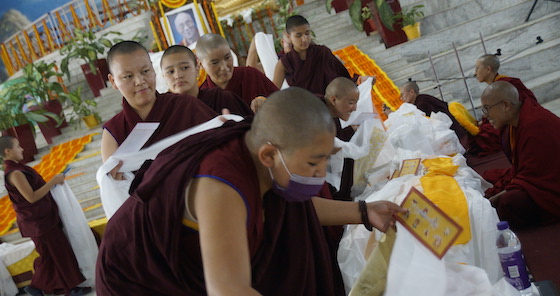
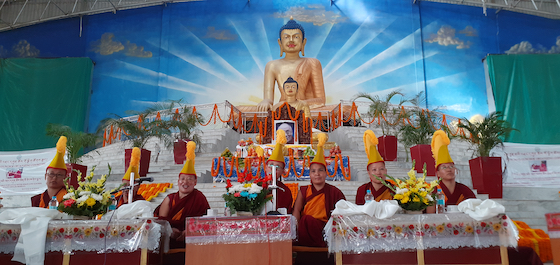
On November 6th, 47 Tibetan Buddhist nuns graduated as Geshemas in the holy city of Bodh Gaya. The Geshema degree is the highest academic degree in the Gelug tradition and was only opened to women in 2012. This is the largest group of Geshema graduates since the first Geshema graduation took place in 2016, bringing the total number of Geshemas to 120.
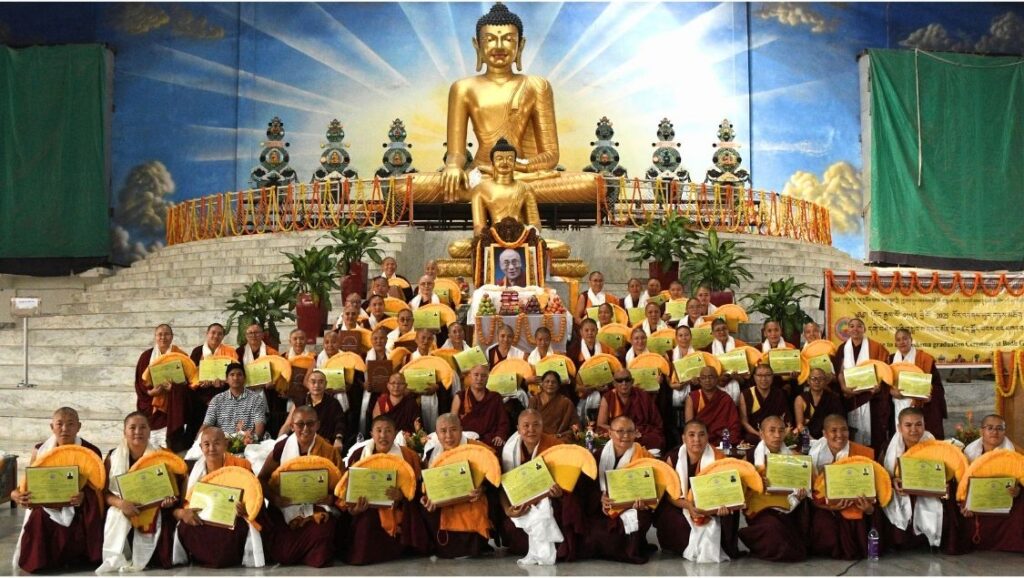
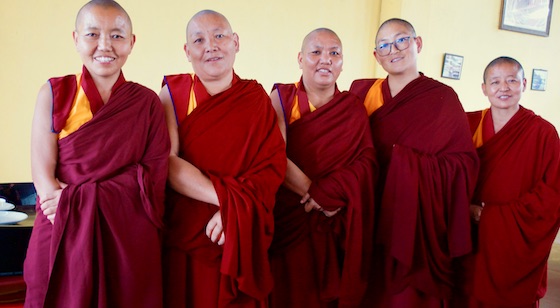
47 Geshemas graduated in November 2025

Congratulations to the 47 Tibetan Buddhist nuns who graduated in November 2025 as Geshemas.

In this blog post, we share photos taken by the Dolma Ling Media Nuns of the special event and news of the annual inter-nunnery debate, the Jang Gonchoe, which started 30 years ago in 1995.

Record Number of Nuns Earn Geshema Degrees

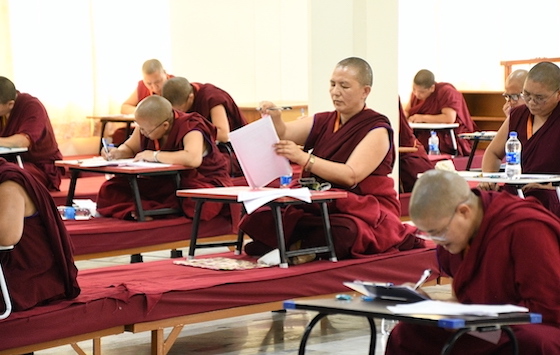
In the summer of 2025, a record number of nuns took various levels of exams for the Geshema degree, equivalent to a PhD in Tibetan Buddhist philosophy. The rigorous written and oral are completed over four years, with one set held each year. To be eligible to take their Geshema exams, the nuns must first complete at least 17 years of study.
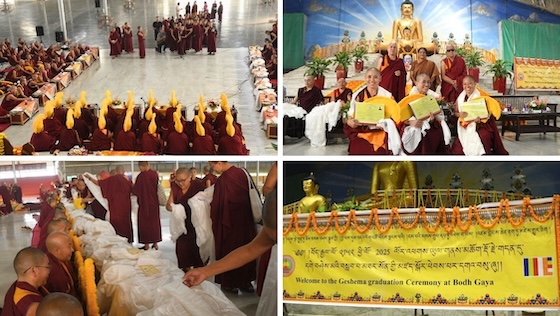
A collage showing parts of the Geshema graduation ceremony in November 2025. Elements include an oath-taking ceremony and a special debate event followed by a traditional khata (scarf)offering ceremony.

A collage showing parts of the Geshema graduation ceremony in November 2025. Elements include an oath-taking ceremony and a special debate event, followed by a traditional khata (scarf) offering ceremony.

The Geshemas are paving the way for other nuns to follow in their footsteps. The momentum is building. Not long ago, this increased status of nuns was almost unimaginable. We are so grateful for your support to educate and empower these dedicated women!
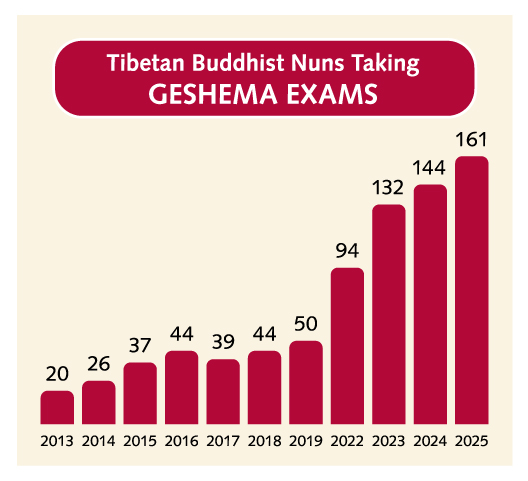
Geshema exams chart 2025

2025 marks another new record for nuns taking various levels of the 4-year Geshema exams. The degree was only opened to women in 2012. No exams were held in 2020 or 2021 due to COVID.

The exams were hosted this year by Dolma Ling Nunnery and Institute near Dharamsala from July 21 to August 16, 2025. The costs of the nuns’ travel, food, and the exam process were once again covered by the Tibetan Nuns Project’s Geshema Endowment Fund.

In November, the Jang Gonchoe closing ceremony and Geshema certification were held on the same day, attended by chief guests Dr. Mahashweta Maharathi, Secretary of the Bodh Gaya Temple Management Committee and Gen Tenzin la from Namgyal Monastery in Dharamsala.

Here’s a list of the Geshema graduations since the formal approval in 2012:

The Annual Inter-Nunnery Debate

From October 5th to November 8th, 460 nuns and 23 teachers from 10 Tibetan Buddhist nunneries in India and Nepal gathered in Bodh Gaya for one month of intensive training in monastic debate.
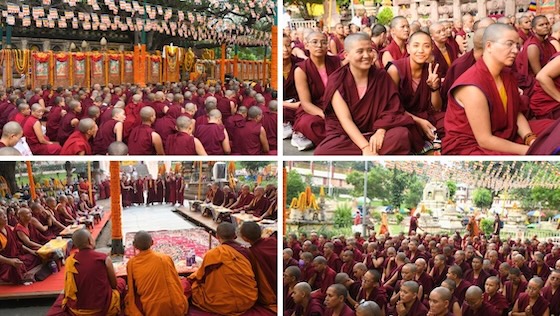
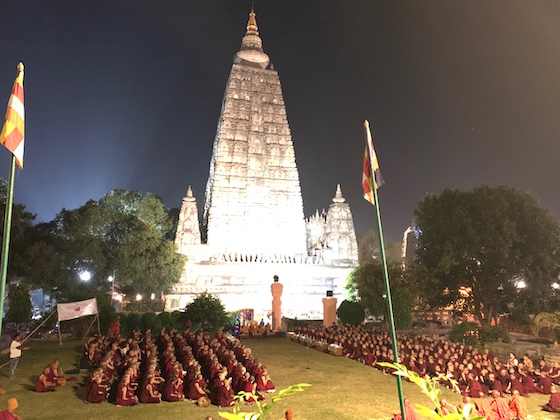
Tibetan Buddhist nuns from India and Nepal practice debating at the Mahabodhi Temple

Tibetan Buddhist nuns from India and Nepal practice debating at the Mahabodhi Temple (literally the “Great Awakening Temple”) in Bodh Gaya, marking the location where the Buddha attained enlightenment.

Monastic debate is of critical importance in traditional Tibetan Buddhist learning. Through debate, nuns test and consolidate their classroom learning.
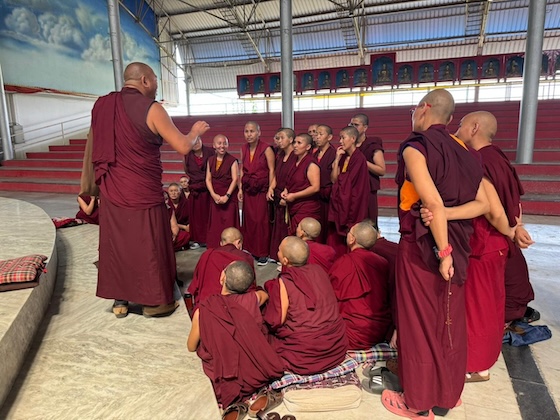
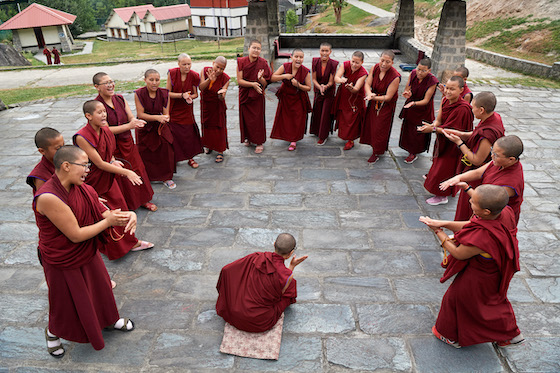
inter-nunnery debate in Bodh Gaya 2025 with Tibetan Buddhist nuns

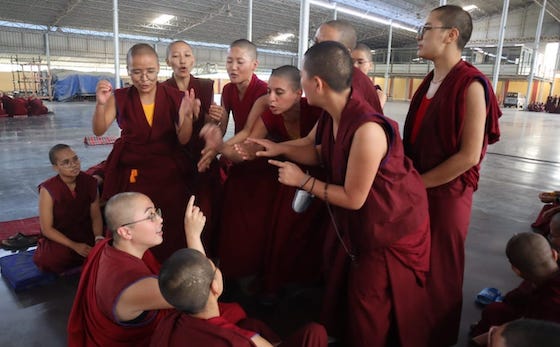
A teacher guides Tibetan Buddhist nuns during their month-long intensive training in monastic debate in Bodh Gaya. 2025 marks the 30th anniversary of the start of the Jang Gonchoe for nuns in 1995.

Although the nuns practice debate daily at their nunneries, the annual Jang Gonchoe debate event provides essential training and practice that is vital for those who wish to pursue higher degrees. The nuns are very grateful to the Kagyu Monlam Office for lending the space since 2019 to the nunneries during Jang Gonchoe and for their continued support.

At the Jang Gonchoe, the nuns take part in structured debate sessions with individual and class-wide debates, followed by an evening inter-nunnery session where two nuns answer questions from a team from another nunnery. Debate strengthens reasoning skills, confidence, and understanding of Buddhist studies.

The inter-nunnery debate helps bring the nuns closer to equality with the monks in terms of learning opportunities and advancement along the spiritual path.

This year, nuns from these 10 nunneries participated:
1.    Geden Choeling: 3 teachers + 64 nuns = 67
2.    Jamyang Choeling: 2 teachers + 37 nuns = 39
3.    Dolma Ling: 3 teachers + 92 nuns = 95
4.    Jangchub Choeling: 4 teachers + 77 nuns = 81
5.    Kachoe Gakyil Ling: 4 teachers + 64 nuns = 68
6.    Thukche Choeling: 2 teachers + 32 nuns = 34
7.    Jangsemling: 1 teacher + 17 nuns = 18
8.    Jampa Choeling – 1 teacher + 11 nuns = 12
9.    Yangchen Choeling : 1 teacher + 26 nuns = 27
10. Sherab Choeling: 2 teachers + 39 nuns = 41
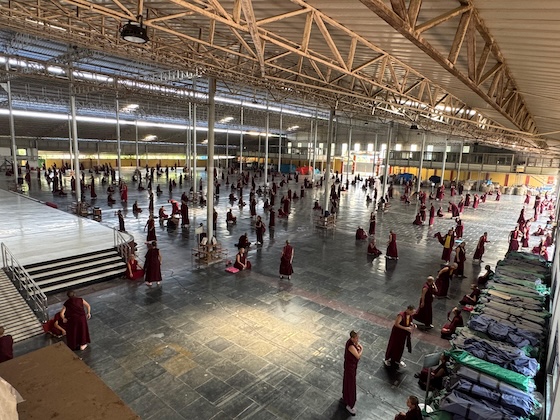
Annual internunnery debate in Bodh Gaya 2025, Jang Gonchoe

Nuns practice monastic debate in pairs and groups during the month-long Jang Gonchoe. The nuns expressed appreciation to the Kagyu Monlam Office for lending the space in Bodh Gaya for the Jang Gonchoe since 2019 and for their continued support.

1995-2025: The 30th Anniversary of the Inter-Nunnery Debate

The Jang Gonchoe for nuns was first initiated in 1995, making this year its 30th anniversary, though there was a year-long gap during the Covid pandemic when the event could not take place. Because of that missed year, the nuns’ committee has decided to count this as the 29th Jang Gonchoe instead of the 30th.
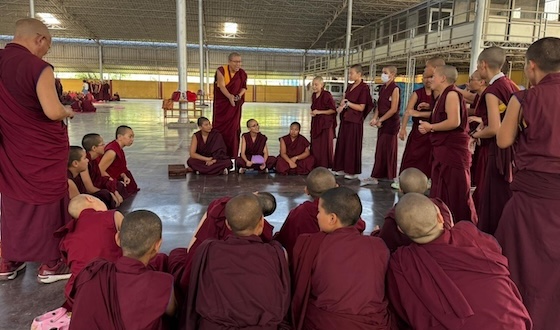
Jang Gonchoe inter nunnery debate 2025 in Bodh Gaya 2

The inter-nunnery debate has been supported since 1997 by the Tibetan Nuns Project through our Jang Gonchoe Endowment Fund. Now we want to put more of our core programs on a sustainable footing with our Long-Term Stability Fund.

Before 1995, there was no Jang Gonchoe for nuns and this learning opportunity was only open to monks. The Tibetan Nuns Project, with the wonderful support of His Holiness the Dalai Lama, played a critical role in opening up this learning opportunity to women. Establishing a comparable debate session for nuns has been an integral part of the nuns reaching their current level of excellence in their studies.

The inter-nunnery debate has been supported since 1997 by the Tibetan Nuns Project. Our Jang Gonchoe Endowment Fund covers costs such as transportation, food, and accommodation for the nuns and teachers who wish to attend.

The following video is a great primer on Tibetan Buddhist debate by nuns. It’s taken from a longer video made by the nuns at Dolma Ling Nunnery in northern India. It answers many of the frequently asked questions about Tibetan Buddhist debate, such as the meaning of the hand movements.

Can’t see the video? Click here.

Nuns Learning Tibetan Buddhist Debate

“It all happened because of the kindness, generosity, and genuine concern shown by all the wonderful donors who supported us for so many years,” said Rinchen Khando Choegyal, Founding Director and Special Advisor to the Tibetan Nuns Project, in a past interview.

“Much as we had the blessings from His Holiness the Dalai Lama and the vision, determination, and courage to pursue this matter to the full, without their generosity we would not have been able to have the Jang Gonchoe every year, which was and is the moving force behind every step of progress in education the nuns have made,” she said.
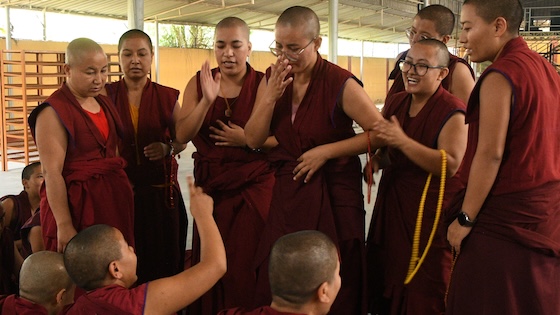
Tibetan Buddhist nuns debating 2025

In 2025, 460 nuns from ten nunneries took part in the annual inter-nunnery debate, the Jang Gonchoe. The event began in 1995. Prior to that, nuns did not have this opportunity.

His Holiness the Dalai Lama has often spoken of the need to examine the teachings of the Buddha closely and with an inquisitive mind. “This is the 21st century and we need to understand the Buddha’s teachings in the light of reason. When we teach, we need to do so on the basis of reason,” His Holiness the Dalai Lama told the nuns at the end of the 2014 Jang Gonchoe.

His Holiness added, “Nowadays, the Nalanda tradition of approaching the Buddha’s teachings with logic and reason is only found amongst Tibetans. It’s something precious we can be proud of and should strive to preserve.”
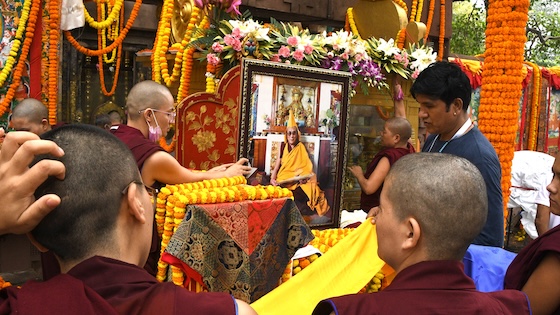
A portrait of His Holiness the Dalai Lama is placed at the Mahabodhi Temple in Bodh Gaya, marking the place where the Buddha attained enlightenment.

A portrait of His Holiness the Dalai Lama is placed at the Mahabodhi Temple in Bodh Gaya, marking the place where the Buddha attained enlightenment. His Holiness the Dalai Lama is the patron of the Tibetan Nuns Project.

Support Long-Term Stability

The annual Geshema exams and the inter-nunnery debate are both funded by endowments and are now self-sustaining thanks to our generous supporters.

We are extremely grateful to the 159 donors to the Geshema Endowment, including the Pema Chodron Foundation, the Pierre and Pamela Omidyar Fund of the Silicon Valley Community Foundation, the Frederick Family Foundation, and the Donaldson Charitable Trust. We are also very grateful to all those who sponsor nuns and help them on their path.

Now we want to put more of our core programs on a sustainable footing with our Long-Term Stability Fund. Thank you for supporting this vision. You can learn more and donate here.
 

More Nuns Earn Highest Degree

2023 Geshema Graduation and Annual Debate Event

On November 27th, seven Tibetan Buddhist nuns graduated with their Geshema degrees at a special convocation ceremony in the holy city of Bodh Gaya, India.

Geshema graduation 2023, Geshema

The seven Tibetan Buddhist nuns who earned their Geshema degrees in 2023 at the graduation ceremony in Bodh Gaya. Photo by the Dolma Ling Media Nuns.

The degree is the female equivalent of the Geshe degree for monks and is the highest academic degree available in the Gelug tradition, roughly equivalent to a PhD.

This was the sixth cohort of Geshemas since the degree was opened to women in 2012. The first 20 nuns graduated in 2016.

At the ceremony, Nangsa Choedon, the director of the Tibetan Nuns Project in India, spoke about the work to ensure a strong future for Tibetan nuns.

Geshema graduation 2023, Nangsa Choedon

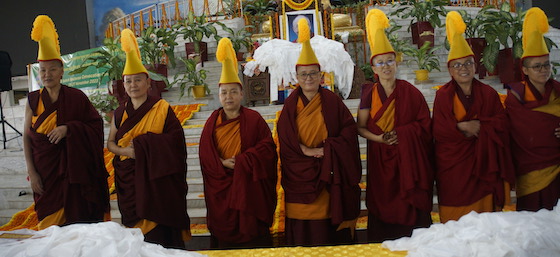
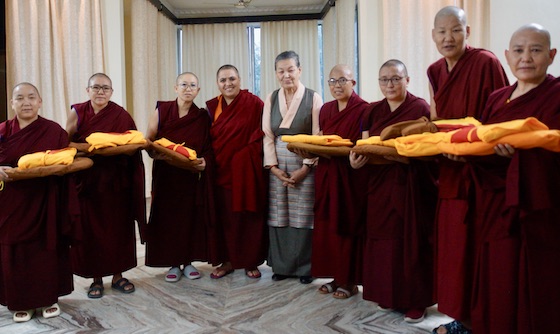
Nangsa Choedon of the Tibetan Nuns Project presents the Geshema graduates with robes and the yellow hats that signifies the holding of this highest degree. Photo by the Dolma Ling Media Nuns.

Other special guests who attended the graduation included Kunga Gyaltsen, the additional secretary of Religion and Cultural Affairs for the Central Tibetan Administration (CTA) who offered congratulations to the new Geshemas on behalf of the CTA. He encouraged the nuns to educate their local communities on core Buddhist teachings and also urged them to encourage participation in projects aimed at bringing insights from modern science to monastics.

2023 Geshema graduation

Tibetan Buddhist nuns line up to offer congratulations and ceremonial white katak scarves to the Geshema graduates. Photo by the Dolma Ling Media Nuns.

The Geshema degree enables these dedicated women to assume various leadership roles in their monastic and lay communities reserved for degree holders and hence previously not open to women.

Geshemas, 2023 inter-nunnery debate

At the 2023 Jang Gonchoe inter-nunnery debate event, there were five Geshemas from previous years who acted as teachers during the month of intensive training in monastic debate. Two were from Jangchup Choeling, one from Kopan Nunnery, one from Jangyang Choeling, and one from Dolma Ling.

The Geshema exams took place in the summer and a record 132 nuns took various levels of the four-year exams. This is 38 more than the 94 nuns who took exams in 2022. Here’s a video  made by the nuns about the 2023 exams.

Tibetan Buddhist nuns, Geshema exams in 2023

In 2022, 94 nuns sat Geshema exams. This year, a record 132 nuns are taking various levels of the four-year exams. Photo by the Dolma Ling Media Nuns.

Momentum is building and an increasing number of nuns wish to attain this highest academic standing. Many young and new nuns who join the nunneries we support in northern India are saying in their introductory interviews that they want to pursue the rigorous 17-year training that precedes the Geshema exam process.

They look to examples of Geshemas as teachers and leaders and they are inspired to follow in their footsteps. As of the end of 2023, there are 60 Geshemas in this tradition of Tibetan Buddhism.

2023 Jang Gonchoe Inter-Nunnery Debate

The graduation was the culmination of the nuns’ annual inter-nunnery debate event called the Jang Gonchoe which took place from October 25th to November 28th.

inter-nunnery debate,2023 Jang Gonchoe

In 2023, over 500 Tibetan Buddhist nuns from India and Nepal took part in the month-long inter-nunnery debate event called the jang Gonchoe.

This year around 520 nuns from 10 nunneries from India and Nepal gathered at the Kagyu Monlam in Bodh Gaya to take part in the month-long intensive training in monastic debate.

Nuns practicing debate daily at Dolma Ling Nunnery.

Nuns practicing debate daily at Dolma Ling Nunnery. Monastic debate is of critical importance in traditional Tibetan Buddhist learning. Through debate, nuns test and consolidate their classroom learning. Photo courtesy of Olivier Adam.

Throughout the year nuns practice debate daily at their nunneries. But, the Jang Gonchoe debate event provides the training and practice that is essential for nuns who wish to pursue higher degrees.

Long-Term Stability

Both the Geshema exams and the inter-nunnery debate are funded by endowments through the Tibetan Nuns Project and are self-sustaining. We are grateful to all those who supported these two funds.

Tibetan Buddhist nuns

Some of 510 nuns who took part in the 2023 inter-nunnery debate. Their food and travel costs were covered by the Debate Fund. Now we want to more more of our core programs on a sustainable footing with TNP’s Long-Term Stability Fund.

Now our wish is to put more of the Tibetan Nuns Project’s core programs on a sustainable footing. To that end, we launched the Long-Term Stability Fund. You can learn more about this vision and donate here

Another great debate!

Thank you for making the annual inter-nunnery debate a big success.

The 25th annual inter-nunnery debate, called the Jang Gonchoe, took place from October 25-November 30th 2019.

At the month-long event, 422 nuns received intensive training in Tibetan Buddhist debate.

Jang Gonchoe Inter Nunnery debate 2019 in Bodh Gaya

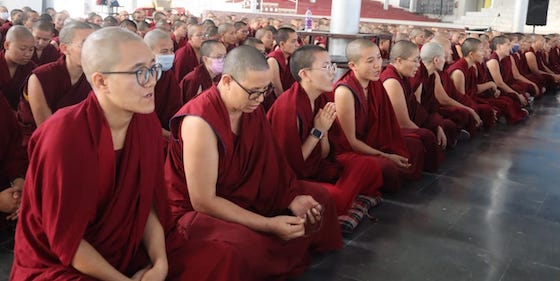
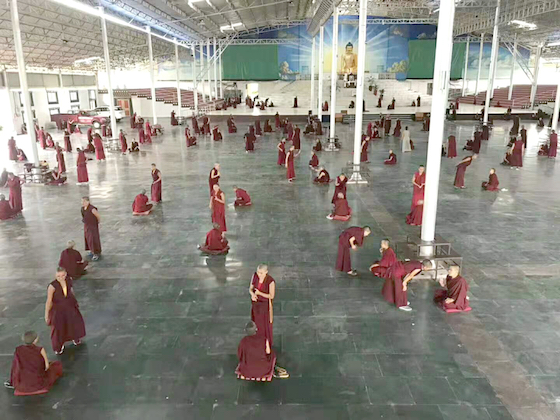
Tibetan Buddhist nuns debating in pairs at the Jang Gonchoe Inter-Nunnery Debate held at the Kagyu Monlam Pavilion in Bodh Gaya, India. Over 400 nuns took part in the 25th annual event.

The historic event was held at the huge Kagyu Monlam Pavilion in Bodh Gaya, India. The nuns also debated outdoors in front of the Mahabodhi Temple, the “Great Awakening Temple” marking the location where the Buddha attained enlightenment.

Tibetan Buddhist debate is a unique method of learning that, until very recently, was not open to women. This form of learning has helped to produce many renowned Tibetan scholars over the centuries. With the steady religious and cultural persecution inside Tibet, these important Tibetan Buddhist practices can only survive in exile.

Here’s a video about the 2019 Jang Gonchoe:

The nuns came from the following nine nunneries in India and Nepal:
1.     Geden Choeling Nunnery, Dharamsala: 60 nuns attended
2.     Dolma Ling Nunnery and Institute, Sidhpur: 70 nuns attended
3.     Jamyang Choeling Nunnery, Dharamsala: 48 nuns attended
4.     Jangchub Choeling Nunnery, Mundgod: 74 nuns attended
5.     Jangsemling Nunnery, Kinnaur: 23 nuns attended
6.     Jampa Choeling Nunnery, Kinnaur: 16 nuns attended
7.     Yangchen Choeling Nunnery, Spiti: 16 nuns attended
8.     Khachoe Gakhiling Nunnery, Kopan, Nepal: 60 nuns attended
9.     Thugke Choeling Nunnery, Nepal: 55 nuns attended

The vast Kagyu Monlam Pavilion provided an excellent space for the nuns to debate all under one roof. The Kagyu Monlam Committee kindly provided the complex free of cost for the nuns’ Jang Gonchoe, only requesting a small thank-you donation for water and electricity consumption. We are extremely grateful for their support.

At the conclusion of the event, the 7 nuns who passed their fourth and final year of Geshema exams in August took part in a formal damcha debate with the assembled nuns.

Following the damcha, there was a Geshema graduation ceremony to conclude the Jang Gonchoe. The graduation of 7 more Geshemas brings the total number of Geshemas to 44.

Geshemas debate at 2019 Jang Gochoe for Tibetan Buddhist nuns

The 7 nuns who earned their Geshema degree, the highest degree in their tradition, debate with other nuns in a formal session called a damcha at the conclusion of the 2019 Jang Gochoe. With their graduation in November, this brings the total number of women with this highest degree, equivalent to a Ph.D. in Tibetan Buddhism, to 44.

We are extremely grateful to everyone who helped support this amazing educational opportunity by donating to our 2019 Jang Gonchoe fund and to the Jang Gonchoe Endowment Fund.

The practice of debate combines logical thinking with a deeper understanding of Buddhist philosophy and is an essential part of monastic education in the Tibetan tradition. To grasp the importance of Buddhist debate, one might compare it to the significance of essay writing in secondary and post-secondary education. Both methods of learning develop skills in critical thinking, demonstrate knowledge and understanding of the topic, involve structuring and organizing an argument, referencing texts, and gaining different points of view.

25th nuns Jang Gonchoe 2019 Bodh Gaya

During the 2019 Jang Gonchoe, the nuns also debated outdoors in front of the Mahabodhi Temple. The “Great Awakening Temple” marks the location where the Buddha attained enlightenment.

Until the 1990s, Tibetan Buddhist nuns were excluded from this form and level of education. The Tibetan Nuns Project has worked hard to open up this opportunity for the nuns and make debate a core part of their education.

Establishing a comparable debate session for nuns has been an integral part of the nuns reaching the level of excellence in their studies that they have.

It is only by attending the Jang Gonchoe and getting intensive debating practice that the nuns can advance their knowledge and gain the necessary confidence and experience to pursue higher degrees such as the Geshema degree, equivalent to a Ph.D. in Tibetan Buddhism.

Let’s Make the Inter-Nunnery Debate Sustainable

The Jang Gonchoe for nuns was started in 1995. Since 1997, the Tibetan Nuns Project has been fully supporting it.

The obstacle to wider attendance at the Jang Gonchoe has always been funding. Sadly, more nuns wish to attend than there is funding available to support them.

We would like to make the nuns’ Jang Gonchoe sustainable. To that end, we have created a Jang Gonchoe Endowment Fund so that revenue from the endowment can cover the annual costs.

Our goal is to have $600,000 in the Jang Gonchoe Endowment Fund.

A generous donor has offered to match every gift to the Jang Gonchoe Endowment Fund up to a total of $30,000 so you can double the power of your gift here.

The individual costs for each nun are very low. For instance, the food allowance for each nun is 100 rupees a day, equivalent to US$1.46. However, with hundreds of nuns attending for one month, these small costs add up. It now costs about $30,000 a year to fund the event each year.

Geshema graduates 2019

Congratulations to the 7 new Geshema graduates. At the end of the Jang Gonchoe, they took part in a formal debate and graduation ceremony. The graduation of 7 more Geshemas brings the total number of Geshemas to 44.

By donating to the Jang Gonchoe Endowment Fund, you would be opening up a centuries-old tradition to the nuns and enabling and empowering them to become great teachers in their own right. The benefit of this is inestimable and will be an enduring legacy for generations to come.

By helping nuns attend the annual Jang Gonchoe, you will also be helping to preserve the Tibetan religion, culture, and language — all of which are under severe threat inside Tibet.

This is a unique opportunity to build capacity and equality for the nuns, to foster the dharma for future generations, and to ensure that this unique tradition continues and grows. Donations to the Jang Gonchoe Endowment Fund can be made here. Thank you for helping the nuns!