Tag Archives: Buddhist nun education

Witness history in the making: Geshema Graduation Ceremony

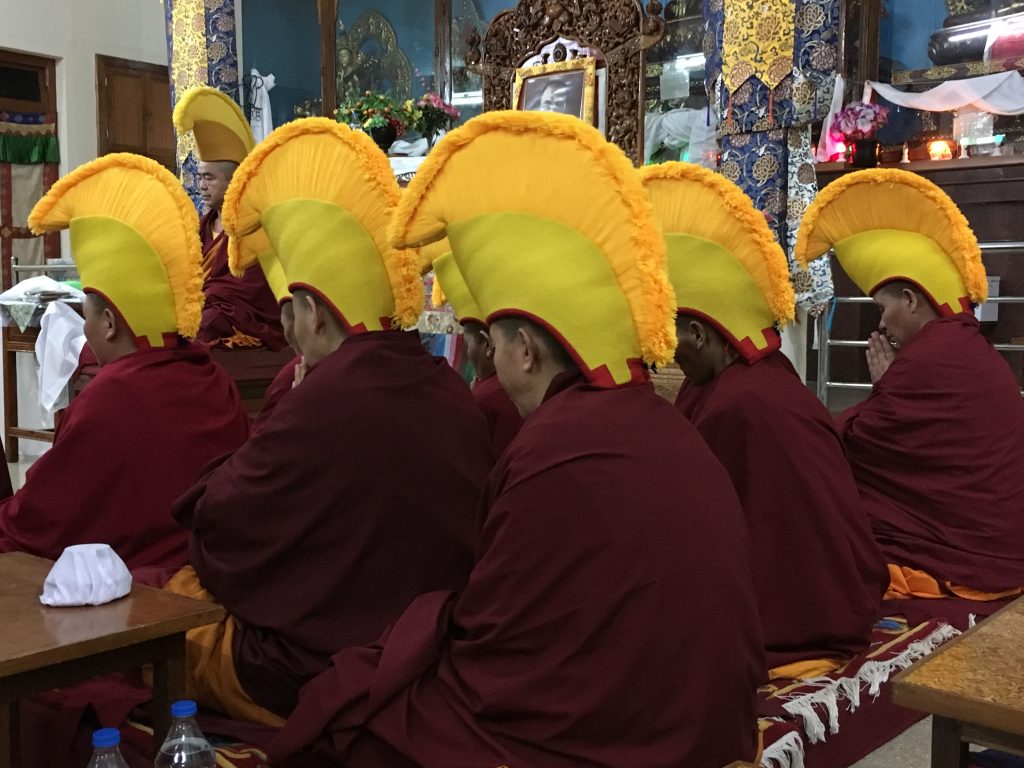
In one week’s time, twenty Tibetan Buddhist nuns will receive their Geshema degrees from His Holiness the Dalai Lama at a special Geshema Graduation Ceremony in Mundgod, South India.

Geshema nuns

This historic event will be attended by hundreds of monks and nuns.

Here’s the formal schedule of events:

schedule for Geshema Graduation event

The event will be livestreamed from India and can be viewed on the home page of the Tibetan Nuns Project.

Please note the time difference for your region. The event starts at 8 am on December 22 Indian time which is equivalent to 6:30 pm on December 21st Pacific Standard Time.

livestream of the Geshema Graduation Ceremony

Photo courtesy of Tenzin Choejor, OHHDL

If you are unable to watch the livestream of the event, check back to the Tibetan Nuns Project homepage sometime from December 28th onwards and where we’ll have the video embedded.

Our visit to Dorjee Zong Nunnery by Rinchen Khando Choegyal

This is a special report from Rinchen Khando Choegyal, Founder and Director of the Tibetan Nuns Project and Tsering Diki, Project Co-Ordinator. The beautiful photos are all by media nun, Delek Yangdron, who accompanied us on the trip.

Dorjee Zong Nunnery low resIn August 2015, we travelled for three days over rough, bumpy roads from Leh in Ladakh to Zanskar, a remote area in northern India. Located in this majestic, arid landscape is Dorjee Zong Nunnery, home to 19 nuns.

It was good to see the nuns and the nunnery once again. Since 2010 the Tibetan Nuns Project has been helping this small nunnery with sponsorship and a teacher’s salary, and it was wonderful to see the assistance we have been providing used to the fullest extent. The nuns are very happy to be receiving support and care from us and their sponsors.
Buddhist nuns, ladakh, Rinchen Khando Choegyal, Tibetan Nuns Project, nuns, sponsor a nun, Dorjee Zong, Buddhist nunnery

During our short visit, the Director gave a warm and personal talk to all of the nuns and we could see how inspired they were and how cared for they felt. This was encouraging and inspiring for those of us who are trying to work for them.nuns, Buddhist nuns, Dorje Zong Nunnery, Tibetan Nuns Project, sponsor a nun
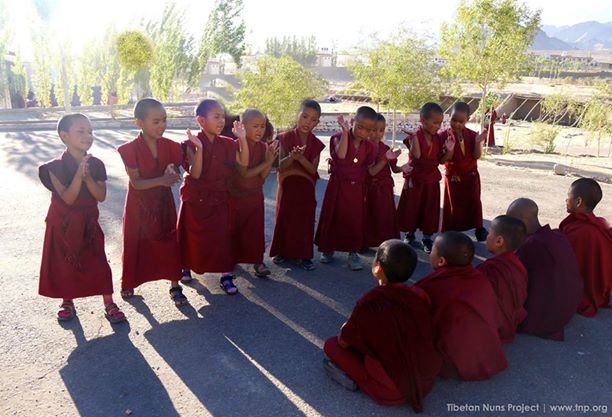
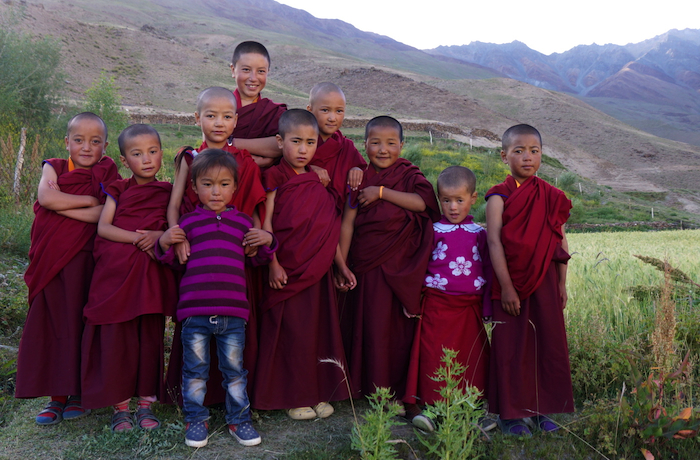
There are 12 young nuns and 7 elder nuns. The younger nuns looked very bright and happy to be where they are, and we felt energized to help them even more. Our focus will be mainly on education, health care, and overall development, including setting up infrastructure for an education system and facilitating a good educational programme. Continue reading

Life at Sherab Choeling Nunnery in Spiti

In the remote Spiti Valley of Himachal Pradesh in northern India, lies Sherab Choeling Nunnery, currently home to 42 Tibetan Buddhist nuns, many of whom are sponsored by Tibetan Nuns Project supporters.waterfall in Spiti Valley
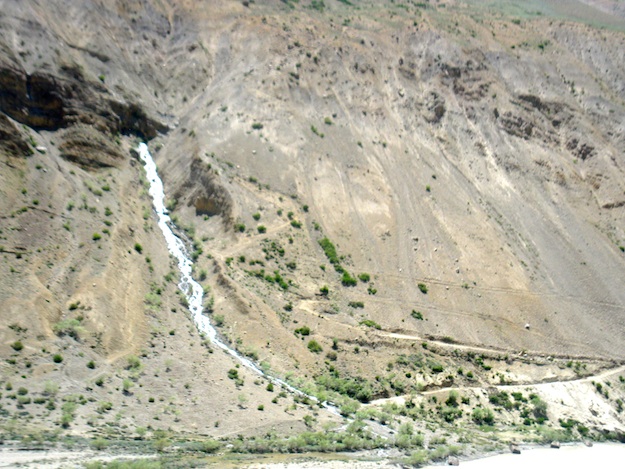
group of nuns at Sherab Choeling Nunnery in Spiti

Sherab Choeling nuns in 2006

The nunnery is very secluded and lies in the village of Morang (between Manali and Tabor) at 4,000 meters altitude. It was built in 1995 by 20 nuns and their teacher with the intent of addressing the problem of the inadequate education of women in the region. The nunnery was consecrated in 1995 by His Holiness the Dalai Lama who encouraged the nuns to study. There is a main building, a prayer hall, a classroom, an office, a kitchen and a storeroom. In 2006, Sherab Choeling Nunnery approached the Tibetan Nuns Project to help develop their institution and we accepted them into our sponsorship program.

Earlier this year we received lots of photos of daily life at the nunnery that we wanted to share with sponsors of the nuns and with all the Tibetan Nuns Project donors worldwide.

Although the area of Lahaul-Spiti is part of India, ethnically, the people are descended from Tibetans and the majority are devout Buddhists. They have preserved an ancient Tibetan culture, speaking an old dialect of the Tibetan language, as written in Tibetan scriptures.
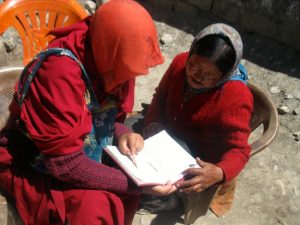
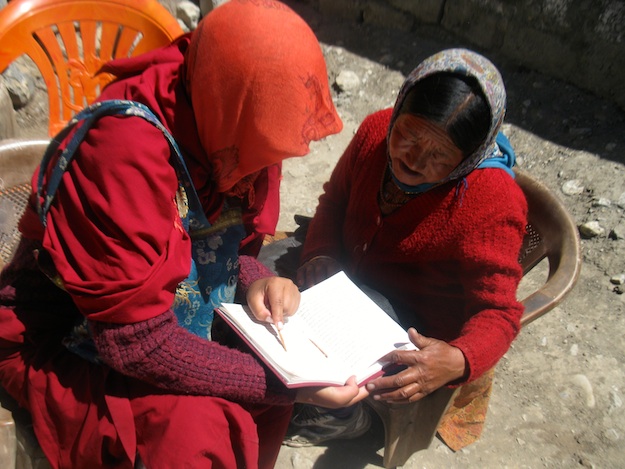
Sherab Choeling nun teaching a woman in Spiti

Sherab Choeling nun teaching a woman in Spiti

Sherab Choeling Nunnery was the first religious educational project for Spiti women. Traditionally women in this region have suffered from many social and educational disadvantages. Many have been deprived of any kind of education, and this institute is the first in Spiti to provide women with the opportunity to overcome these disadvantages.

Sherab Choeling is a non-sectarian nunnery that recognizes the beauty and value in all Buddhist traditions. The nuns at follow a 17-year study program. The curriculum is designed to educate the nuns in Buddhist philosophy, meditation, Tibetan language and literature, in addition to a basic education in English, Hindi and math. The broad education is intended to provide the nuns with necessary skills to educate future generations of nuns and the communities from which they come.Buddhist nuns studying outdoors Sherab Choeling 2014
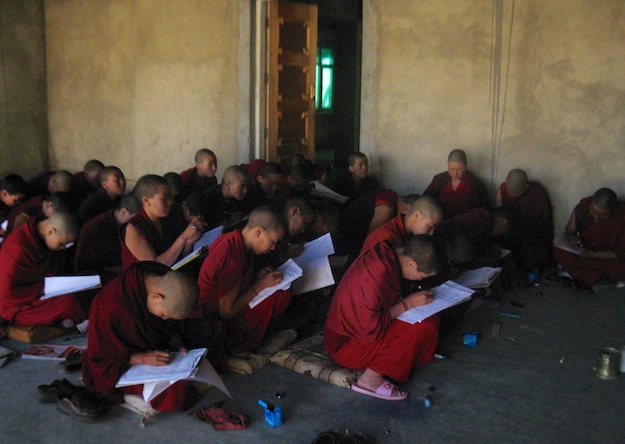
Many young girls seek admission to Sherab Choeling, but due to lack of facilities and sponsors, it is not possible for all to gain entrance. The Tibetan Nuns Project helps by raising awareness, finding sponsors for the nuns, and helping them to fundraise for the further development of the institute.
Young Tibetan Buddhist nuns in class

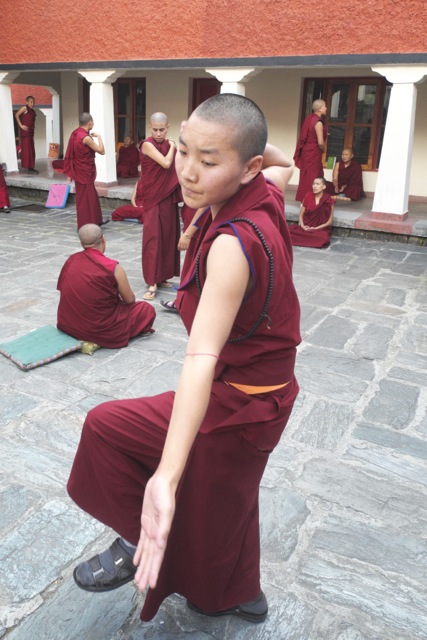
young Buddhist nuns debating Spiti

This year started with 14 new nuns in the nunnery including three 5-year-olds. Along with Tibetan classes, the younger nuns are also taught mathematics and Hindi up to 5th standard, after which the nuns are introduced to English language classes.
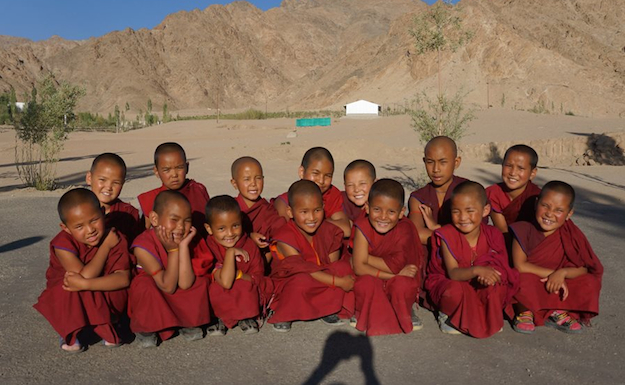
young Tibetan Buddhist nuns at Sherab Choeling Nunnery in Spiti 2014

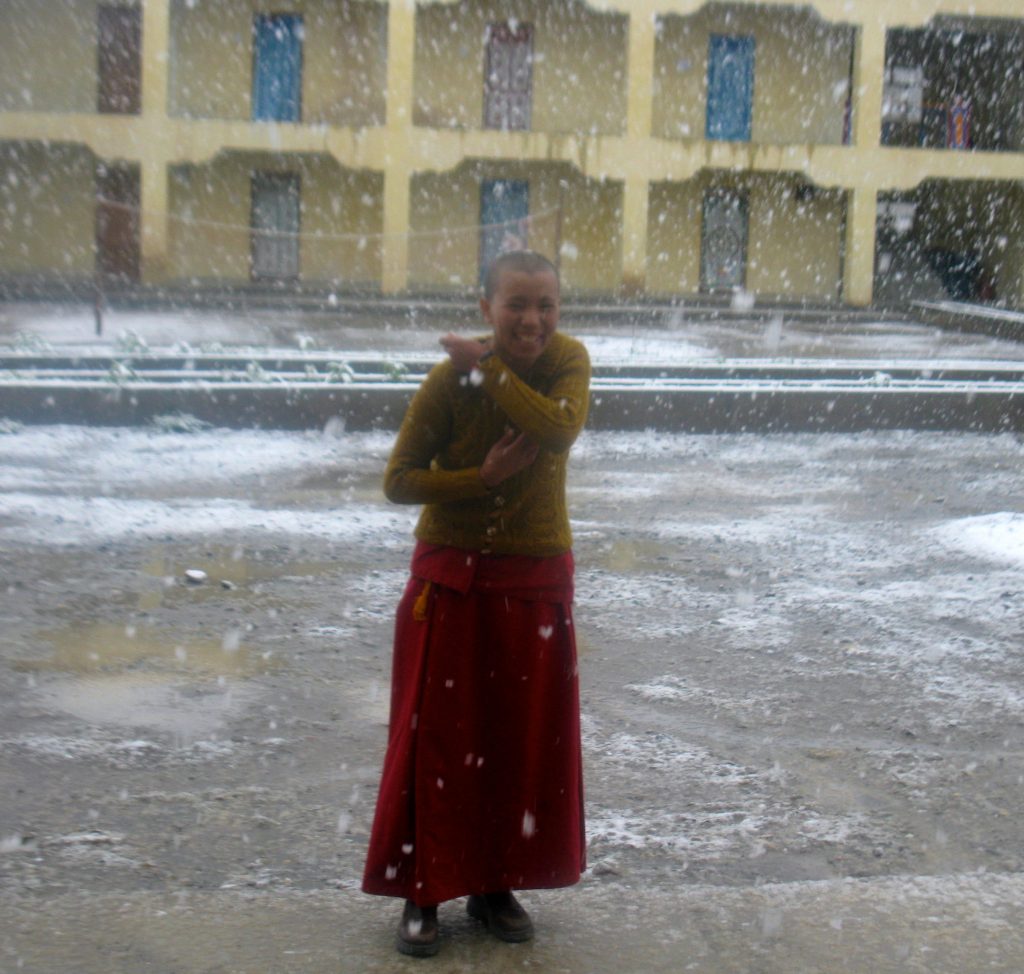
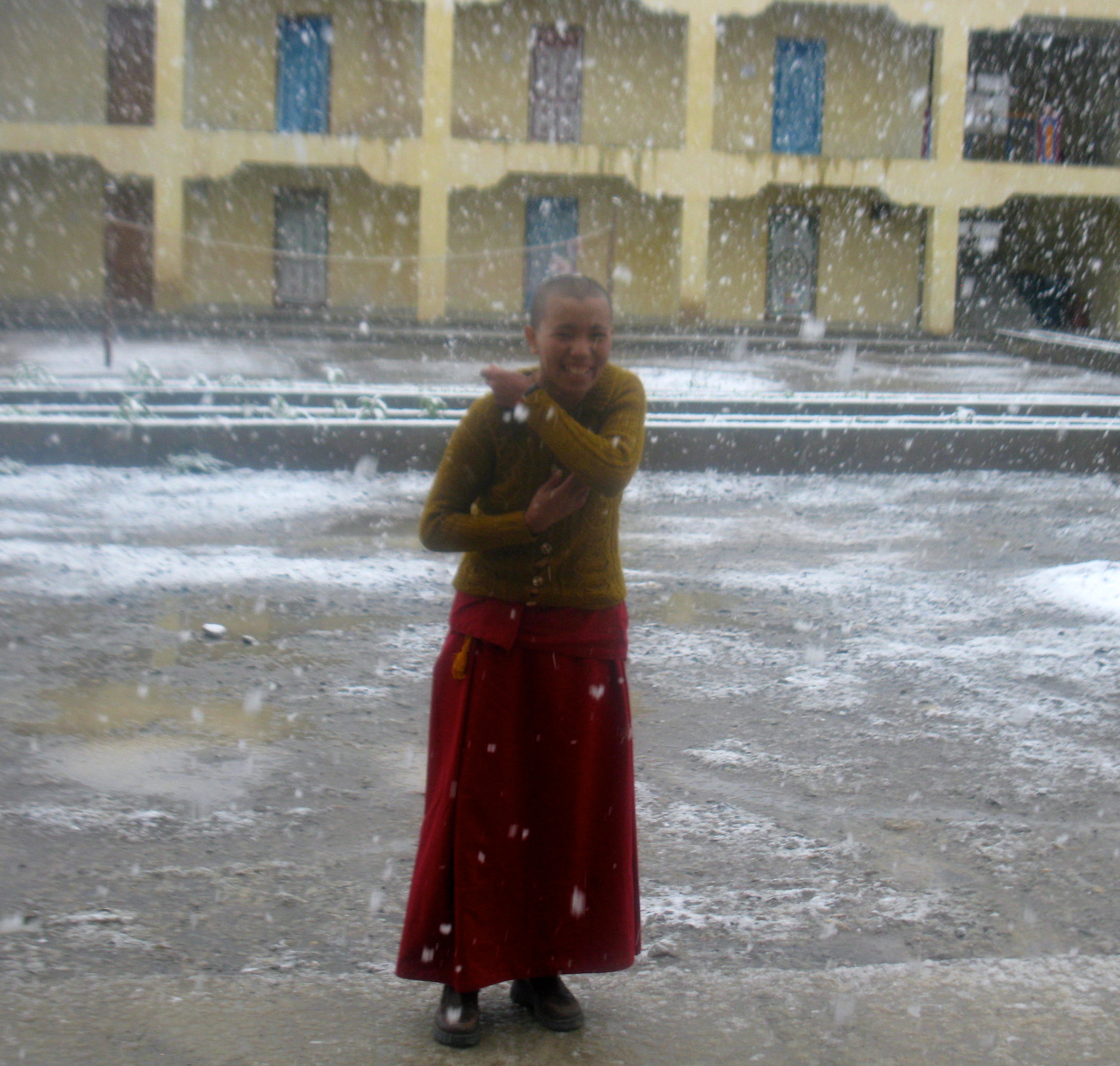
Tibetan Buddhist nun in snowfall at Sherab Choeling NunneryThe nuns have difficult living conditions. They often face long harsh winters and heavy snowfalls. During winter the region is cut off from neighboring villages so the nuns must stock up their daily supplies well before the onset of cold weather.Tibetan Buddhist nun working in kitchen

During the coldest months, the nuns hold their classes, prayers and meetings in the kitchen because it is warmer and helps to save wood.building prayer hall Sherab Choeling Nunnery
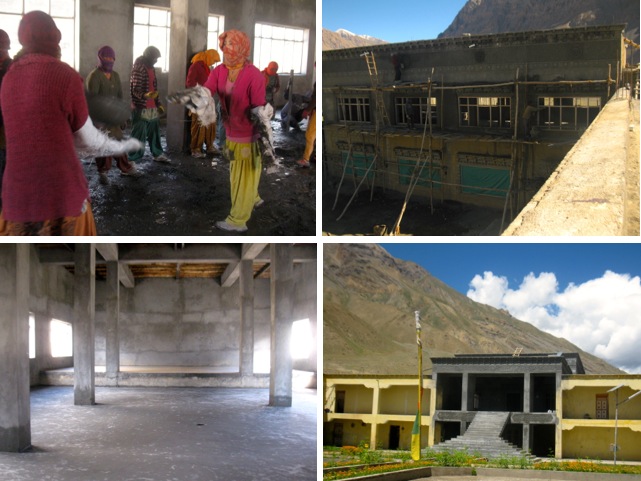
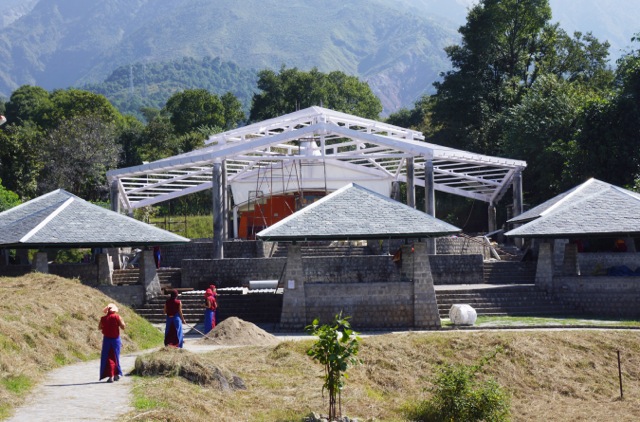
This year, the nuns were able to do more work to complete the new prayer hall. Construction of the prayer hall began several years ago but was suspended in 2012 for lack of funds. The new prayer hall is nearly finished with plans to turn the old nunnery block into a small 3-room retreat center for the nuns.Tibetan Buddhist nun working in greenhouse Sherab Choeling 2014
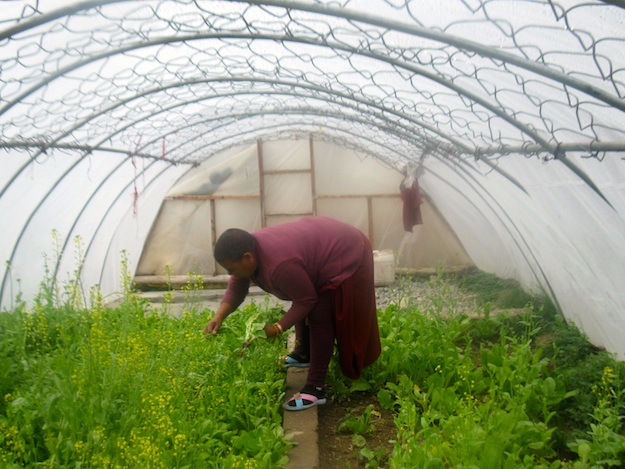
Several years ago, people from the nearby village donated a piece of land to the nuns where the nuns can grow spinach, beans and potatoes. With help of volunteers, the nuns have been able to set up three greenhouses where they mostly grow spinach. The head nun has also donated her share of a field to the nunnery so the nuns have been able to grow peas and wheat.

The nuns take a one-month annual holiday, during which most return to their families in nearby villages.

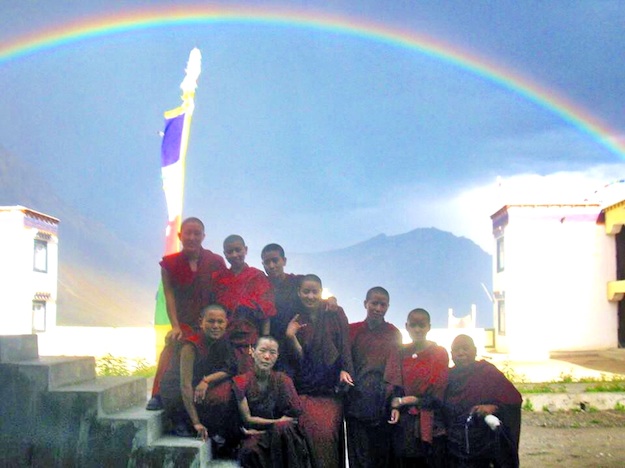
We’d like to thank all our sponsors of nuns at Sherab Choeling for their support. We still need more sponsors. To sponsor a nun please visit https://tnp.org/youcanhelp/sponsor/nuns and rainbow at Sherab Choeling
208 Tibetan Buddhist Nuns Gather For Debate

On October 4th, 208 Tibetan Buddhist nuns from 8 nunneries in India and Nepal gathered at Dolma Ling Nunnery and Institute near Dharamsala, India for the start of the month-long Jang Gonchoe debate session.

The nuns have just sent the following photographs showing the start of the event.

Tibetan Buddhist nuns arriving at debate session at Dolma Ling nunnery Oct 2013 Tibetan Nuns Project Tibetan Buddhist nuns at Dolma Ling Nunnery debate 2013 Tibetan Nuns Project

The nuns have come from the following nunneries:

  • Khachoe Gakyi Ling Nunnery in Nepal
  • Thukje Choling Nunnery in Nepal
  • Nangchoe Teney Nunnery in Kinnaur, northern India
  • Dhongyue Gatseling in Tashi Jong, India
  • Jamyang Choeling Nunnery in Dharamsala, India
  • Jangchub Choeling Nunnery in Mundgod, south India
  • Geden Choeling Nunnery in McLeod Ganj, Dharamsala, India and
  • Dolma Ling Nunnery and Institute, near Dharamsala, which is the host nunnery for this year’s annual Jang Gonchoe debate session.

This brings the number of nuns at Dolma Ling Nunnery to over 450 for this very special month-long event.

opening of Jang Gonchoe debate session

start of Tibetan Buddhist debate session Oct 2013 Tibetan Nuns Project

The chief guest for the Jang Gonchoe is Mr. Pema Chonjor, Kalon (Minister) of the Department of Religion for the Tibetan Government.

Monastic debate is of critical importance in traditional Tibetan Buddhist learning. Through debate, the nuns test and consolidate their classroom learning with the motivation of ending suffering for all sentient beings.

The Jang Gonchoe debate session provides a tremendous opportunity for the nuns to practice this ancient form of learning and for many, it an essential component of working towards their Geshema degree, equivalent to a PhD in Tibetan Buddhism.

Tibetan Buddhist nuns in debate courtyard with new roof

As you can see from the photos, the debate courtyard at Dolma Ling nunnery is a wonderful space where the nuns can debate year-round, regardless of the weather and the season. The photos clearly show the new metal roof that will protect the nuns from the hot Indian sun, the torrential monsoon rains and the other extreme weather in the region.

The Tibetan Nuns Project is extremely grateful to all our supporters who have helped make this event possible through the funding of scholarships to enable nuns to attend, the funding of the creation of the debate courtyard space and also the funders for the debate courtyard roof.

The former soft-cover roof for the courtyard was destroyed in extreme weather. In order to have a new roof in place in time for the start of this event, the Tibetan Nuns Project took out a loan and rushed to create a permanent metal roof for the courtyard.

Tibetan Buddhist nuns at Dolma Ling working to build the new roof for the debate courtyard. Tibetan Nuns Project

As with all the construction projects at Dolma Ling Nunnery, such as the retreat huts and the roof of the debate courtyard, the nuns themselves work tirelessly. This is one of many photos showing the nuns working to get the new permanent roof ready for the start of the Jang Gonchoe debate session on October 4th.

We are still seeking support for both scholarships and the roof fund.

Click Here to Donate Now!

To donate you can:

  • Click here to donate online now
  • Call our office in Seattle at (206) 652-8901 10 am to 4 pm, PST weekdays
  • Mail a check to 815 Seattle Boulevard South #216, Seattle, WA 98134
 USA
A Tibetan Buddhist nun helps build roof for debate courtyard at Dolma Ling Nunnery  Tibetan Nuns Project

A Tibetan Buddhist nun helps build roof for debate courtyard at Dolma Ling Nunnery. To complete the project in time for the annual debate event, the Tibetan Nuns Project had to take a loan. We are seeking donations to help with our roof fund.

Background:
The Tibetan Nuns Project was established over 2 decades ago to support a tremendous influx of nuns escaping from Tibet in search of religious and educational freedom. Ranging in age from early teens to mid-80s, they come from all parts of Tibet and from many different backgrounds. Many nuns suffered severely from their long, arduous and often dangerous escape to India. In most cases, the nuns have arrived without money or possessions to a community already struggling to support itself. These women wish nothing more than to live, study, practice, and teach in accordance with their spiritual beliefs.

nuns working on metal roof debate courtyard Tibetan Nuns Project

The debating courtyard needs a roof

One of the final construction projects at Dolma Ling Nunnery located near Dharamsala, India is the creation of a permanent roof for the debate courtyard.

Please help us complete the roof of the debating courtyard at Dolma Ling Nunnery

Please help us complete the roof of the debating courtyard at Dolma Ling Nunnery

Monastic debate is of critical importance in traditional Tibetan Buddhist learning. Through debate, the nuns test and consolidate their classroom learning with the motivation of ending suffering for all sentient beings.

Each year in October, the Tibetan Nuns Project supports a special debating event, called the Jang Gonchoe at which hundreds of nuns from nunneries throughout India and Nepal come together to practice this ancient form of learning. For many, this is an essential component of working towards the Geshema degree, equivalent to a PhD in Tibetan Buddhism.

To support this core learning activity, we need to build a large covered space where large numbers of nuns can congregate to debate.

The former soft-cover roof for the courtyard was destroyed in extreme weather and we are now seeking funds to create a permanent metal roof for the courtyard so that hundreds of nuns can debate, regardless of the weather and the season. The roof will protect the nuns from the hot Indian sun, the torrential monsoon rains and the other extreme weather in the region.

Click Here to Donate Now!

The building process for the roof is already underway thanks to the generosity of our supporters. The concrete columns and supporting pillars are complete. The Tibetan Nuns Project has taken a loan and is rushing the project ahead in order to have the roof in place in time for the Jang Gonchoe debating session which starts on October 4, 2013.

The total cost of the project is US $65,000.

Please help us finish the roof by contributing to our roof fund.

To donate you can:

  • click here to donate online now
  • call our office in Seattle at (206) 652-8901 any time from 10 am to 4 pm, PST weekdays
  • mail a check to 815 Seattle Boulevard South #216, Seattle, WA 98134
 USA

Tibetan Buddhist nuns debatingBackground:
The Tibetan Nuns Project was established over 2 decades ago to support a tremendous influx of nuns escaping from Tibet in search of religious and educational freedom. Ranging in age from early teens to mid-80s, they come from all parts of Tibet and from many different backgrounds. Many nuns suffered severely from their long, arduous and often dangerous escape to India. In most cases, the nuns have arrived without money or possessions to a community already struggling to support itself. These women wish nothing more than to live, study, practice, and teach in accordance with their spiritual beliefs.