
A two-day “Conference on Women’s Empowerment in Tibetan Buddhism” took place on May 20–21, 2026 in Dharamsala, India. This landmark gathering sought to highlight His Holiness the 14th Dalai Lama’s vision and contributions toward strengthening the education, ordination, and recognition of Buddhist women. The photos are by the Dolma Ling Media Nuns.
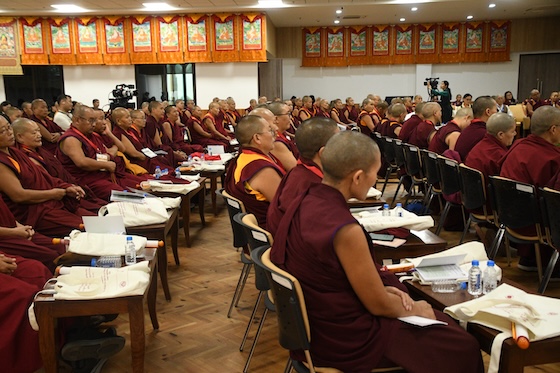
The two-day event was convened with three principal objectives: to reflect on His Holiness the Dalai Lama’s commitment to women’s empowerment in Tibetan Buddhism, to review ongoing developments in women’s education and recognition, and to strengthen collaboration among monastic institutions, educational centers, and lay communities.
The conference was jointly organized by the Central Tibetan Administration’s Department of Religion and Culture and the Dalai Lama Trust, with support from the Tibetan Nuns Project and the Tibetan Women’s Association. It was part of the ongoing celebrations of His Holiness the Dalai Lama’s 90th birthday and the Year of Compassion.
Held at Dharamsala’s Library of Tibetan Works and Archives, the conference brought together 86 participants from 13 nunneries in India and Nepal, including 69 Geshemas and 17 nuns representing all schools of Tibetan Buddhism as well as the Yungdrung Bon tradition.
The Tibetan Nuns Project was represented by former Kalon Rinchen Khando Choegyal, our Founding Director and Special Advisor; Youdon Aukatsang, the Director of the Tibetan Nuns Project in India and member of the 17th Tibetan Parliament-in-Exile; and Geshema Delek Wangmo, Academic Principal of Dolma Ling Nunnery and Institute.
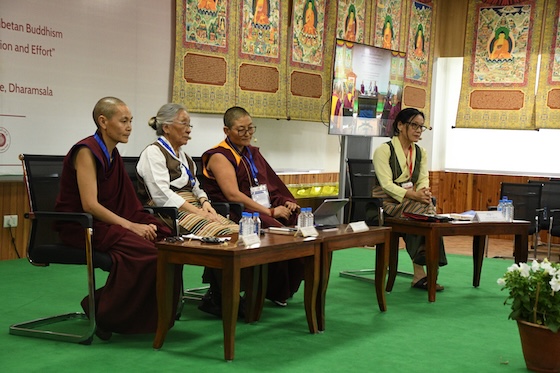
Rinchen Khando Choegyal, TNP’s Founding Director and Special Advisor second from left and Youdon Aukatsang, the Director of the Tibetan Nuns Project in India, far right.
Key discussions focused on the institutionalization of the Geshema degree, the recognition of 21 Tibetan and Indian female Mahasiddhis, and the possibility of establishing Bhikshuni ordination within the Tibetan Mulasarvastivada Vinaya tradition.
The conference also deliberated on the curriculum development in nunneries, institutional support for the Tibetan Nuns Project, the leadership role of Geshemas in society and monastic institutions, and prospects for greater international recognition of Buddhist women.
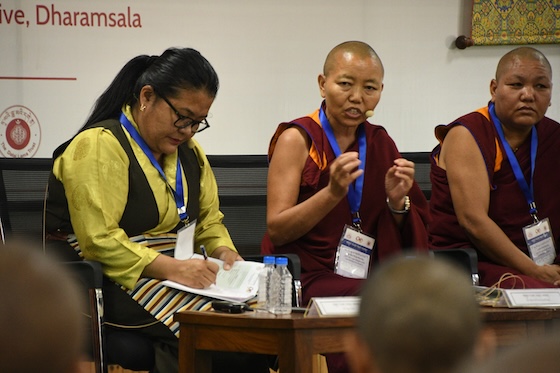
Geshema Delek Wangmo, Academic Principal of Dolma Ling Nunnery and Institute, spoke at the conference.
The conference was inaugurated by Kyabje Kundeling Tatsak Jedrung Rinpoche and Sikyong Penpa Tsering attended the closing ceremony. Other attendees included the Department of Religion and Culture Secretary Dhondul Dorjee; Dalai Lama Trust Secretary Jamphel Lhundup; scholar and translator Geshe Thupten Jinpa; Tibetan Women’s Association President Tsering Dolma; Library of Tibetan Works and Archives Director Geshe Lhakdor; Ven. Thupten Yarphel; Additional Secretary of the Department of Education (CTA) Tenzin Pema; and Head of the Women’s Empowerment Desk at the Department of Finance (CTA) Tsering Kyi.
Recognizing His Holiness the Dalai Lama’s Leadership and Vision
The event recognized the lifelong efforts of His Holiness the 14th Dalai Lama to support gender equality and expand opportunities for women within Tibetan Buddhism. The conference aimed to examine “His Holiness’s vision and concrete contributions toward strengthening the education, ordination, and recognition of Buddhist women.” His Holiness the Dalai Lama is the patron of the Tibetan Nuns Project.

The conference brought together 86 participants from 13 nunneries in India and Nepal, including 69 Geshemas and 17 nuns representing all schools of Tibetan Buddhism as well as the Yungdrung Bon tradition.
“Within the Tibetan Buddhist tradition, His Holiness the Dalai Lama has long been an advocate for the empowerment and equal rights of women, particularly nuns,” said Jamphel Lhundup, Secretary of the Dalai Lama Trust.
“He has given numerous teachings on the importance of equality and has taken significant steps to re-establish the lineage of women’s monastic ordination… Over time, he also reintroduced the historic title of ‘Geshema’, and in 2016, the first Geshema degrees were conferred by him at Drepung Monastery in southern India. Today, there are more than 120 Geshemas, and this recognition underscores the high esteem and respect accorded to Tibetan nuns. All these achievements bear witness to the profound impact of the grace and vision of His Holiness the Dalai Lama,” Jamphel Lhundup said.
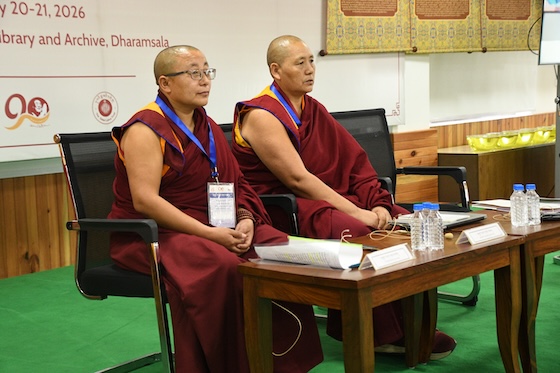
The conference included 69 Geshemas. Ten years ago, in 2016, the first Tibetan Buddhist nuns earned their Geshema degrees. That historic occasion was a dream come true for the 20 pioneering nuns, most of whom were illiterate when they escaped from Tibet. The Geshema degree is the highest level of training in the Gelug tradition and is equivalent to a PhD in Tibetan Buddhist philosophy.
During the closing ceremony, Sikyong Penpa Tsering stressed that it was due to the astute and visionary leadership of His Holiness the Dalai Lama that Tibetan Buddhism has continued to be preserved in exile, including the unprecedented conferment of Geshema degrees, regarded as a landmark reform in Tibetan Buddhism.
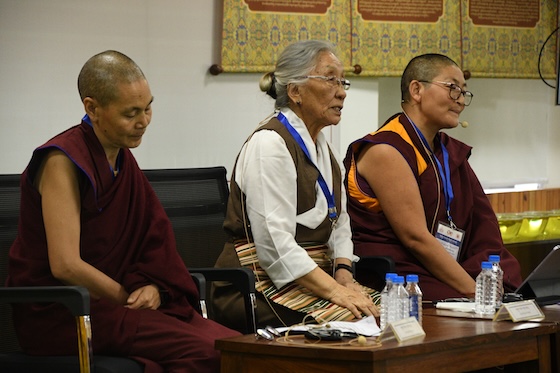
Rinchen Khando Choegyal, the Tibetan Nuns Projects’s Founding Director and Special Advisor, spoke at the conference.
The Tibetan Nuns Project Higher Studies Fund
One of the projects that the Tibetan Nuns Project is working on now is the Higher Studies Fund, a quasi-endowment dedicated to supporting the Geshema degree process as well as post-graduate training in Tantric Studies.
An increasing number of nuns in the Gelug tradition are seeking higher education. They are taking the rigorous four-year Geshema exams in record numbers, and many also wish to pursue post-graduate training in Tantric Buddhism as part of a program launched by the Tibetan Nuns Project in 2017.
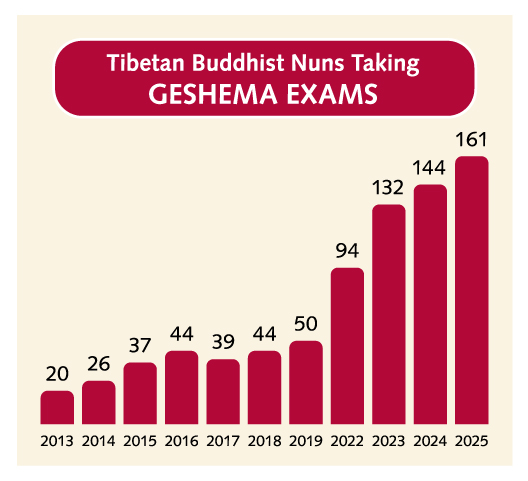
The number of nuns taking the four-year Geshema exams has tripled since 2019. The small fund we created in 2021 no longer covers the costs for the growing numbers or rising food and transport. Please support the Higher Studies Fund, a quasi-endowment that will support Tibetan Buddhist nuns who wish to become Geshemas, teachers, and leaders and to preserve their religion, culture, and language.
Unfortunately, the modest Geshema Endowment Fund that the Tibetan Nuns Project established in 2021 can no longer support the growing number of nuns and the rising costs of transportation and food. Our goal is to build up the Higher Studies Fund so that both the Geshema exam process AND the Tantric Studies program are self-sustaining.
Through higher studies, Tibetan Buddhist nuns can become fully qualified teachers of their traditions and help preserve Tibet’s rich religion and culture.
Learn more and donate to Higher Studies here.
The mission of the Tibetan Nuns Project is to educate and empower nuns of the Tibetan Buddhist tradition as teachers and leaders; and to establish, strengthen, and support educational institutions to preserve the Tibetan religion and culture. You can see all our current projects here.