One of our biggest projects in 2026 is to build suitable accommodation for elder nuns at Dolma Ling Nunnery, the largest of the seven nunneries we support in India. As one of the elder nuns said, “A proper senior home would transform our lives, giving us safety and dignity in the years we have left.”
The project was launched in April 2025. So far, thanks to you, we’ve raised $487,346, leaving $207,478 still to raise to complete the three-story building that will house 60 older nuns.
The initial plan was to build a two-story building, but the nuns appealed for a third floor so that more elder nuns could be accommodated. By adding a third floor, we increased the capacity from 40 nuns to 60 nuns at an extra cost of about $40,000.
As they age, the elder nuns have a number of special needs and mobility issues, but they remain an important source of inspiration and guidance. We need your help to create a comfortable living space for older nuns while fostering their sense of community and caring for each other. You can donate at tnp.org
The aim of this project is to provide more independent accommodation for elderly nuns who have been living in quite basic rooms in Dolma Ling for over 30 years. Having completed their education and many of them having worked for the nunnery or held positions of responsibility for many years deserve a safe and comfortable room in which to live. This building is set very much in the main campus of the nunnery, but offers a peaceful place with wonderful views up to the mountains and down over the nunnery.
Progress Report

Deepest thanks to the 392 donors to this project. As of August 25, 2026, we have $207,478 still to raise to help the elder nuns at Dolma Ling.
The foundation was completed before the monsoon season in 2025 and was left to settle until we restarted the project in December of the same year. The committee was not happy with the old contractor, and hired a new contractor. The new contractor repaired the foundation, established adequate drainage around the back of the building, and constructed the septic tank.
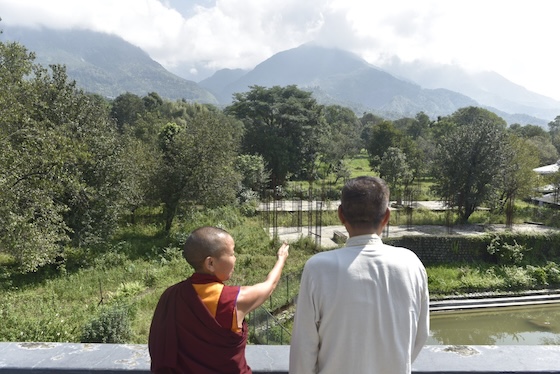
Geshema Delek Wangmo, the principal of Dolma Ling, shows Sikyong Penpa Tsering, the political leader of the Central Tibetan Administration, the foundations for the housing for elder nuns during his visit in late August 2025. Photo tibet.net
Work was well underway on the original two-story structure when the nuns’ committee appealed to us to increase the building’s height by one extra floor, thus providing an additional ten rooms to accommodate up to 20 nuns. Because the land prices are so high in this area now, it was felt that rather than later needing to find land on which to construct a further building, it would be better to add an extra floor of accommodation now.
In March, some of the senior nuns who will live in the new building, visited the building site with the team and the two nuns who are in charge of monitoring the work. The elder nuns were very happy to see the building’s progress and expressed their gratitude to the donors and for all the work being done for this project. At the end of the visit, they offered a short prayer at the site for the successful completion of the building.
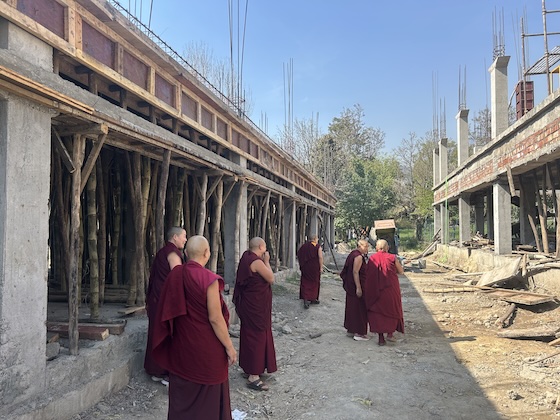
In March, some of the elder nuns visted the building site to see the progress on what will eventually be their home within the nunnery. They offered prayers for the successful completion of the project.
Despite the monsoon, the work is continuing steadily. Now in August, the structure has reached its final height, and the contractor has started the brickwork to build up the rooms. At this stage, the nuns made a careful appraisal of the provision within the rooms for storage and windows and, in consultation with the architects, revised the lay out to increase the size of the windows, provide an alcove in which set wooden shelves to accommodate their religious objects, pictures, and books and to build in a brick and concrete closet which will have wooden doors made as part of the furnishings.
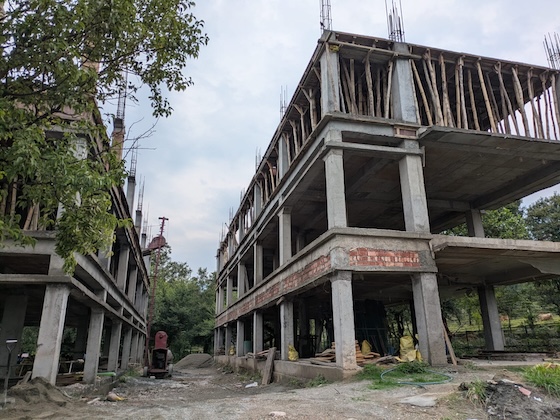
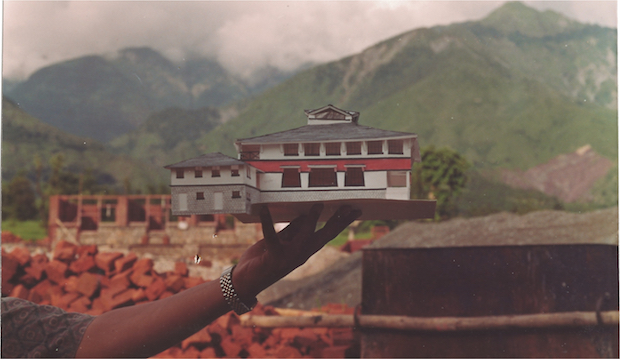
Here is a photo taken on June 26, 2026 showing the building progress for the three-story building to house 60 elder nuns at Dolma Ling Nunnery.
The Need for Housing for Elder Nuns
The Tibetan Nuns Project was founded almost 40 years ago in 1987. The nuns are aging, some are ill, and others have mobility issues. The elder nuns need suitable accommodation so that they can live comfortably within the nunnery which is their permanent home.
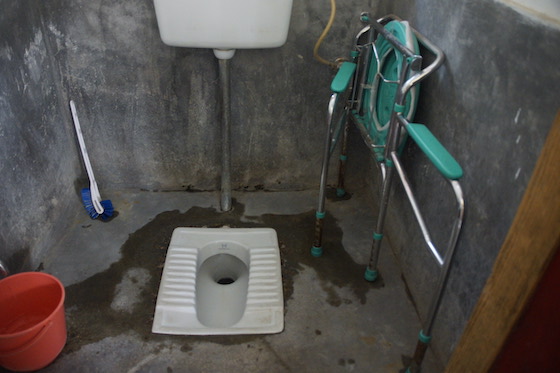
Many older nuns have mobility issues. The elder nuns currently use Indian-style squat toilets with the aid of potty seats for support. Access to Western-style toilets would greatly ease their daily lives.
Dolma Ling is overcrowded. The nunnery was built to accommodate 200 refugee nuns in double-bed rooms, but is now home to 302 nuns, so the nuns are very cramped. The 55 junior nuns live three to a room, giving them very little space. Living three to a room is very difficult and requires cooperation as they cannot all stand up and dress at the same time! The majority of senior nuns continue to share two per room.
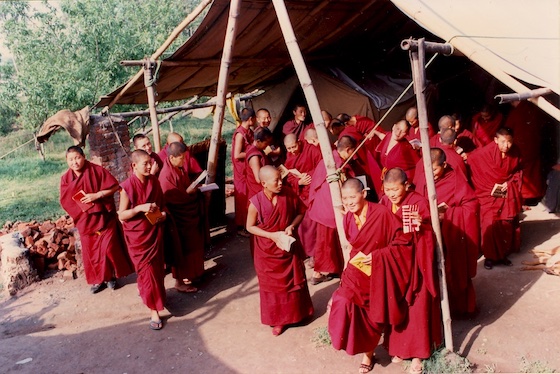
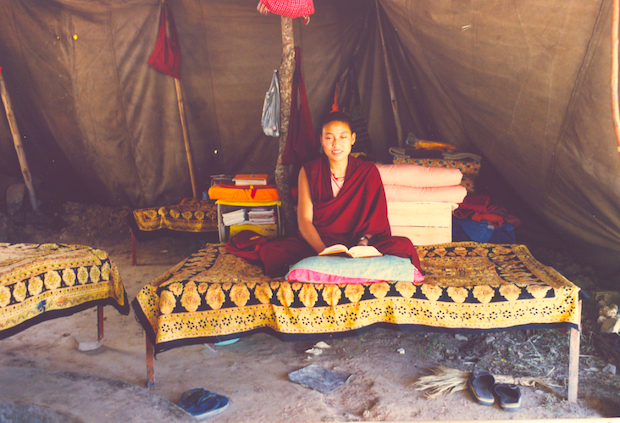
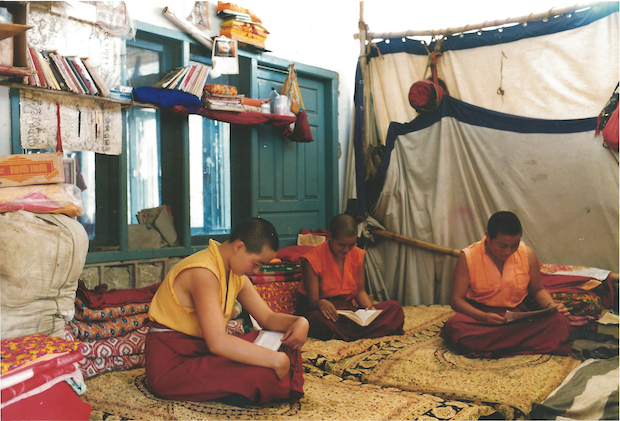
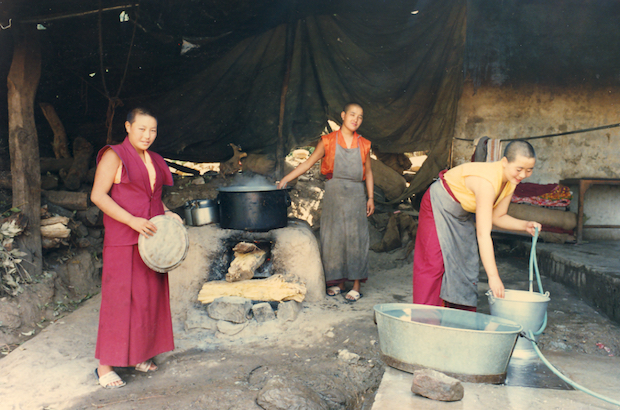
Archival photo of Tibetan refugee nuns before Dolma Ling was built in India. The nunnery is now home to about 302 nuns, but it was built to accommodate 200, so it is very cramped. The nuns want help to build safe, comfortable rooms for elder nuns.
As they age, the elder nuns have a number of special needs and mobility issues. but they remain an important source of inspiration and guidance. We need your help to create a comfortable living space for older nuns while fostering their sense of community and caring for each other.
This special building will:
- Be wheelchair accessible on the ground floor
- Have low-rise stairs for those who have difficulty climbing stairs
- Have slightly larger rooms than the regular dormitory rooms
- Have a private bathroom for each room with handrails and a Western-style toilet
- Have a small kitchenette in each room
- Be equipped with an alarm bell system for vulnerable nuns
The nuns have dedicated their lives to preserving and sharing the Buddha dharma and Tibet’s rich culture and religion. They have endured trauma and great suffering in escaping from Tibet and losing their homeland. Their lives as refugees leave them very vulnerable.
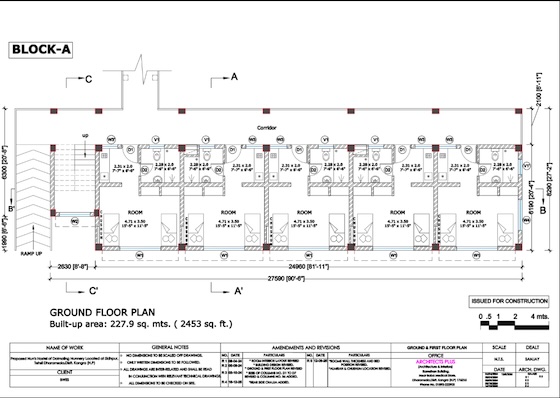
Here are the updated drawings of the room plan for the housing for elder nuns, a three-story building that will accommodate 60 older nuns.
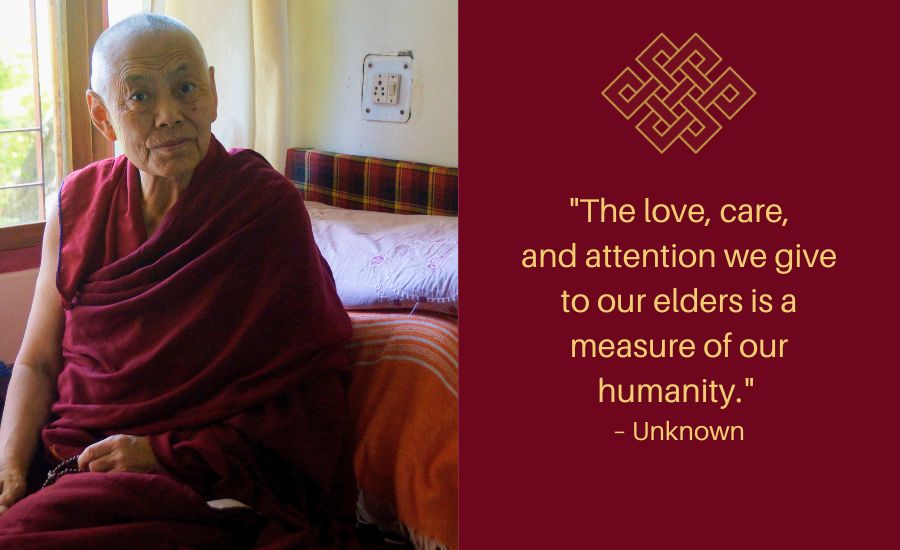
One of the elder nuns is Ani Rigzin, pictured below. She spoke about the project and what it means to her. “I escaped Tibet after torture took everything from me, my family, my home, my culture. Even now, with failing eyesight and constant pain, I carry those scars. Dolma Ling is my only family, the only home I have left. With your support, a senior home here would mean I could spend my last years with dignity and peace, surrounded by my sisters. This would be the greatest gift of my life.”
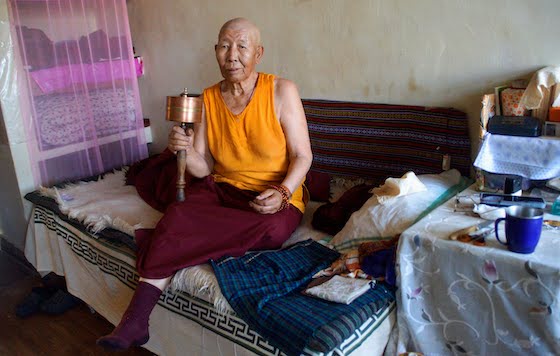
Ani Rigzen is one of the elder nuns at Dolma Ling, carrying with her years of quiet devotion and peace. She said, “With your support, a senior home here would mean I could spend my last years with dignity and peace, surrounded by my sisters. This would be the greatest gift of my life.”
Ani Rigzen said, “As I grow older, my health weakens, my eyesight fails, my body aches, and even using the toilet has become a struggle. Many of my sisters are in their 70s and 80s, facing the same hardships. A proper senior home would transform our lives, giving us safety and dignity in the years we have left.”

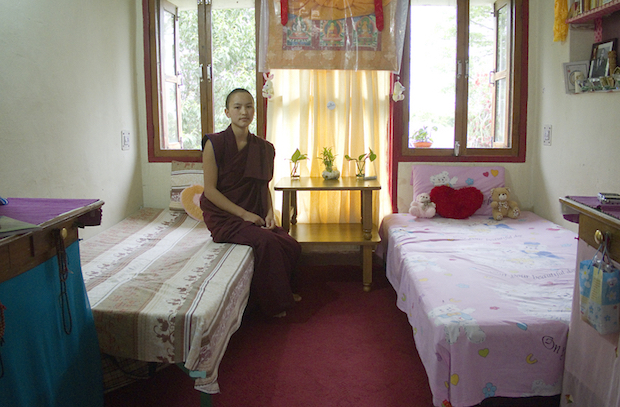
Ani Tashi Yangzom, aged 77, rests quietly in her humble room. She lives with another nun while finding strength and serenity in her daily routine.
Despite the heartache of losing their homeland, the senior nuns at Dolma Ling have persevered through the hardships of life in exile, and some have attained the highest degree in their tradition, the Geshema degree. The nunnery is their permanent home. The nunnery is not like a university or college from which graduates pass out and leave. Many of Dolma Ling’s Geshemas are now working as teachers in schools and other institutions. However, Dolma Ling is their only home and they will return when their term of service is concluded or they retire.
We still need to raise roughly $207,000 to complete this big project.
Please help build safe, comfortable rooms for elder nuns!
To help you can:
- Make a gift online
- Call our office in Seattle, U.S. at 1-206-652-890
- Mail a check to The Tibetan Nuns Project, 815 Seattle Boulevard South #418, Seattle, WA 98134 U.S. (note that it is for the Housing for Elder Nuns)
- Donate securities
- Leave a gift in your will to the Tibetan Nuns Project
“Many years ago, I realized I couldn’t do much to change the world, but with the Tibetan Nuns Project, I could move the dial a bit for one woman on the other side of the world from me. I am grateful for the opportunity to do so.” Cathy