Tag Archives: Tibetan calendar

The Tibetan Calendar vs. the Gregorian Calendar

The primary difference between the Tibetan calendar and the Gregorian calendar is that the Tibetan calendar uses both the moon phases and solar cycles, whereas the Gregorian calendar uses only the sun.

The Tibetan calendar is thousands of years old and extremely complex. It is used in daily life to calculate the dates for religious holidays, various Buddhist offering ceremonies or tsog, and both auspicious and inauspicious days. It differs from the Gregorian calendar, which is the international standard used almost everywhere in the world for civil purposes. The Gregorian calendar modified the earlier Julian calendar, reducing the average year from 365.25 days to 365.2425 days and spacing leap years.

While the Gregorian calendar is a purely solar calendar, the Tibetan calendar (Tibetan: ལོ་ཐོ, Wylie: lo-tho) is a lunisolar calendar. This means that the Tibetan year has either 12 or 13 lunar months, each beginning and ending with a new moon. A thirteenth month is added every two or three years so that an average Tibetan year is equal to the solar year.
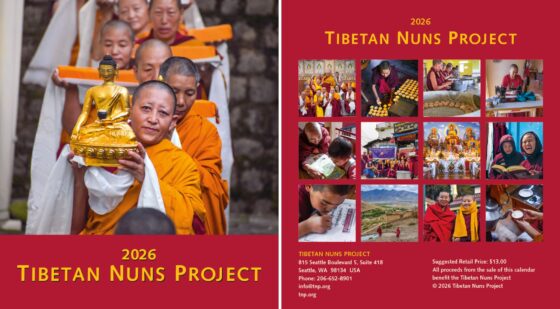
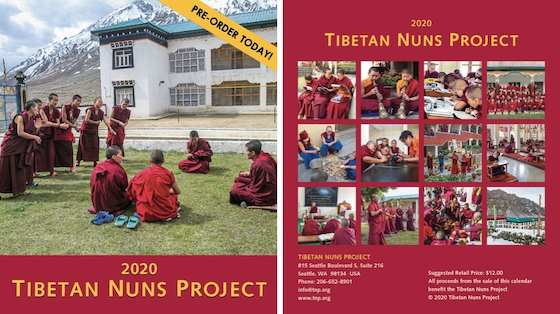
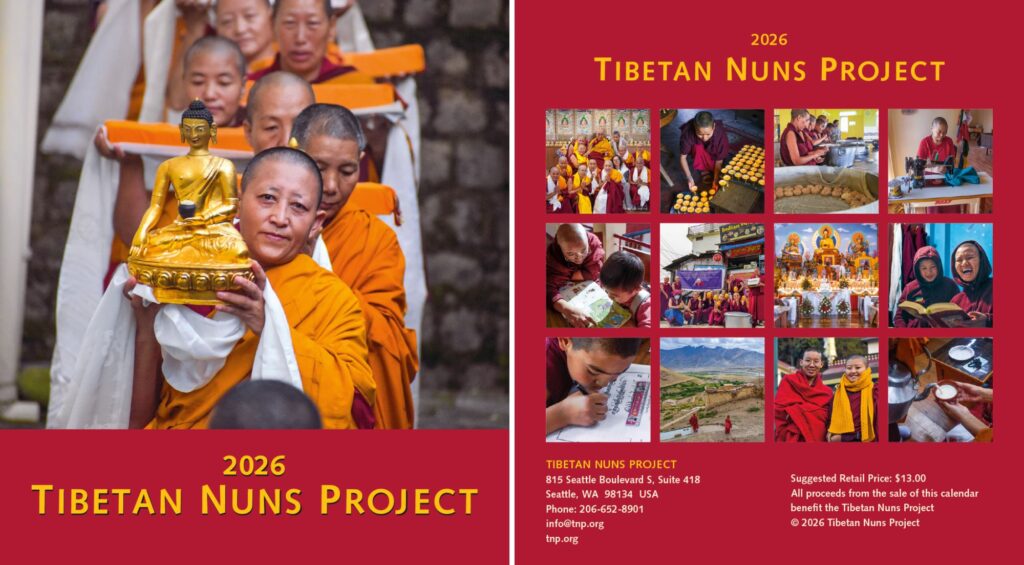
2026 Calendar front and back

Our 2026 calendar is available through our online store at tnp.org and all proceeds help provide education, food, shelter, clothing, and healthcare to Tibetan Buddhist nuns in India.

The Tibetan Calendar

In the traditional Tibetan calendar, each year is associated with three things: an animal, an element, and a number. For instance, the Tibetan year of the Fire Horse, 2153 begins on February 18, 2026. This is Losar, the Tibetan New Year.

The Tibetan calendar operates with a 60-year cycle of five elements and twelve animals. The animals in the Tibetan calendar are similar to those in the Chinese zodiac and are in the following order: Mouse, Ox, Tiger, Rabbit, Dragon, Snake, Horse, Sheep, Monkey, Bird, Dog, and Boar. The five elements are in this order: Wood, Fire, Earth, Iron, and Water.

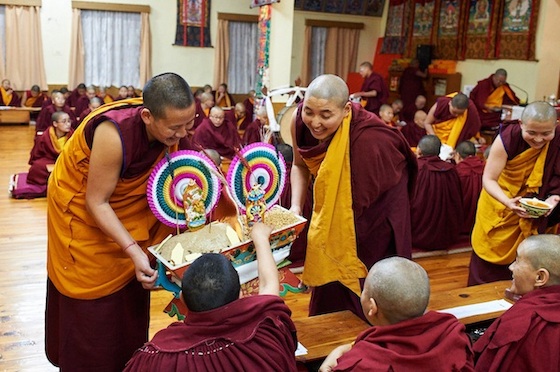
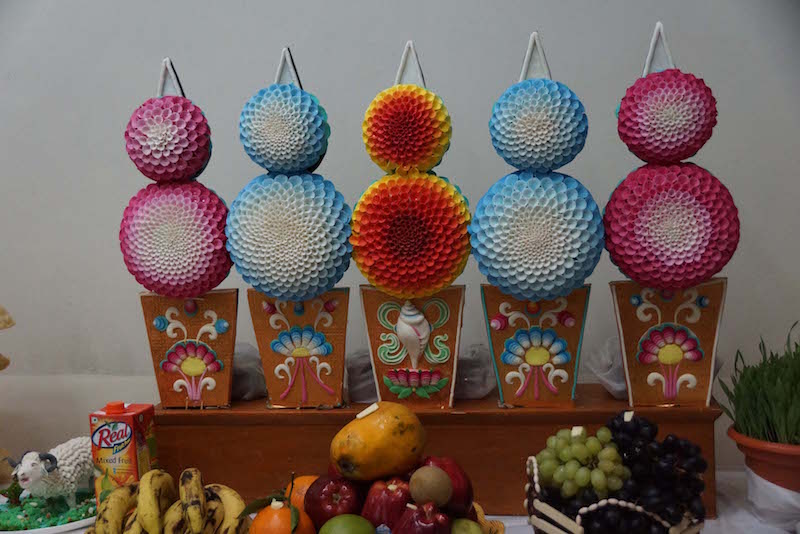
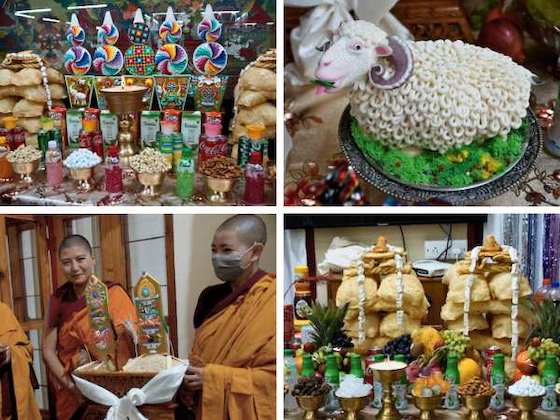
Losar offering tables

Here are some Losar offerings for Tibetan New Year. The nuns make elaborate butter sculptures of flowers and animals like this sheep, which corresponded to the animal associated with that year.

The 60-year Tibetan cycle is called Rabjung (Tib. རབ་བྱུང་). So each Tibetan year is properly identified by three parts. The first two, the Element and Animal, correspond roughly to similar identifiers used in the Chinese calendar. The third part is the Rabjung, the number of the 60-year cycle. The first year of the first Rabjung cycle started in 1027.

Tibetan New Year or Losar falls in either February or March, so each year of a Rabjung cycle spans two Western years. This is why each Tibetan Nuns Project calendar goes partway into the next Western year, to include Losar. Thus, our 2026 calendar spans from January 1, 2026, to the end of February 2027, to accommodate Losar which falls on February 7th in 2027 and marks the start of the Year of the Fire Sheep, 2154, according to the Tibetan calendar.

February 2026 image from Tibetan Nuns Project calendar

Here is one of the images from Tibetan Nuns Project 2026 calendar. Sales help to support the nunneries and nuns.

The Tibetan calendar and almanac entail five calendar features: the lunar weekday, the date of the lunar month, the moon’s constellation, the combination period, and the action period. The first two are also used to bring the lunar and solar calendars into harmony.

For a deeper dive into the complexity of the Tibetan calendar, see this article by Dr. Alexander Berzin. 

The Story of the Tibetan Nuns Project Calendar

Each year, the Tibetan Nuns Project sells a wall calendar through our online store. Our  2026 Tibetan Nuns Project calendar is available for purchase. The cost is $13, and all proceeds go to support Tibetan Buddhist nuns at seven nunneries in northern India, as well as some nuns living on their own.

The Tibetan Nuns Project calendar was started over 20 years ago as a fundraising and friend-raising tool to help support hundreds of Tibetan Buddhist nuns at nunneries in northern India.

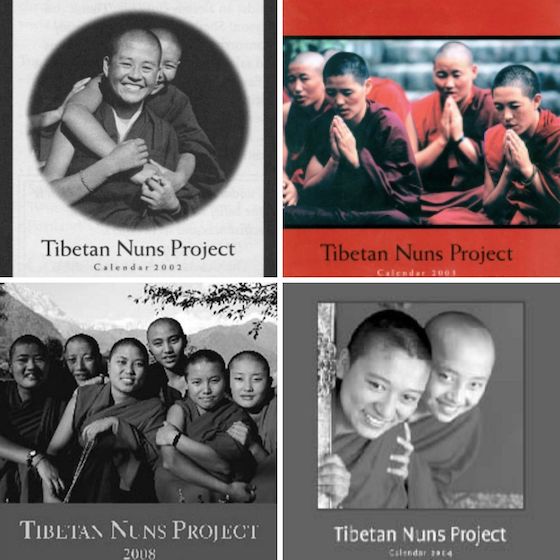
selection of old Tibetan Nuns Project charity calendars

A selection of some of the early Tibetan Nuns Project charity calendars from 2002 to 2008. The Tibetan Nuns Project wall calendar is now full color and uses photos taken by the nuns themselves.

Each summer, the astrologers at the Tibetan Medical and Astrological Institute in Dharamsala (also known as Men-Tsee-Khang) supply us with the ritual and holy dates for the coming Tibetan year. It should be noted that the timings of the solstices and equinoxes in the calendar are based on north-eastern India where the nuns live, so they may be slightly different from where you are.

The Tibetan Nuns Project calendar uses almost exclusively photographs taken by the nuns themselves. These photographs provide an intimate insight into the daily lives and religious and cultural practices of the nuns.

October 2026 image Tibetan Nuns Project calendar

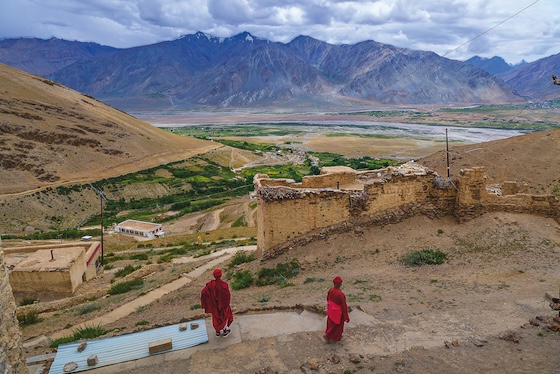
The October 2026 image from Tibetan Nuns Project calendar. This photo was taken from Dorjee Zong Nunnery in Zanskar.

Throughout the year, the nunneries that we support send a selection of photos for possible inclusion in the upcoming calendar. Once all the photos are gathered together, we make a final selection.  We try to balance the images, choosing at least one photograph from each nunnery. We select photographs that are windows into the nuns’ lives.

Each photo is captioned and paired with quotations from inspirational people, such as His Holiness the Dalai Lama.

“It’s really exciting to open up emails from India and see the photos sent by the nuns for the calendar,” says Lisa Farmer, Executive Director of the Tibetan Nuns Project.

The proceeds from the sale of the Tibetan Nuns Project calendar are used to support approximately 900 Tibetan Buddhist nuns and seven nunneries in India. The calendar cost $13 plus shipping and is 6.5″ x 7″.

Thank you for buying our 2026 Tibetan Nuns Project calendar and helping the nuns!

Important Tibetan Buddhist Holidays in 2026

Here is a list of important Tibetan Buddhist holidays in 2026, plus other major dates in the Tibetan calendar.

2026 Calendar front and back

The 2026 Tibetan Nuns Project calendar is available through our online store at tnp.org and has the Tibetan lunar calendar, ritual dates, inspirational quotes, phases of the moon, and major US and Canadian holidays. The cost is $13, and all proceeds help the nuns.

Each year, the Tibetan Nuns Project publishes a calendar with beautiful images by the nuns. By purchasing the calendar, you will help provide education, food, shelter, and healthcare for approximately 900 Tibetan Buddhist nuns residing in northern India.

February 18, 2026: Losar, Tibetan New Year

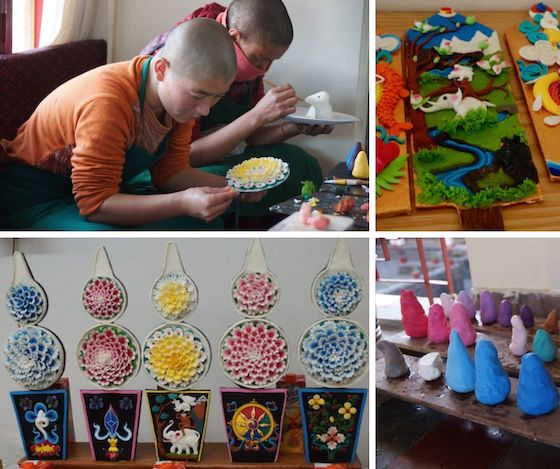
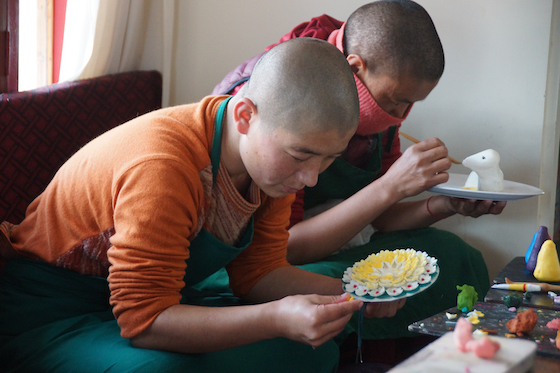
Tibetan butter sculptures for Losar

The nuns at Dolma Ling make elaborate and colorful butter sculptures of flowers and Buddhist sacred symbols to decorate an offering table for Losar or Tibetan New Year. Photos by the Dolma Ling Media Nuns.

Losar, or Tibetan New Year, is a very special time of year. In the traditional Tibetan calendar, each year has an animal, an element, and a number.

This year, Losar falls on February 18, 2026. According to the Tibetan calendar, it is the start of the year of the Fire Horse, 2153.

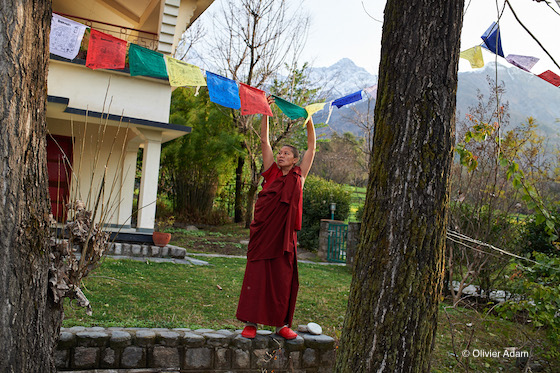
Tibetan Buddhist nun, prayer flags, hanging prayer flags
Tibetans hang new prayer flags and burn incense at Tibetan New Year. Photo courtesy of Olivier Adam

The animals in the Tibetan calendar are similar to those in the Chinese zodiac and are in the following order: Mouse, Ox, Tiger, Hare, Dragon, Snake, Horse, Sheep, Monkey, Bird, Dog, and Boar. The five elements are in this order: Wood, Fire, Earth, Iron, and Water.
Losar-related rituals fall into two distinct parts. First, Tibetans bid farewell to the old year and release themselves from all its negative or bad aspects. Part of this involves cleaning one’s home or room from top to bottom.

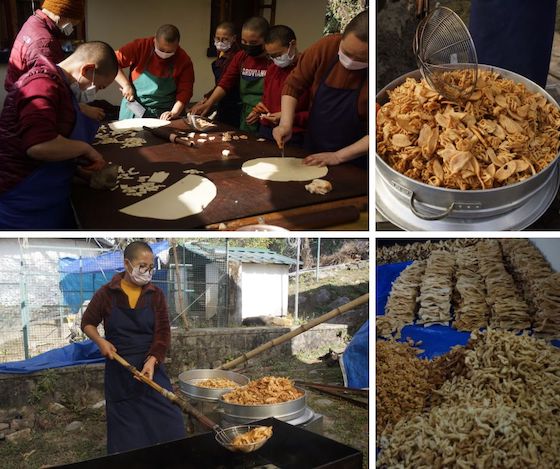
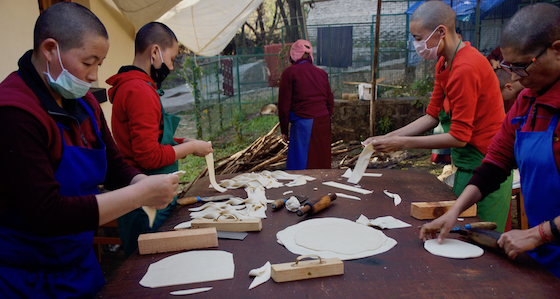
Tibetan Buddhist nuns making khapse for Tibetan New Year or Losar

Each year the nuns make lots of khapse biscuits in various shapes and sizes for Losar. These deep-fried Tibetan cookies are a staple of Tibetan New Year celebrations everywhere. Photos by the Dolma Ling Media Nuns

After that, Tibetans welcome the “Losar” or “new year” with prayers and by inviting all good, auspicious things into their homes and lives. They prepare special food such as khapse, fried biscuits, and a Losar noodle soup called guthuk. Here is a recipe for vegetarian guthuk.

At Losar, Tibetans hang new prayer flags and burn incense and fragrant juniper bows to welcome the new year. If you would like to hang Tibetan prayer flags, you can order them here. The Tibetan prayer flags sold in our online store are made and blessed by Tibetan Buddhist nuns in India.

March 10 and March 12: Tibetan Uprising Day

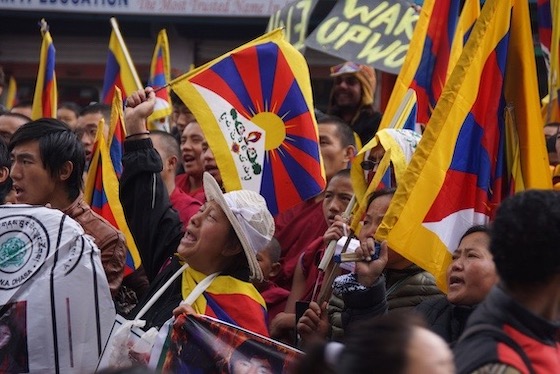
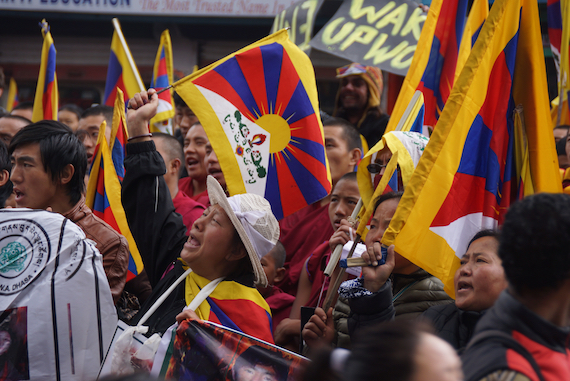
Tibetans taking part in March 10th demonstrations Dharamsala

Nuns, monks, and lay people hold Tibetan flags and banners as they take part in a demonstration in Dharamsala, India to mark March 10th, Tibetan Uprising Day. Photo courtesy of the Dolma Ling Media Nuns.

While not a Tibetan Buddhist holiday, March 10th is a very important date in the Tibetan calendar. It marks the anniversary of the Tibetan National Uprising.

In 1950, Chinese Communist forces invaded Tibet. On March 10, 1959, Tibetans attempted to take back their country with an uprising in Lhasa. The protests were crushed with brutal force.

Around the world on March 10th, Tibetans and their supporters remember and pay tribute to all those who have sacrificed their lives for Tibet’s struggle. An estimated one million Tibetans have perished and 98% of monasteries and nunneries were destroyed under the Chinese occupation.

March 12th, 2025, marks the anniversary of the Tibetan Women’s Uprising. Following the National Uprising Day on March 10th, 1959, thousands of Tibetan women gathered in front of the Potala Palace in Lhasa to demonstrate for Tibetan independence.

Read this blog post to learn more about these important dates and why Tibetans are in exile.

May 31, 2026: Saga Dawa Düchen

The most important month in the Tibetan calendar is Saga Dawa, the 4th lunar month, which runs this year from May 17 to June 15th, 2026. The 15th day of the 4th lunar month, the full moon day, is called Saga Dawa Düchen. Düchen means “great occasion,” and this day is the holiest day of the year for Tibetan Buddhists. In 2026, Saga Dawa Düchen is on May 31st.

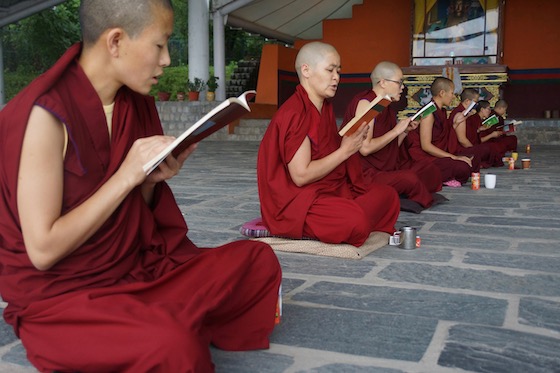
Saga Dawa, Saga Dawa Duchen, words of the Buddha, Tibetan Buddhist nuns at Dolma Ling

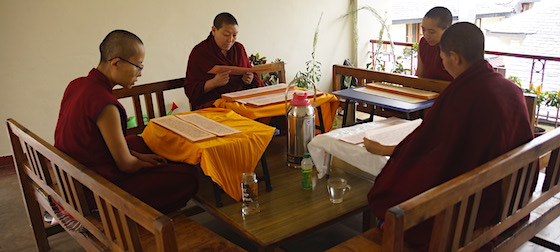
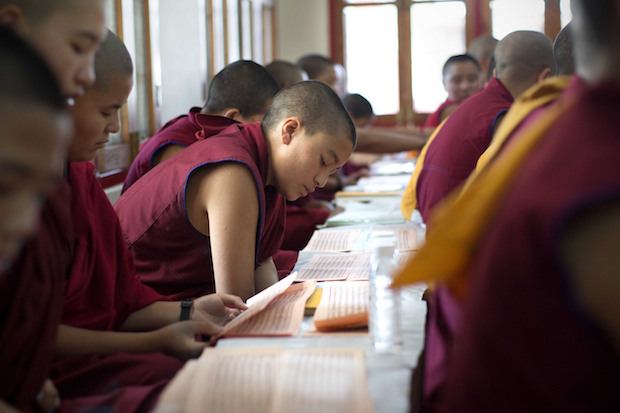
Every year, during the month of Saga Dawa, over several days, the nuns at Dolma Ling Nunnery read the entire Tibetan Buddhist canon or Kangyur, the 108 volumes of the spoken words of the Buddha. Photo courtesy of the Dolma Ling Media Nuns.

Saga Dawa Düchen commemorates the birth, enlightenment, and parinirvana of Buddha Shakyamuni. In other Buddhist traditions, this occasion is known as Vesak or is sometimes called Buddha Day.

Saga Dawa is known as the month of merits. Tibetans believe that during this month the merits of your actions are multiplied. Tibetan Buddhists make extra effort to practice more generosity, virtue, and compassion to accumulate greater merit. On the 15th day of the month or Saga Dawa Düchen the merits of your actions are hugely increased.

Tibetan Buddhist nuns reading the kangyur for Saga Dawa

Tibetan Buddhist nuns at Dolma Ling read the Kangyur, the spoken words of the Buddha, during the holy month of Saga Dawa. Photo by the Dolma Ling Media Nuns.

July 6: His Holiness the Dalai Lama’s Birthday

His Holiness the Dalai Lama 90th birthday

His Holiness the Dalai Lama waves to the crowd as he arrives at his 90th birthday celebration on July 6, 2025. His Holiness the Dalai Lama is the patron of the Tibetan Nuns Project. Photo by Tenzin Choejor, OHHDL, dalailama.com

His Holiness the Dalai Lama’s birthday on July 6th is celebrated worldwide with happiness and prayers for his good health and long life. This year, His Holiness the Dalai Lama turns 91. To mark His Holiness’s 90th birthday, the Central Tibetan Administration organized a year-long celebration running to July 5th, 2026.

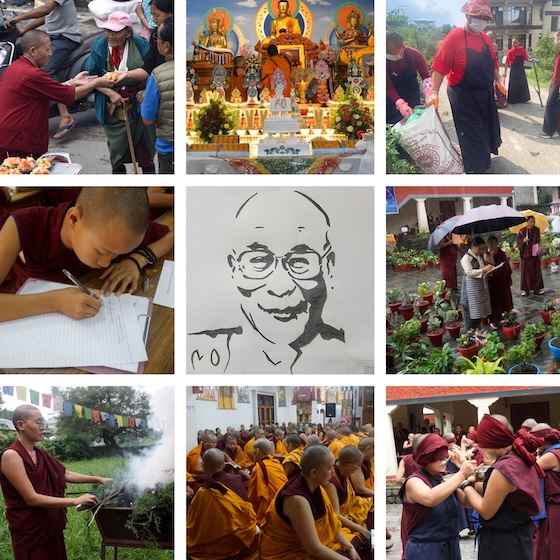
collage of some of the many ways that the nuns celebrated His Holiness the Dalai Lama's 90th birthday in 2025.

Here’s a collage of some of the many ways that the nuns celebrated His Holiness the Dalai Lama’s 90th birthday in 2025.

Each year on His Holiness the Dalai Lama’s birthday, the nuns pray and make special offerings of tsok, khataks (prayer scarves), and sangsol (incense offering) to His Holiness. Here’s a photo essay and blog post of the many ways that the nuns at two nunneries celebrated His Holiness’s 90th birthday last year.

They also celebrate with games and special food such as Tibetan momos, the steamed savory dumplings that are loved by Tibetans around the world and made on Tibetan Buddhist holidays. Here is a recipe for vegetarian momos so you can celebrate at home.

June 29, 2026: Universal Prayer Day

Universal Prayer Day celebrated by Tibetan Buddhist nuns

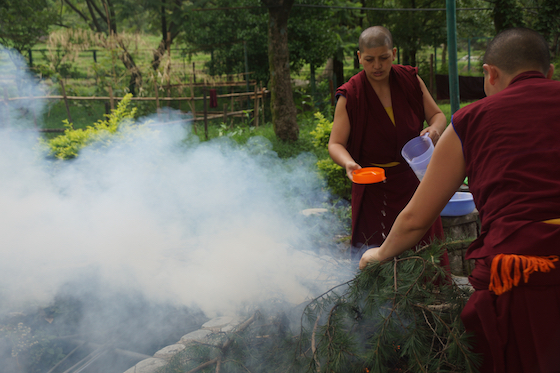
On Universal Prayer Day, nuns hold handfuls of tsampa, roasted barley flour, which they will throw into the air as part of the celebrations. In addition to prayers, the nuns also burn fragrant juniper boughs on this day. Photo by the Dolma Ling Media Nuns.

Universal Prayer Day or Dzam Ling Chi Sang falls on the 15th day of the 5th month of the Tibetan Lunar calendar, so it falls in June or July. This year it is on June 29th, just before His Holiness the Dalai Lama’s birthday on July 6th. It is a time for spiritual cleansing and Tibetans hang prayer flags and burn fragrant  juniper boughs.

July 18, 2026: Buddha’s First Teaching

Called Chokhor Düchen, this important day falls on the fourth day of the sixth lunar month. This day is the third “great occasion” or düchen in the Tibetan Buddhist calendar. It celebrates the first teaching by the historical Buddha, named Siddhartha at birth and commonly known as Shakyamuni Buddha.

On this day, over 2,500 years ago, the Buddha taught the Four Noble Truths in Sarnath, shortly after attaining enlightenment in Bodh Gaya. This event is known as the “turning of the wheel of dharma”. In Theravada traditions, this event is remembered on Dhamma Day, also known as Asalha Puja, and is generally marked on the full moon of the eighth lunar month. To celebrate Chokhor Düchen, Tibetan Buddhists make pilgrimages to holy places, offer incense, and hang prayer flags.​​

November 1, 2026: Buddha’s Descent from Heaven

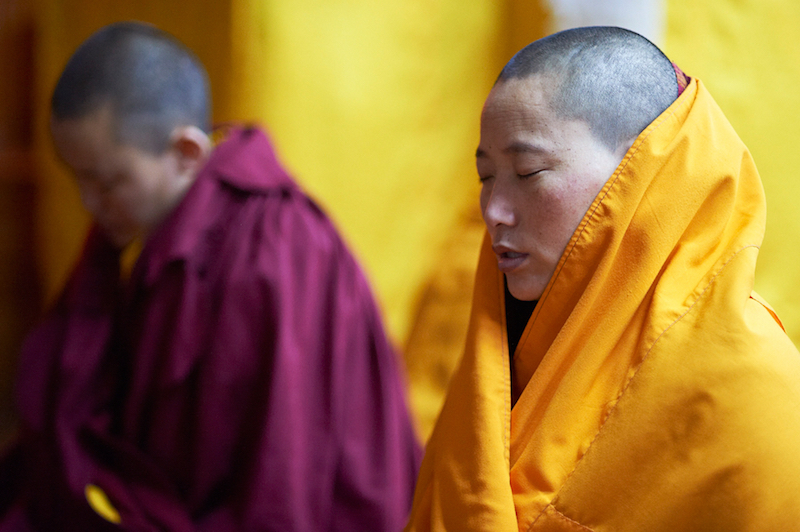
Tibetan Buddhist nun praying by Olivier Adam

Tibetan Buddhist nun praying. Photo courtesy of Olivier Adam.

Another “great occasion” or düchen in the Tibetan Buddhist calendar is Lhabab Düchen. This date commemorates the Buddha’s descent from the heavenly realm, where he had gone to impart teachings to his mother, Maya Devi (or Mayadevi), who had been reborn there. She had passed away seven days after his birth. To repay her kindness and liberate her from samsara, and also to benefit the gods, Buddha spent three months teaching in the realm of the gods.

Lhabab Düchen occurs on the 22nd day of the ninth lunar month, according to the Tibetan calendar. On this day, the karmic effects of our actions are multiplied millions of times. In the Tibetan Buddhist tradition, people engage in virtuous activities and pray to gain merit and to mark this special occasion.

February 7, 2027: Losar (Tibetan New Year)

Tibetan Buddhist nuns offering at Losar Tibetan New Year

Tibetan Buddhist nuns offering at Losar Tibetan New Year. Photo by Olivier Adam

Losar in 2027 falls on February 7th and is the start of the Year of the Fire Sheep, 2154, according to the Tibetan calendar.
Keep Track with the 2026 Tibetan Nuns Project Calendar

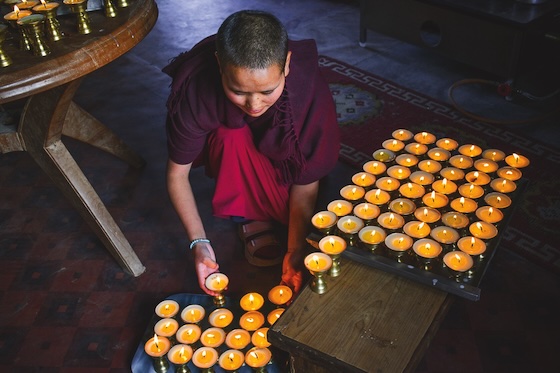
You can order our 2026 Tibetan Nuns Project calendar. It’s a great way to keep track of the Tibetan Buddhist holidays and all the special events throughout the year. The calendar has the dates of the Tibetan lunar calendar, Tibetan holidays, and special ritual days for Tibetan Buddhist practices. It also has inspirational quotes and, of course, beautiful photos taken by the nuns. It costs $13 and your purchase helps support around 900 Tibetan Buddhist nuns and seven nunneries in India. Thank you for your support!

Tibetan Buddhist Holidays 2021

This is an illustrated list of some of the major Tibetan Buddhist holidays in 2021, as well as some other important dates in the Tibetan calendar.

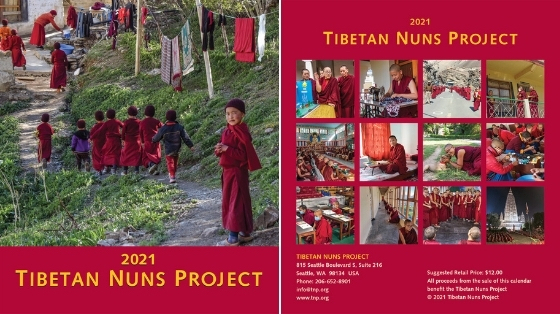
Front and back of the 2021 Tibetan Nuns Project calendar

Front and back of the 2021 Tibetan Nuns Project calendar

Each year, the Tibetan Nuns Project publishes a calendar with the Tibetan Buddhist holidays and other important ritual dates, plus the phases of the moon, inspirational quotes, and major US and Canadian holidays. This beautiful 2021 calendar is available from our online store, along with prayer flags, incense, malas and much more. By purchasing the calendar, you help provide education, food, shelter, and health care for over 700 Tibetan Buddhist nuns living in northern India. Thank you!

February 12 2021: Losar, Tibetan New Year

Tibetan Buddhist nuns, Tibetan butter sculpture, Losar, Tibetan New Year

Tibetan Buddhist nuns make butter sculptures for Losar Tibetan New Year 2020. Photo by the Dolma Ling Nuns’ Media Team.

Losar, the Tibetan New Year, is a very special time of year.

This year, Tibetan New Year or Losar falls on February 12th, 2021. The year of the Iron Ox, 2148, begins on this day.

In the traditional Tibetan calendar, each year is associated with an animal, an element, and a number. January 1st through February 11th, 2021 are the last weeks of the Tibetan year 2147. Next year, Losar begins on March 3, 2022, and is the year of the Water Tiger, 2149.

Tibetan Buddhist nun, prayer flags, hanging prayer flags

It is customary to hang new prayer flags and to burn incense at Tibetan New Year. Photo courtesy of Olivier Adam

The animals in the Tibetan calendar are somewhat similar to those in the Chinese zodiac and are in the following order: Mouse, Ox, Tiger, Rabbit, Dragon, Snake, Horse, Sheep, Monkey, Bird, Dog, and Boar. The five elements are in this order: Wood, Fire, Earth, Iron, and Water.

Losar-related rituals fall into two distinct parts. First, the nuns, like all Tibetans, say goodbye to the old year and let go of all its negative or bad aspects. Part of this involves cleaning one’s home or room from top to bottom.

Losar, khapse, Tibetan New Year

Nuns at Dolma Ling making khapse biscuits for Losar These deep-fried Tibetan cookies made into different shapes and sizes are a staple of Tibetan New Year’s celebrations everywhere. Photo by the Dolma Ling Nuns’ Media Team, 2020.

After that, the Losar or “new year” is welcomed with prayers and by inviting all good, auspicious things into our homes and our lives. Special food is prepared such as khapse and a  noodle soup called guthuk. See this recipe for vegetarian guthuk. Tibetans hang new prayer flags and also burn incense and juniper bows to welcome the new year.

March 10 and March 12: Tibetan Uprising Day

March 10th, Dharamsala, March 10th, March 10th demonstration, Tibetan nun, Tibetan Nuns Project, Tibetan Uprising Day

Nuns, monks, and lay people hold Tibetan flags and banners as they take part in a demonstration in Dharamsala, India to mark March 10th, Tibetan Uprising Day. Photo courtesy of the Nuns’ Media Team.

While not a Tibetan Buddhist holiday, March 10th is a very important date in the Tibetan calendar. This year marks the 62nd anniversary of the Tibetan National Uprising. Around the world, Tibetans and their supporters remember and pay tribute to all those who have sacrificed their lives for Tibet’s struggle. An estimated one million Tibetans have perished and 98% of monasteries and nunneries were destroyed under the Chinese occupation.

In 1950, Chinese Communist forces invaded Tibet. On March 10, 1959, Tibetans attempted to take back their country with an uprising in Lhasa. The protests were crushed with brutal force.

March 12th 2019 marks the 62nd anniversary of the Tibetan Women’s Uprising. Following the National Uprising Day on March 10th, thousands of Tibetan women gathered in front of the Potala Palace in Lhasa to demonstrate for Tibetan independence.

Read this blog post to learn more about these important dates and why Tibetans are in exile.

May 26 2021: Saga Dawa Düchen

The most important month in the Tibetan calendar is Saga Dawa, the 4th lunar month which runs this year from May 12 to June 10, 2021. The 15th day of this lunar month, the full moon day is called Saga Dawa Düchen. Düchen means “great occasion” and this day is the single most holy day of the year for Tibetan Buddhists.

Tibetan Buddhist nuns, Saga Dawa, reading words of the Buddha

Every year, during the month of Saga Dawa, over a period of several days, the nuns at Dolma Ling Nunnery read the entire Tibetan Buddhist canon or Kangyur, the 108 volumes of the spoken words of the Buddha. During 2020, due to the coronavirus pandemic, the nuns had to observe physical distancing while reciting. Photo courtesy of the Nuns’ Media Team.

In 2021, Saga Dawa Düchen falls on May 26th. Saga Dawa Düchen commemorates the birth, enlightenment, and parinirvana of Buddha Shakyamuni. In other Buddhist traditions, this occasion is known as Vesak or is sometimes called Buddha Day.

Saga Dawa is known as the month of merits. Tibetan Buddhists make extra efforts to practice more generosity, virtue, and compassion in order to accumulate greater merit. Tibetans believe that during this month, the merits of one’s actions are multiplied. On the 15th day of the month, the merits of one’s actions are hugely increased.

Every year, during the month of Saga Dawa, over a period of several days, the nuns at Dolma Ling Nunnery read the entire Tibetan Buddhist canon or Kangyur, the 108 volumes of the spoken words of the Buddha.

Last year, due to the coronavirus pandemic and the lockdown in India, the nuns had to adapt their regular celebrations and rituals for Saga Dawa.

June 24, 2021: Universal Prayer Day

Tibetan Buddhist nuns, burning juniper

As on other auspicious occasions, such as Tibetan New Year and His Holiness the Dalai Lama’s birthday, nuns burn fragrant juniper boughs. Photo by the Dolma Ling Nuns’ Media Team

Universal Prayer Day or Dzam Ling Chi Sang falls on the 15th day of the 5th month of the Tibetan Lunar calendar, so in June or July. It is a time for spiritual cleansing. Tibetans hang prayer flags and burn juniper twigs.

July 6: His Holiness the Dalai Lama’s Birthday

His Holiness the Dalai LamaAround the world, His Holiness the Dalai Lama’s birthday on July 6th will be celebrated with happiness and prayers for his good health and long life. This year, His Holiness the Dalai Lama turns 86. The nuns will pray and make special offerings of tsok, khataks (prayer scarves), and sangsol (incense offering) to His Holiness. It’s a day of celebration with special food, such as Tibetan momos, the steamed savory dumplings that are much loved by Tibetans around the world and that are often made on Tibetan Buddhist holidays.

July 14, 2021: Buddha’s First Teaching

Called Chokhor Düchen, this important day falls on the fourth day of the sixth lunar month. This day is the third “great occasion” (düchen) in the Tibetan Buddhist calendar. It celebrates the first teaching by the historical Buddha, named Siddhartha at birth and commonly known as Shakyamuni Buddha.

On this day, over 2,500 years ago, the Buddha gave the teaching of the Four Noble Truths in Sarnath, shortly after attaining enlightenment in Bodhgaya. This event is known as the “turning of the wheel of dharma”. In Theravada traditions, this event is remembered on Dhamma Day, also known as Asalha Puja, and is generally marked on the full moon of the eighth lunar month. To celebrate Chokhor Düchen, Tibetan Buddhists make pilgrimages to holy places, offer incense, and hang prayer flags.​​

October 27, 2021: Buddha’s Descent from Heaven

Tibetan Buddhist nuns, Tibetan Buddhist holidays, praying, Olivier Adam, Tibetan Buddhism

Tibetan Buddhist nuns praying. Photo courtesy of Olivier Adam.

Another “great occasion” or düchen in the Tibetan Buddhist calendar is Lhabab Düchen. This date commemorates the Buddha’s descent from the heavenly realm following his visit there to teach his deceased mother. Lhabab Düchen occurs on the 22nd day of the ninth lunar month, according to the Tibetan calendar.

On this day, the karmic effects of our actions are multiplied millions of times. In the Tibetan Buddhist tradition, people engage in virtuous activities and prayer to gain merit and to mark this special occasion.

March 3, 2022: Losar (Tibetan New Year)

butter sculptures, Losar, Tibetan Buddhist holidays, Tibetan New Year, offerings, Tibetan Nuns Project

Butter sculptures and offerings made by the Tibetan nuns for Losar, Tibetan New Year.

Losar in 2022 falls on March 3rd and is the Year of the Water Tiger 2149 according to the Tibetan calendar.

Tibetan Buddhist Holidays in 2021 and the Tibetan Nuns Project Calendar

It is still possible to order copies of our 2021 Tibetan Nuns Project calendar. It’s a great way to keep track of the Tibetan Buddhist holidays and all the special events throughout the year.

How the Tibetan Nuns Project Calendar is Created

Each year, the Tibetan Nuns Project sells a wall calendar through our online store. Our 2020 Tibetan Nuns Project calendar is available for order now.

How the Tibetan Nuns Project Calendar is Created

We started the calendar about 20 years ago as a fundraising and friend-raising tool to help support over 800 Tibetan Buddhist nuns at seven nunneries in northern India.

selection of old Tibetan Nuns Project charity calendars

A selection of some of the early Tibetan Nuns Project charity calendars from 2002 to 2008. The Tibetan Nuns Project wall calendar is now full color and uses photos taken by the nuns themselves.

In the past, we used photographs generously provided by volunteer photographers. Recently,  we have only used photographs taken by the nuns themselves. These photographs provide an intimate insight into the daily lives and religious and cultural practices of the nuns.
Each summer, the nunneries that we support send a selection of photos for possible inclusion in the next year’s calendar. Once all the photos are gathered together a final selection is made.  We try to balance the images, choosing at least one photograph from each nunnery and selecting photographs that are windows into the nuns’ lives.

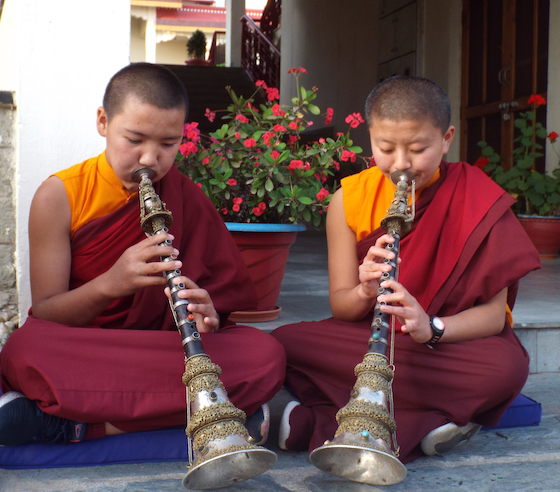
photo from the Tibetan Nuns Project 2020 calendar

In this photo from the 2020 calendar, two nuns at Shugsep Nunnery and Institute play the gyaling, a traditional Tibetan woodwind instrument. The photo was taken by a nun at Shugsep and is an illustration of how the annual calendar provides an intimate insight into the daily lives and religious and cultural practices of the nuns.

Each photo is captioned and paired with inspirational quotations from renowned Tibetan Buddhist teachers, such as His Holiness the Dalai Lama, and others

“Each summer at our Seattle office, it’s really exciting to open up emails from India and see the photos sent by the nunneries for possible inclusion in the calendar,” says Lisa Farmer, Executive Director of the Tibetan Nuns Project.

“In the past, there were challenges with photo quality. Now, thanks to our Media Equipment Project donors, each of the nunneries has a digital camera and the nuns received training on how to use them. We’re looking forward to sharing more photos with supporters, especially from the remote nunneries that didn’t have this capacity until now,” says Lisa.

The Tibetan Calendar vs. the Gregorian Calendar

The Tibetan Nuns Project calendar also includes the dates of the Tibetan lunar calendar, as well as special ritual days, Tibetan holidays, and the full and new moons.

Each year, as we assemble the selection of photos for the calendar, the astrologers at the Tibetan Medical and Astrological Institute in Dharamsala, India supply us with the dates for the year’s Tibetan Buddhist holidays and holy days.

The Tibetan calendar is thousands of years old and is different from the Gregorian calendar, which is the international standard used almost everywhere in the world for civil purposes.

Tibetan Nuns Project camera and media training for nuns

Here’s another image that will be in the 2020 Tibetan Nuns Project calendar and shows nuns receiving camera training from a volunteer Tibetan photographer. Now all 7 nunneries have cameras thanks to Media Equipment donors.

While the Gregorian calendar is a purely solar calendar, the Tibetan calendar (Tibetan: ལོ་ཐོ, Wylie: lo-tho) is a lunisolar calendar. This means that the Tibetan year is composed of either 12 or 13 lunar months, each beginning and ending with a new moon. A thirteenth month is added every two or three years so that an average Tibetan year is equal to the solar year.

In the traditional Tibetan calendar, each year is associated with an animal, an element, and a number. This year, 2019, is the year of the Earth Pig, 2146, according to the Tibetan calendar. Next year, starting at Tibetan New Year or Losar on February 24, 2020, it will be the year of the Iron Mouse, 2147.

The animals in the Tibetan calendar are somewhat similar to those in the Chinese zodiac and are in the following order: Mouse, Ox, Tiger, Rabbit, Dragon, Snake, Horse, Sheep, Monkey, Bird, Dog, and Boar. The five elements are in this order: Wood, Fire, Earth, Iron, and Water.

front and back covers of the 2020 Tibetan Nuns Project charity calendarA Unique Charity Calendar

The proceeds from the sale of the Tibetan Nuns Project calendar are used to support over 700 Tibetan Buddhist nuns and seven nunneries in India.

Thank you for buying our 2020 Tibetan Nuns Project calendar and helping the nuns!
You can order your 2020 Calendar here.

The Tibetan Buddhist holy month of Saga Dawa

Saga Dawa is a very important month in the Tibetan Buddhist calendar. This year, Saga Dawa, the fourth month of the Tibetan lunar calendar, started on May 7th and runs until June 5th 2016.

The 15th day of the lunar month, the full moon day, is called Saga Dawa Düchen. Düchen means “great occasion” and this day is the single most holy day of the year for Buddhists. This year Saga Dawa Düchen falls on May 21 2016. In other Buddhist traditions it is known as Vesak or is sometimes as Buddha Day. Saga Dawa Düchen commemorates the birth, enlightenment, and death (parinirvana) of Buddha Shakyamuni.

Tibetan nun, Buddhist nun, Tibetan Nuns Project, nun reading scripture, Tibetan Buddhism, Saga Dawa, Dolma Ling Nunnery

A young Tibetan Buddhist nun at Dolma Ling Nunnery reads scriptures to mark Saga Dawa. Photo courtesy of Tenzin Sangmo.

Since 1999, the United Nations has marked this sacred Buddhist day each year with a special message from the UN Secretary General. The UN Vesak page states, “Vesak, the Day of the Full Moon in the month of May, is the most sacred day to millions of Buddhists around the world. It was on the Day of Vesak two and a half millennia ago, in the year 623 B.C., that the Buddha was born. It was also on the Day of Vesak that the Buddha attained enlightenment, and it was on the Day of Vesak that the Buddha in his eightieth year passed away.”

This year’s message from the UN Secretary General highlights the primary role that women can play in promoting peace, justice, and human rights. Continue reading