Tag Archives: Windhorse prayer flags

The Meaning of Windhorse Tibetan Prayer Flags

We are sometimes asked about the meaning of windhorse Tibetan prayer flags. The windhorse is a sacred mythical creature in Tibetan culture, believed to carry prayers to the heavenly realm using the strength and speed of the wind.

Lungta (Tib: རླུངྲ་) means air or wind, and ta (རྟ་) is horse. So, Lung-ta means an air-horse or windhorse. Lungta, or windhorse, is a sacred symbol in Tibetan culture. It is believed to raise a person’s energy and carry prayers and intentions to the divine. When travelling through Tibetan settlements or Himalayan villages, you will often see colorful prayer flags hanging on rooftops, trees, bridges, and mountain ridges.
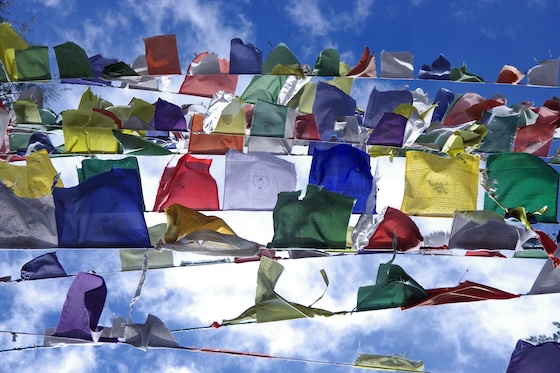
Tibetan prayer flags in the breeze

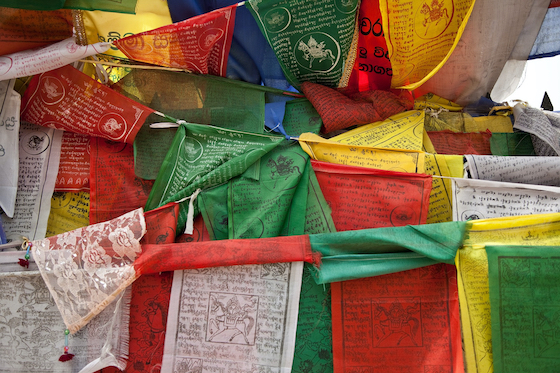
Different types of prayer flags hanging in the breeze. Different types of prayer flags hanging in the breeze. Lungta in Tibetan ( རླུང་རྟ) is translated to “windhorse”. The first Tibetan syllable “lung” རླུང represents the element “wind” or “air” in the five elements of “earth, water, fire, air, and space”. The second syllable “ta” རྟ means horse.

In Tibetan Buddhism, many actions are done with spiritual meaning, and religious items are often blessed before use. Hanging Lungta, or prayer flags, is an important tradition. Tibetan Buddhists hang Lungta flags after they have been blessed by lamas or at monasteries. Once the flags receive these blessings, they are believed to be spiritually empowered and ready to be hung.
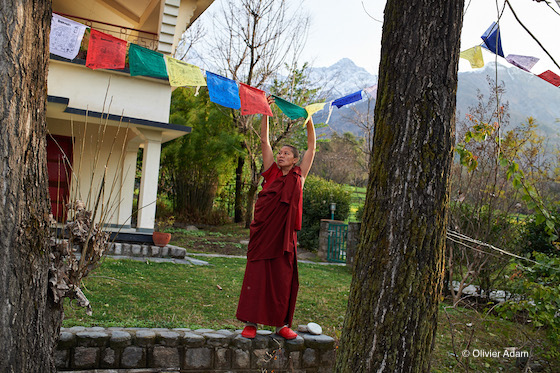
hanging Tibetan prayer flags, prayer flags

A Tibetan Buddhist nuns hangs new prayer flags at Dolma Ling Nunnery and Institute. It is traditional to hang new prayer flags at Losar or Tibetan New Year. Photo courtesy of Olivier Adam.

After an object is blessed and the ritual is completed, it is important to handle it respectfully — for example, keeping it in a safe and clean place and using it appropriately. Likewise, the Tibetan prayer flags we sell here through our online store are all made by nuns and have already undergone the necessary rituals and blessings. When placed outdoors such as on rooftops, mountain passes, or sacred sites, the wind carries the prayers and mantras printed on the flags, spreading blessings, compassion, peace, and good fortune to all beings.

Meaning of the Symbols on Windhorse Prayer Flags
the meaning of windhorse Tibetan prayer flags lungta

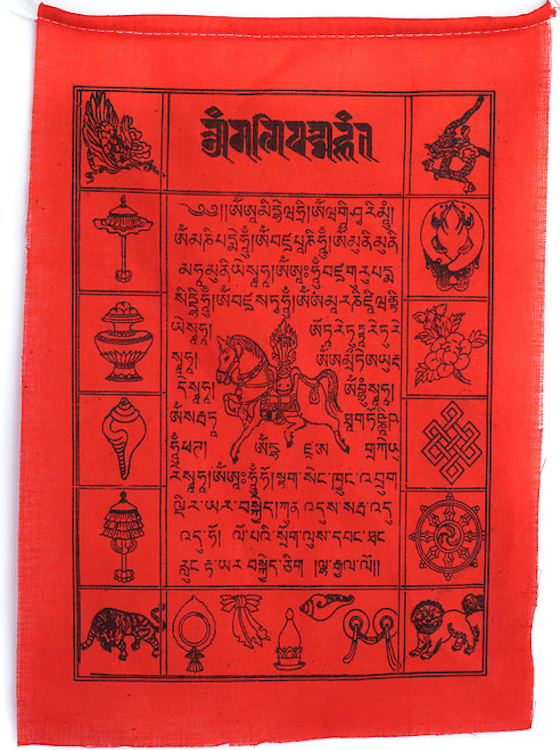
Here’s a detailed photo of one of the windhorse (Lungta) prayer flags made by the nuns, showing the prayers and sacred symbols. The Lungta or windhorse is in the center, surrounded by mantras. In the corners are the four auspicious animals, and, at the sides, are the eight auspicious Buddhist symbols.

The central image on the prayer flag is the windhorse, symbolizing good fortune, luck, and the power to influence events. It is depicted carrying a wish-fulfilling jewel on its back.

In the four corners of each prayer flag are the Four Auspicious Animals. Clockwise from the upper left, they are the Garuda (upper left), Dragon (upper right), Snow Lion (bottom right), and Tiger (bottom left).
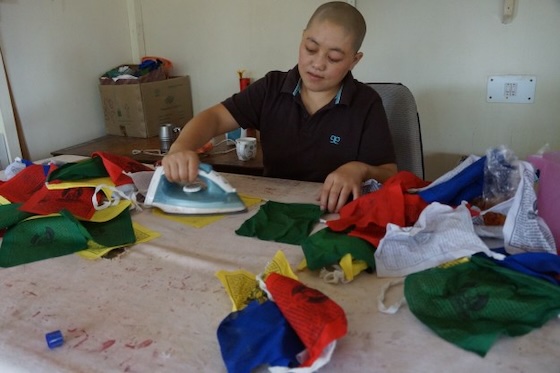
A Tibetan Buddhist nun makes prayer flags at Dolma Ling Nunnery

A Tibetan Buddhist nun makes prayer flags at Dolma Ling Nunnery. All the prayer flags sold in our online store are made and blessed by nuns in India.

These “Four Auspicious Animals” are also called the Four Mythical Creatures, the Four Guardians, the Four Gods, or the Four Dignities in Buddhist mythology. In Buddhism, these four guardian animals symbolize the overcoming of birth, old age, sickness, and death. They are also known as the guardians of the four cardinal directions: north, south, east, and west.

These sacred mythical animals also represent the qualities and attitudes that bodhisattvas develop on the path to enlightenment — qualities such as awareness, vast vision, confidence, joy, humility, and power.

The Meaning of the Four Auspicious Animals in Buddhism

GARUDA: The Garuda is an enormous, mythical bird of prey that represents fearlessness, power, and wisdom. Known for its ability to soar to great heights, it symbolizes the mind’s ability to rise above worldly concerns and attain spiritual liberation. It is believed to be able to subdue nagas (serpent spirits), representing the victory of wisdom over ignorance. It represents the north in the four cardinal directions.

DRAGON: The thunder dragon, also known as druk (འབྲུག) in Tibetan and Bhutanese mythology, is the national symbol of Bhutan and is depicted on the Bhutanese flag. The dragon was adopted as an emblem by the Drukpa Lineage, which originated in Tibet and spread to Bhutan. Tibetan dragons are used on prayer flags, carpets, furniture, thangkas, and to decorate temple gates and roofs. They are believed to bring enlightenment. elegance, generosity, calmness, and achievements.
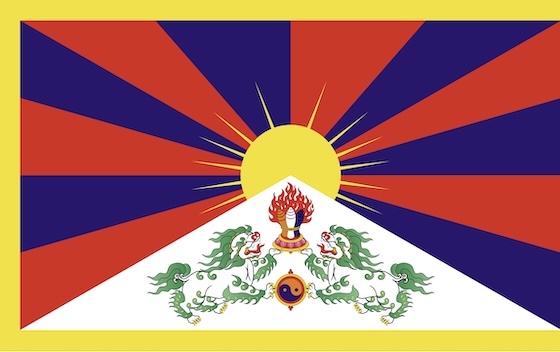
Tibetan flag

The Tibetan flag with the pair of snow lions. The snow lion is the emblem of Tibet and is one of the Four Auspiciaous Animals on the corners of the windhorse prayer flag.

SNOW LION: The snow lion (གངས་སེང་གེ་) is the emblem of Tibet, and a pair of snow lions is on the national flag of Tibet. The snow lion represents both the snowy mountain ranges and glaciers of Tibet and also symbolizes fearlessness and joy, power and strength, the direction east, and the earth element. The lion’s roar embodies the sound of “emptiness” (Sanskrit: Śūnyatā), courage and truth, and this is often a synonym for the Buddhadharma, the Buddha’s teachings and the challenging call to awakening.

TIGER: The tiger may represent power, confidence, discipline, and modesty. In Tibetan Buddhist culture, the tiger is often associated with the famous Buddhist saint, Guru Rinpoche (Padmasambhava), who is believed to have subdued the local deities and demons, bringing Buddhism to the region. The tiger represents the earthly realm and the fierce determination needed to overcome obstacles on the spiritual path.

What are the Prayers on the Prayer Flags?

At the center of a Lungta is the windhorse carrying three flaming jewels on its back. The horse represents strength, energy, and the ability to turn misfortune into good fortune. The three jewels represent the Buddha, the Dharma (the teachings), and the Sangha (the Buddhist community), which are the three main pillars of Tibetan Buddhism.
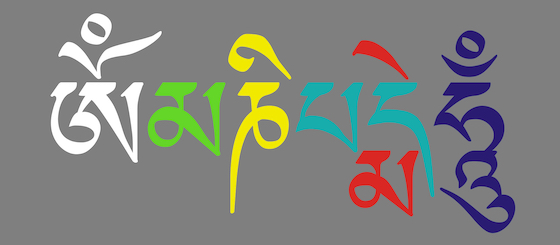
om mani padme hum, mantra, Tibetan mantra, meaning of om mani padme hum

The mantra Om Mani Padme Hum in Tibetan.

At the top of the prayer flag, in an archaic script, it says OM MANI PADME HUM. This is the primary mantra of Avalokiteshvara, the Buddha and Bodhisattva of compassion. It is recited by Tibetans everywhere, and may be loosely translated as “Om, the Jewel in the Lotus, HUM.”

Around the central symbol of the windhorse or lungta are traditional mantras. Tibetan prayer flags vary, but the mantras used are one of the hundreds recited by the three Bodhisattvas or Gurus — Padmasambhava or Guru Rinpoche, Chenrezig, the embodiment of compassion, or Manjusri, known for transcendent wisdom. The oldest and most popular Buddhist mantra on the flags is Om Mani Padme Hum. Here’s a blog post in which His Holiness the Dalai Lama explains the deep  meaning of Om Mani Padme Hum.
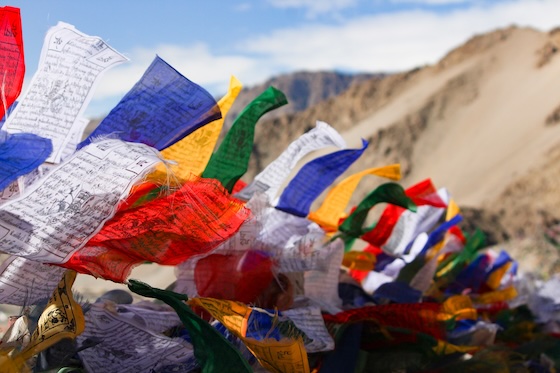
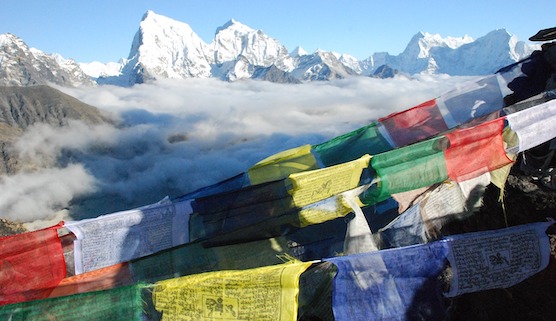
Tibetan prayer flags at a mountain pass

Tibetan prayer flags flutter in the wind at a mountain pass. Each of the five colors has a specific meaning and represents an element.

The Meaning of the Colors of Prayer Flags

Tibetan prayer flags come in sets of five, with one flag in each of the five colors. The colors from left to right are in this specific order: blue, white, red, green, and yellow. Each color has a meaning and represents an element.

According to Traditional Tibetan medicine, health and harmony are produced through the balance of the five elements.

  • Blue symbolizes the sky and space.
  • White symbolizes the air and wind.
  • Red symbolizes fire.
  • Green symbolizes water.
  • Yellow symbolizes earth.

Traditionally, prayer flags are hung from high points like mountain passes, temples, and rooftops, allowing the wind to carry the prayers far and wide.
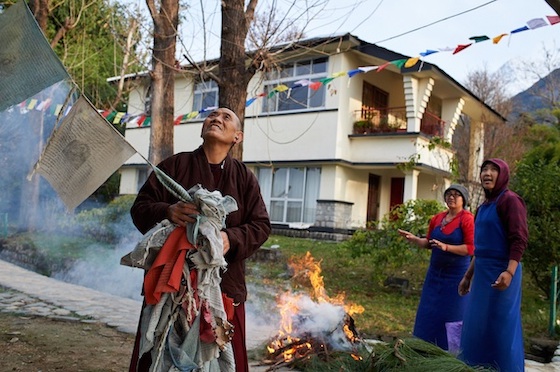
burning old Tibetan prayer flags

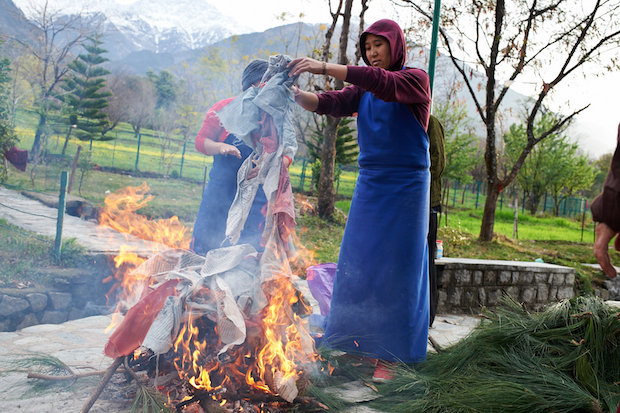
It is traditional to hang new prayer flags at Losar, Tibetan New Year. Here a nun at Dolma Ling Nunnery removes the old weathered prayer flags and respectfully burns them. Photo courtesy of Olivier Adam.

In Tibetan Buddhism, people often choose an auspicious day or date to hang a Lungta (prayer flag). These days are selected based on the lunar calendar and traditional astrological calculations to ensure that the blessings of the flags are most effective. Hanging the flags on a favorable day is believed to increase positive energy, bring good fortune, and enhance the spiritual power of the prayers and mantras printed on the flags. Many families and communities make it a special occasion, sometimes performing small ceremonies or offerings before placing the flags outdoors.

You can order prayers flags made and blessed by the nuns here. 
5 Things to Know About Tibetan Prayer Flags

Here are 5 things you might like to know about Tibetan prayer flags.

1. When you are hanging prayer flags have good intentions

When raising prayer flags it is important to have a good motivation. You should not have selfish or limiting thoughts. When hanging prayer flags, wish that all beings everywhere will benefit and find happiness.

Tibetan prayer flags are used to promote peace, compassion, strength, and wisdom. Tibetans believe the prayers and mantras printed on the flags will be spread by the wind and bring goodwill and compassion to benefit all beings.

colors of Tibetan prayer flags, prayer flags, Tibetan prayer flags, meaning of the colours of prayer flags

Tibetan Windhorse or lung-ta prayer flags in the Himalayas. Prayer flags are hung to bring benefit to all beings.

2. Each of the 5 colors has a meaning

Tibetan prayer flags come in sets of five, with one flag in each of the five colors. The colors from left to right are in this specific order: blue, white, red, green, and yellow.

Each color represents an element.

  • Blue symbolizes the sky and space.
  • White symbolizes the air and wind.
  • Red symbolizes fire.
  • Green symbolizes water.
  • Yellow symbolizes earth.
hanging Tibetan prayer flags, prayer flags

A Tibetan Buddhist nun hangs new prayer flags at Dolma Ling Nunnery and Institute. It is traditional to hang new prayer flags at Losar, the Tibetan New Year. Photo courtesy of Olivier Adam.

Some people have asked whether it is OK to disassemble sets of prayer flags and use them separately. It is better not to take apart the set of prayer flags. They represent the five elements in balance and it is not appropriate to the purpose or culture to separate them. Instead, you might choose to double them back or allow the remaining flags to hang down without touching the ground.

3. You should treat prayer flags with respect

Tibetans consider prayer flags to be holy. The flags contain sacred texts and symbols and should always be treated respectfully. They should not touch the ground or be put in the trash.

When disposing of old prayer flags, you should safely burn them so that the smoke may carry their blessings to the heavens. Again, do not let prayer flags touch the ground as they are burned.

prayer flags, burning prayer flags, Tibetan Nuns Project, how to dispose of old prayer flags

A Tibetan Buddhist nun burns old prayer flags while being careful not to let them touch the ground. As she does this, she holds in her mind the wish to end the suffering of all sentient beings. Photo courtesy of Olivier Adam.

As you are burning the prayer flags, remember the intentions with which the prayer flags were made, blessed, and hung. You should have compassion for all sentient beings.

You may also choose to let your old Tibetan prayer flags fade and disintegrate. If you wish, you can hang new prayer flags together with old ones. The contrast between old and new is a reminder of impermanence and the continuing cycle of birth and death.

Tibetan prayer flags

You can hang new prayer flags up with old prayer flags. The contrast between old and new is a reminder of impermanence and the continuing cycle of birth and death.

The traditional cotton prayer flags, like those made by the nuns at Dolma Ling and sold in the Tibetan Nuns Project online store, fade more quickly than synthetic ones and come on a cotton string. The fact that they do not last is part of their nature and is a reminder of the central Buddhist teaching of impermanence.

4. You don’t have to be a Buddhist to hang prayer flags

Some people have asked whether it is OK for non-Buddhists to display Tibetan prayer flags. Yes, it is fine. Again, your motivation and intentions are key. Hang them with a wish for all beings to be free of suffering and the causes of suffering, or for a positive intention of your choice.

5. There are different types and sizes of prayer flags

Prayer flags are made of block-printed fabric using traditional printing techniques going back hundreds of years. They come in various types and sizes.

Tibetan prayer flags, types of Tibetan prayer flags, lungta, windhorse prayer flag

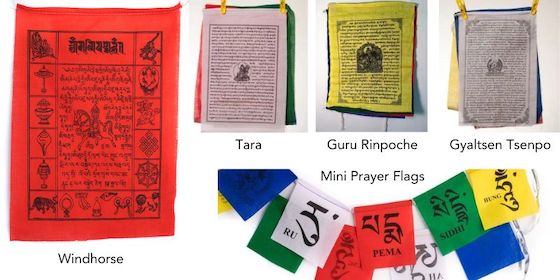
Here are some of the types of Tibetan prayer flags sold in the Tibetan Nuns Project online store. They are made and blessed by the nuns at Dolma Ling Nunnery.

The most common types are square or rectangular and connected along their top edges to a long string. They are hung on a straight or diagonal line between two objects and in high places such as the tops of temples, monasteries, stupas, and mountain passes.

Another type of prayer flag is called Darchog. These vertical prayer flags are usually large single rectangles attached to poles along their vertical edge. Darchog are commonly planted in the ground, mountains, cairns, or on rooftops.

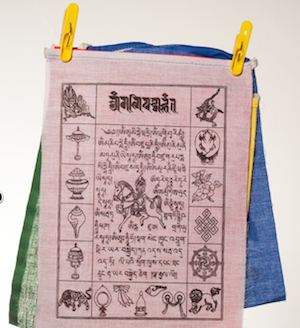
The Windhorse or Lung-ta is the most common type of prayer flag. In the center of each prayer flag is the symbol of a powerful horse (lung-ta in Tibetan) bearing three flaming jewels on its back. The triple gem or three jewels represent the Buddha, the dharma (the teachings), and the sangha (the community of practitioners).

The horse (ta in Tibetan) is a symbol of speed and the transformation of bad fortune to good fortune. Surrounding the lung-ta are mantras and Buddhist sacred symbols. In the corners of the prayer flags are images of four powerful animals, also known as the Four Dignities: the dragon, the garuda, the tiger, and the snow lion. You can purchase Windhorse prayer flags here.

Other types of Tibetan prayer flags made by the nuns and sold in our online store include:

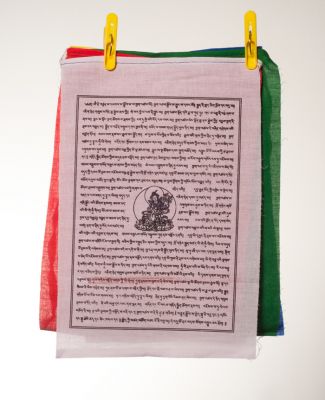
  • Tara prayer flags with a lovely image of Tara in the center. Tara represents virtuous and enlightened action. It is said that her compassion for living beings is stronger than a mother’s love for her children. She brings about longevity, protects travel, and guards her followers on their spiritual journey to enlightenment.
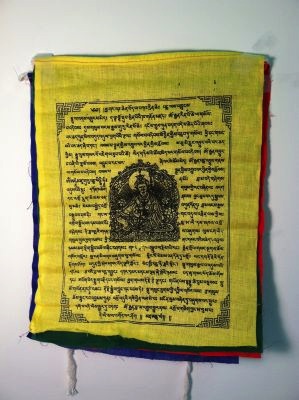
  • Guru Rinpoche prayer flags. Padmasambhava, the renowned 8th-century saint, was a central figure in shaping Buddhism’s history in Tibet. Revered as the second Buddha, Guru Rinpoche (Precious Guru) conquered the local deities and demons of Tibet and bound them by oath to become guardians of Buddhism.
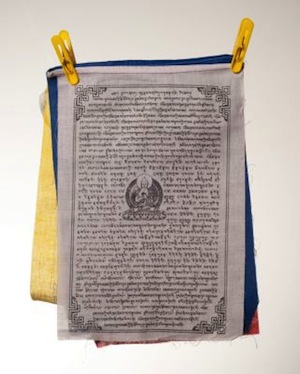
  • Gyaltsen Tsenpo prayer flags are printed with sutras bestowed by Lord Buddha to Indra, king of the gods, to overcome his enemies and achieve victory. This is a common prayer flag, especially at New Year, symbolizing new ventures and beginnings.
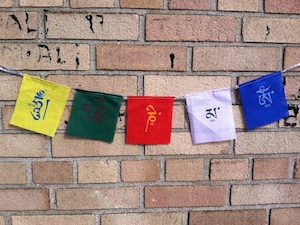
  • Mini prayer flags. These are perfect for small spaces, such as above your desk, computer or in your kitchen window. These prayer flags are handmade and blessed by Tibetan Buddhist nuns in India. There are four kinds with different mantras.

Tibetan prayer flags made and blessed by nuns

The Tibetan Nuns Project sells Tibetan prayer flags made and blessed by the Tibetan Buddhist nuns at Dolma Ling Nunnery and Institute, near Dharamsala, northern India.

The nuns have been making prayer flags for many years now and the sale of these specially blessed objects helps provide food, health care, shelter and education for the over 230 nuns who live at the nunnery, as well as help support hundreds of nuns at 6 other nunneries in India.

nun making Tibetan prayer flags

Making Tibetan prayer flags at Dolma Ling Nunnery and Institute. Sales of prayer flags through the Tibetan Nuns Project online store benefit the nuns at Dolma Ling as well as six other nunneries in India.

Traditionally, prayer flags come in sets of five, with one flag in each of five colors, left to right in this specific order: blue, white, red, green, and yellow. The five colors represent the elements: blue symbolizes the sky and space, white symbolizes the air and wind, red symbolizes fire, green symbolizes water, and yellow symbolizes earth.

Prayer flags are used to promote peace, compassion, strength, and wisdom. Tibetans believe the prayers and mantras will be spread by the wind and bring good will and compassion to benefit all beings.

Prayer flags are made of block-printed fabric using traditional printing techniques going back hundreds of years.

When raising prayer flags it is important to have a good motivation. One should not have selfish or limiting thoughts; when hanging prayer flags one should wish that all beings everywhere will benefit and find happiness.

Tibetan tradition considers prayer flags to be holy. The flags contain sacred texts and symbols and should be treated respectfully. They should not be placed on the ground or put in the trash. When disposing of old prayer flags one should burn them so that the smoke may carry their blessings to the heavens.

You can buy Tibetan prayer flags through the Tibetan Nuns Project online store. They come in a variety of types and sizes of prayer flags as follows:

mini Tibetan prayer flagsMini Prayer Flags

These are perfect for small spaces such as above a desk or computer or in a kitchen window. Each mini flag in the set of 5 has one symbol and one syllable of the mantra OM MANI PADME HUM on it. Probably the oldest Buddhist mantra and still the most widespread among Tibetans is this six-syllable mantra of Avalokiteshvara, the Bodhisattva of Compassion. This mantra sends blessings of compassion to the six worldly realms. Buy mini prayer flags here.

Windhorse Tibetan prayer flagsWindhorse Prayer Flags

The Wind Horse or Lung-ta is the most prevalent symbol used on prayer flags. In the center of the prayer flag is a powerful horse (lung-ta) bearing three flaming jewels on its back. These jewels represent the Buddha, the Dharma (Buddhist teachings), and the Sangha (Buddhist community) which are the three cornerstones of Tibetan philosophical tradition. The horse (Ta) is a symbol of speed and the transformation of bad fortune to good fortune. Surrounding the Lung ta are mantras and Buddhist sacred symbols. In the corners of the prayer flags are images four powerful animals, also known as the Four Dignities: the dragon, the garuda, the tiger, and the snow lion. Windhorse prayer flags made by the nuns are available in three sizes. Buy Windhorse Prayer flags here.

Tara Tibetan Prayer flagsTara Prayer Flags

Tara represents virtuous and enlightened action. It is said that her compassion for living beings is stronger than a mother’s love for her children. She also brings about longevity, protects earthly travel, and guards her followers on their spiritual journey to enlightenment. The Tara prayer flags have a lovely image of Tara in the center.  You can order Tara prayer flags in three sizes here.

Guru Rinpoche prayer flagsGuru Rinpoche Prayer Flags

Padmasambhava, the renowned saint of the eighth century, was a central figure in shaping Buddhism’s history in Tibet. Revered as the second Buddha, Guru Rinpoche (Precious Guru) conquered the local deities and demons of Tibet and bound them by oath to become guardians of Buddhism. Purchase Guru Rinpoche prayer flags in three sizes here.

Gyaltsen Tsenpo Tibetan Prayer flagsGyaltsen Tsenpo Prayer Flags

This is a common prayer flag, especially at New Year, symbolizing new ventures and beginnings. Gyaltsen Tsenpo prayer flags are printed with sutras bestowed by Lord Buddha to Indra, king of the gods to overcome his enemies and achieve victory. Order Gyaltsen Tsenpo prayer flags in three sizes here.