Tag Archives: Spiti Valley

Nuns at Sherab Choeling Grateful for Better Living Conditions

Preventing Cold and Mold at Sherab Choeling

In the spring of 2025, the nuns at Sherab Choeling Nunnery in the high-altitude Spiti Valley requested assistance to insulate the ground floor of their nunnery, to protect against cold, dampness, and mold.

Images showing one Head nun, Ani Budith La, shows the state of her room at the nunnery. Like the other 24 rooms, it suffers from visible mold, peeling walls, and harsh cold during winter.

A “before” picture. Head nun, Ani Butith, shows the state of her room at the nunnery. Like the other 24 rooms, it suffers from visible mold and peeling walls. The rooms were very cold  during winter.

The existing living conditions were posing a serious health hazard to the nuns. Five nuns had already fallen ill due to the damp and mold.

We are happy to report that, thanks to 44 generous donors, the insulation and wood panelling project at Sherab Choeling Nunnery has now been completed. Here is a report with photos and a sweet video made by the nuns.
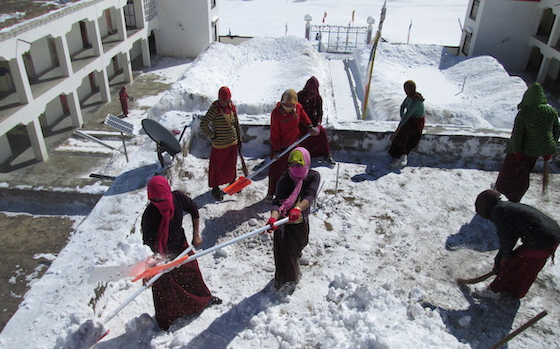
Tibetan Buddhist nuns at Sherab Choeling clear the roof from snow

An archival photo showing the nuns clearing snow off the roof of the nunnery. The nunnery is located at an altitude of approximately 12,500 feet (3,800 meters) and can be cut off in winter. The cold and damp were impacting the health and well-being of the nuns.

Background to the Mold and Cold Mitigation Project

Sherab Choeling Nunnery is home to approximately 60 nuns who live and study in extremely harsh climatic conditions, especially during winter when temperatures fall well below freezing and heavy snowfall often isolates the region.

The objective of this project was to address severe cold, dampness and mold issues within the nunnery buildings to improve the health and living conditions of the resident nuns.

The nunnery buildings were constructed using traditional mud and local materials. While this is culturally appropriate in the region, the aging structures developed significant damp issues over time which encouraged the growth of mold on the interior walls.
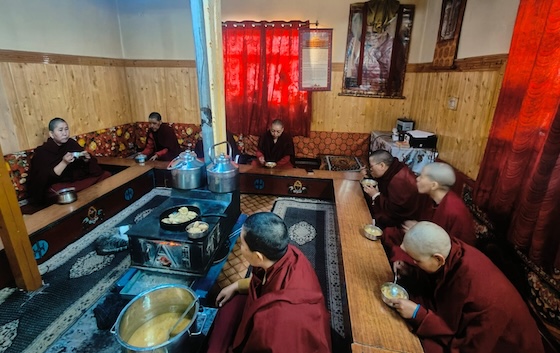
Kitchen at Sherab Choeling after wood panelling

The kitchen and dining area at the nunnery was severely damaged by dampness, especially in the corners. This not only affected hygiene but also made the space difficult to maintain. Now this area has new insulation and wood panelling and is much more comfortable and healthy for the nuns.

Poor insulation against the extreme cold and persistent moisture retention led to unhealthy living conditions, and several nuns developed health problems, including joint pain, knee and back problems, and increased physical discomfort during the winter months, which impacted their ability to carry out their daily tasks.

Due to extreme winter weather and frequent road closures, the nuns found it difficult to remain in Spiti during the peak winter months. For the past few years, they have been temporarily relocating to Hamirpur, where the Spiti community generously provided hostel accommodation until the snow cleared.
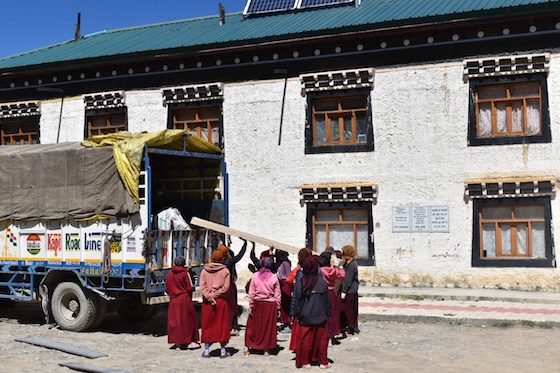
nuns unload wood for panelling project at Sherab Choeling

The nuns unload wood for panelling project at Sherab Choeling. The major project took many months to complete and is already having a profound impact on the well-being of the nuns.

Your Generosity in Action

Despite the challenging location, the work went smoothly. Fortunately, this winter did not bring heavy snowfall, which allowed the timber wood panelling work to continue without interruption.

The following areas have now been fully completed with wood panelling:
— The nuns’ residences
— The kitchen and dining area
— The temple/prayer hall
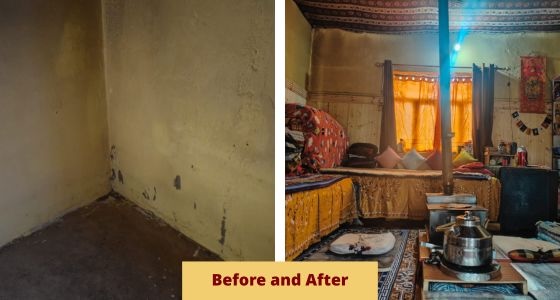
before and after Sherab Choelingbefore and after Sherab Choeling

Before and after. One of the nuns’ shared rooms with the new panelling making the space much warmer and liveable.

Huge Impact on the Nuns’ Lives

The nuns report that the wood panels are helping to keep the rooms warmer. They also reduce dampness and prevent mold from growing because black foam was placed between the wall and the wooden panels. This method is commonly practiced by people in the Spiti Valley to protect their homes from dampness and mold.
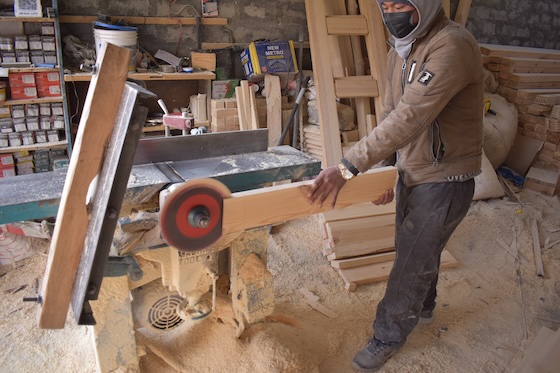
A carpenter making wood panelling for Sherab Choeling

A carpenter making wood panelling for Sherab Choeling. The nuns say in their video, “It has truly changed our lives.”

The nuns have expressed great happiness and satisfaction with the completed work. This project marks a meaningful improvement in both their physical well-being and daily living environment.
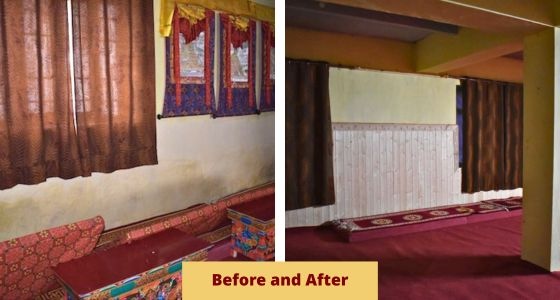
Prayer room and temple at Sherab Choeling before and after panelling

The prayer room and temple room at Sherab Choeling before and after the wood panelling. You can see the damp, moldy walls on the left before the work was done to insulate the room.

The nuns of Sherab Choeling Nunnery extend their heartfelt gratitude to all donors and supporters who made this project possible.

Here’s a video that the nuns made for you. Can’t see the video? Click here.

Ani Butith, who has been in the nunnery for the past 30 years and currently acts as the administrator, conveyed sincere appreciation on behalf of all the nuns. She shared that although they may not be able to repay the generosity materially, they will offer Long Life and Tara prayers at the nunnery dedicated to all donors and supporters as a gesture of their gratitude.
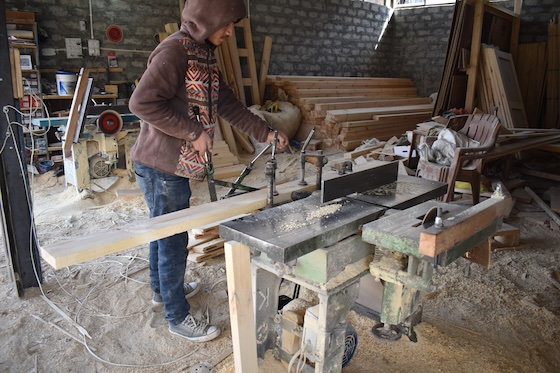
A carpenter prepares wood panelling for the nunnery.

A carpenter prepares wood panellling. The nuns say in their video, “Before this the cold would seep into our bones, leaving many of us with aching backs and knees. But this year is different. Our rooms are finally a sanctuary of warmth.”

Conclusion

The Mold and Cold Mitigation Project through wood paneling at Sherab Choeling Nunnery has been successfully completed. The intervention addresses long-standing issues of dampness, mold, and extreme cold exposure and is expected to bring lasting positive change to the health and daily lives of the nuns.

The nuns say the wood panelling and insulation has truly changed their lives. “Before this, the cold would seep into our bones, leaving many of us with aching backs and knees. But this year is different. Our rooms are finally a sanctuary of warmth. We burn less firewood and, most importantly, the health of our sisters has improved so much.”

Thank you to all the donors and supporters for making this project possible and successful!
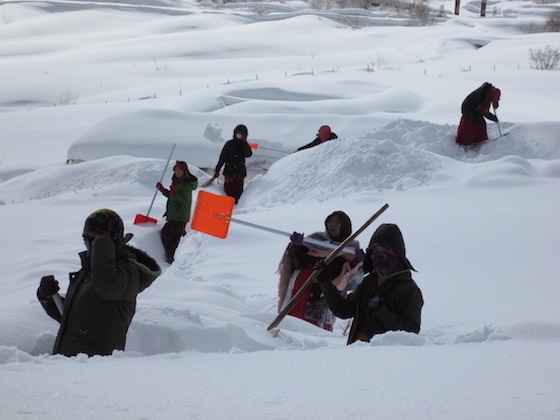
Winter at Sherab Choeling Nunnery in the Indian Himalayas nuns shovelling snow copy

An archival photo of the nuns shovelling a path around the nunnery. Winters in the Spiti Valley can be very severe with temperatures dropping as low as -22ºF or -30ºC.
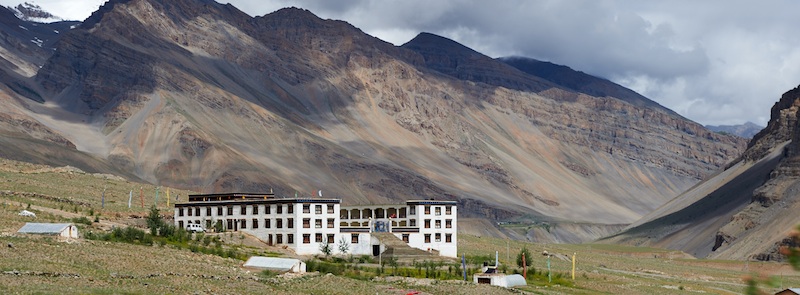

Life at a remote Tibetan Buddhist Nunnery in Spiti [with photos and audio of chanting]

This is a special post on Sherab Choeling Nunnery and Institute, one of the 7 nunneries in northern India supported by the Tibetan Nuns Project. It features photos and an audio recording of the nuns chanting by French photographer, Olivier Adam, who visited the nunnery in the summer of 2015.

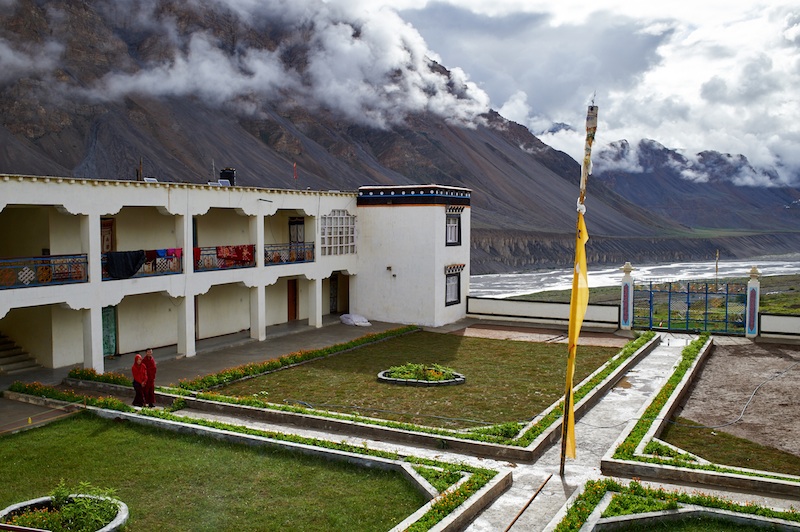
This remote nunnery was built in 1995 by 20 nuns and their teacher in the Spiti Valley, an arid mountain valley located high in the Himalaya mountains in the north-eastern part of the Indian state of Himachal Pradesh.
Sherab Choeling Nunnery, Spiti, Tibetan Nuns Project, Olivier Adam, Tibetan nuns, Buddhist nuns

The nunnery was built to address the problem of inadequate education for women and girls in the region. The vision is to educate Himalayan Buddhist nuns who would otherwise have no opportunity to receive any formal schooling or spiritual education. It is a non-sectarian nunnery that recognizes the beauty and value in all Buddhist traditions.

spiti_2015_2201 copy
Typically, women and girls who live in remote areas like Spiti and who are interested in studying or practicing their religion have very few options. The Tibetan Nuns Project was approached by the nunnery in 2006 to help them develop their institution and we accepted them into our sponsorship program.

Sherab Choeling Nunnery

The nunnery is very secluded and lies in the village of Morang (between Manali and Tabor) at 4,000-feet altitude. The nunnery was consecrated in 1995 by His Holiness the Dalai Lama, who encouraged the nuns to study. There is a main building, a prayer hall, a classroom, an office, a kitchen and a storeroom.spiti_2015_0854 copy

Although the area of Lahaul-Spiti is part of India, ethnically, the people are descended from Tibetans and the majority are devout Buddhists. They have preserved an ancient Tibetan culture, speaking an old dialect of the Tibetan language, as written in Tibetan scriptures.Sherab Choeling Nunnery

Sherab Choeling Nunnery and Institute was the first religious educational project for Spiti women. Traditionally women in this region have suffered from many social and educational disadvantages. Many have been deprived of any kind of education, and this institute is the first in Spiti to provide women with the opportunity to overcome these disadvantages.
spiti_2015_2261 copy

The nuns at Sherab Choeling follow a 17-year study program. The curriculum is designed to educate the nuns in Buddhist philosophy, meditation, Tibetan language and literature, in addition to a basic education in English, Hindi and math. The broad education is intended to provide the nuns with necessary skills to educate future generations of nuns and the communities from which they come.spiti_2015_0776 spiti_2015_4112

There are currently 55 nuns at Sherab Choeling Nunnery, the youngest being only 5 years old.  At the time of posting this blog, there are 17 new nuns at the nunnery who are eagerly awaiting sponsorship so that they can pursue their studies. To sponsor a nun, visit https://tnp.org/youcanhelp/sponsor/
spiti_2015_3175 copy

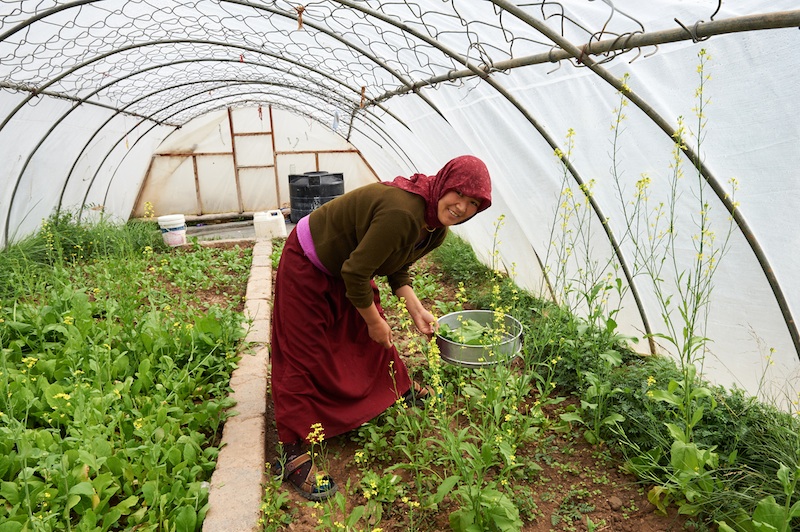
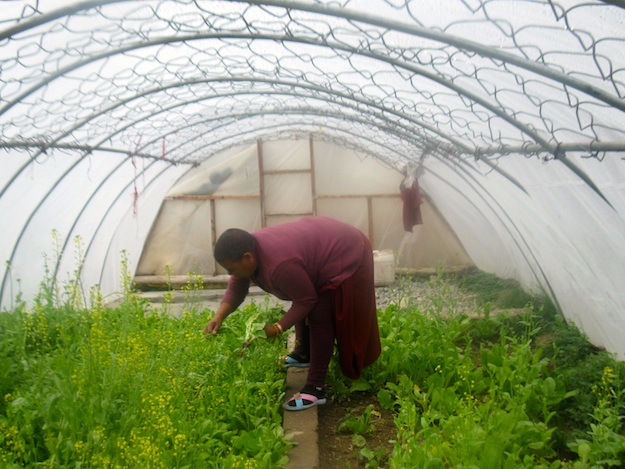
Summer is the most important and busy season at the nunnery. The nuns must work hard in the fields and store firewood for the winter in addition to concentrating on their studies. This summer the nuns are experimenting with growing cabbage outdoors on a small plot of land. Tomatoes, cabbage, and spinach grow well in the greenhouse that is well maintained by the nuns.
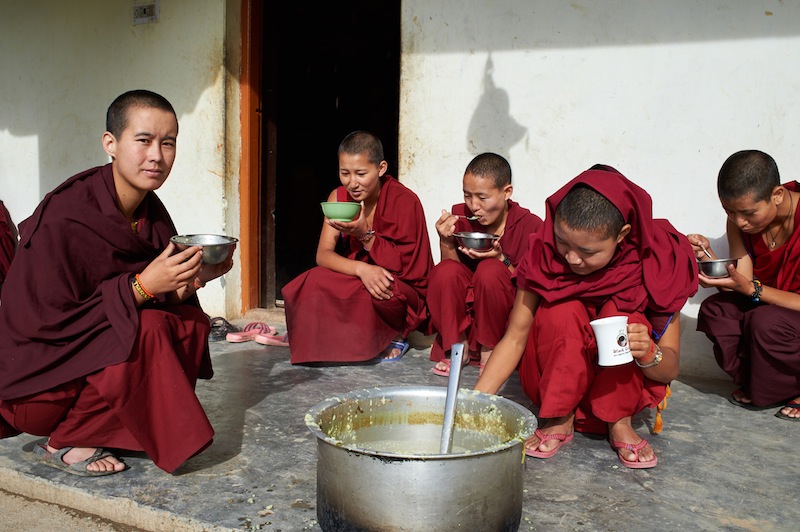
spiti_2015_3247 copyThe nuns have difficult living conditions. They often face long harsh winters and heavy snowfalls. During winter the region is cut off from neighboring villages so the nuns must stock up their daily supplies well before the onset of cold weather. During the coldest months, the nuns hold their classes, prayers and meetings in the kitchen because it is warmer and helps to save wood.spiti_2015_2159

This past winter the Spiti Valley experienced an extremely heavy snowfall and all the local villages were cut off. Unable to get supplies, the nuns ran out of cooking gas and for over two months had to rely solely on firewood to cook. In order to fetch water from the nearby village, the nuns had to clear a path that was waist-deep in snow. Thankfully they had enough stores of vegetables and tsampa (roasted barley flour) to last them through the winter months.

The nuns are very positive about their future and someday want to be able to serve as teachers back in their villages. Here is an audio recording of the nuns reciting the Lama Chopa or Guru Puja.


spiti_2015_3257 copy

Life at Sherab Choeling Nunnery in Spiti

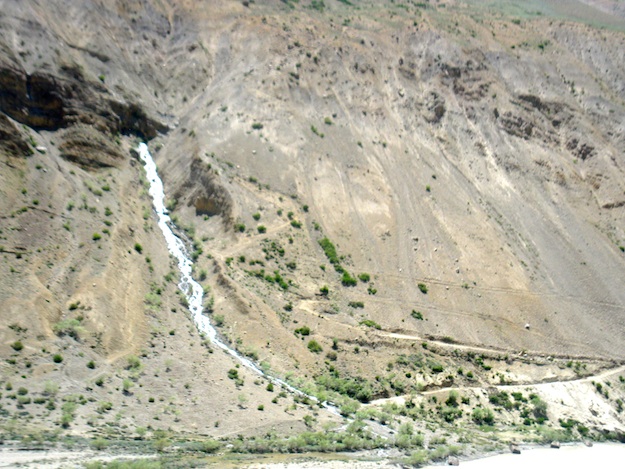
In the remote Spiti Valley of Himachal Pradesh in northern India, lies Sherab Choeling Nunnery, currently home to 42 Tibetan Buddhist nuns, many of whom are sponsored by Tibetan Nuns Project supporters.waterfall in Spiti Valley

group of nuns at Sherab Choeling Nunnery in Spiti

Sherab Choeling nuns in 2006

The nunnery is very secluded and lies in the village of Morang (between Manali and Tabor) at 4,000 meters altitude. It was built in 1995 by 20 nuns and their teacher with the intent of addressing the problem of the inadequate education of women in the region. The nunnery was consecrated in 1995 by His Holiness the Dalai Lama who encouraged the nuns to study. There is a main building, a prayer hall, a classroom, an office, a kitchen and a storeroom. In 2006, Sherab Choeling Nunnery approached the Tibetan Nuns Project to help develop their institution and we accepted them into our sponsorship program.

Earlier this year we received lots of photos of daily life at the nunnery that we wanted to share with sponsors of the nuns and with all the Tibetan Nuns Project donors worldwide.

Although the area of Lahaul-Spiti is part of India, ethnically, the people are descended from Tibetans and the majority are devout Buddhists. They have preserved an ancient Tibetan culture, speaking an old dialect of the Tibetan language, as written in Tibetan scriptures.

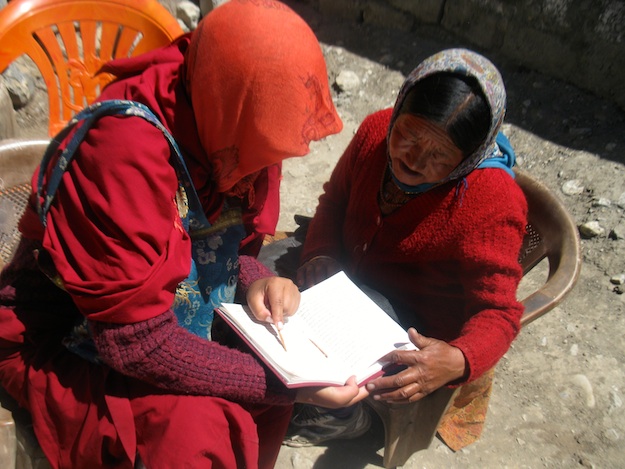
Sherab Choeling nun teaching a woman in Spiti

Sherab Choeling nun teaching a woman in Spiti

Sherab Choeling Nunnery was the first religious educational project for Spiti women. Traditionally women in this region have suffered from many social and educational disadvantages. Many have been deprived of any kind of education, and this institute is the first in Spiti to provide women with the opportunity to overcome these disadvantages.

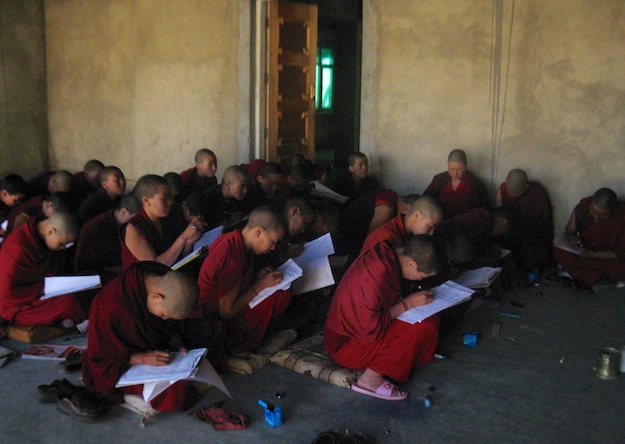
Sherab Choeling is a non-sectarian nunnery that recognizes the beauty and value in all Buddhist traditions. The nuns at follow a 17-year study program. The curriculum is designed to educate the nuns in Buddhist philosophy, meditation, Tibetan language and literature, in addition to a basic education in English, Hindi and math. The broad education is intended to provide the nuns with necessary skills to educate future generations of nuns and the communities from which they come.Buddhist nuns studying outdoors Sherab Choeling 2014

Many young girls seek admission to Sherab Choeling, but due to lack of facilities and sponsors, it is not possible for all to gain entrance. The Tibetan Nuns Project helps by raising awareness, finding sponsors for the nuns, and helping them to fundraise for the further development of the institute.
Young Tibetan Buddhist nuns in class

young Buddhist nuns debating Spiti

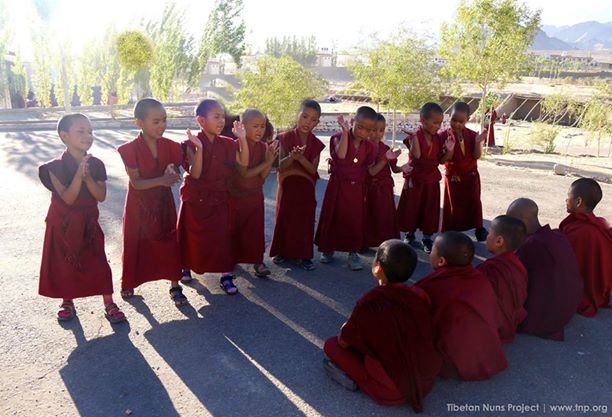
This year started with 14 new nuns in the nunnery including three 5-year-olds. Along with Tibetan classes, the younger nuns are also taught mathematics and Hindi up to 5th standard, after which the nuns are introduced to English language classes.

young Tibetan Buddhist nuns at Sherab Choeling Nunnery in Spiti 2014

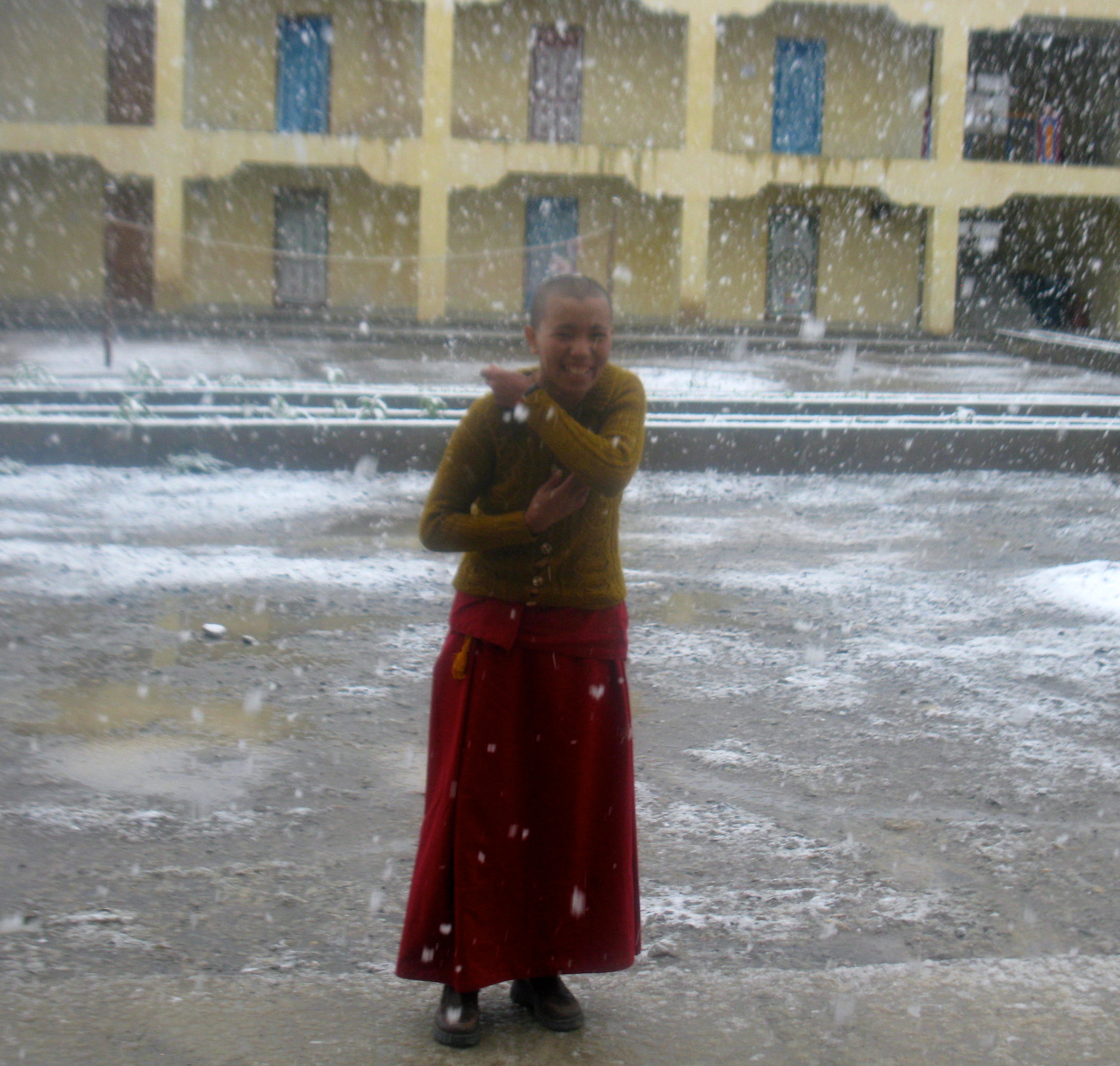
Tibetan Buddhist nun in snowfall at Sherab Choeling NunneryThe nuns have difficult living conditions. They often face long harsh winters and heavy snowfalls. During winter the region is cut off from neighboring villages so the nuns must stock up their daily supplies well before the onset of cold weather.Tibetan Buddhist nun working in kitchen

During the coldest months, the nuns hold their classes, prayers and meetings in the kitchen because it is warmer and helps to save wood.building prayer hall Sherab Choeling Nunnery

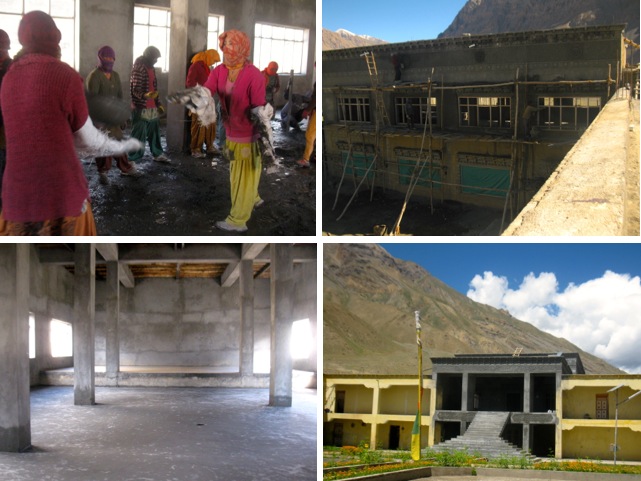
This year, the nuns were able to do more work to complete the new prayer hall. Construction of the prayer hall began several years ago but was suspended in 2012 for lack of funds. The new prayer hall is nearly finished with plans to turn the old nunnery block into a small 3-room retreat center for the nuns.Tibetan Buddhist nun working in greenhouse Sherab Choeling 2014

Several years ago, people from the nearby village donated a piece of land to the nuns where the nuns can grow spinach, beans and potatoes. With help of volunteers, the nuns have been able to set up three greenhouses where they mostly grow spinach. The head nun has also donated her share of a field to the nunnery so the nuns have been able to grow peas and wheat.

The nuns take a one-month annual holiday, during which most return to their families in nearby villages.

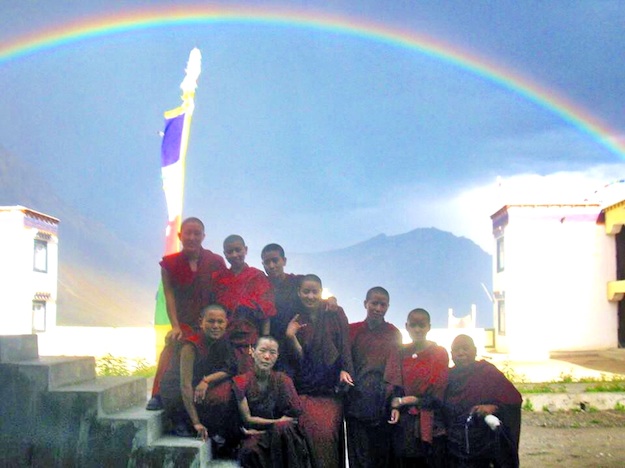
We’d like to thank all our sponsors of nuns at Sherab Choeling for their support. We still need more sponsors. To sponsor a nun please visit https://tnp.org/youcanhelp/sponsor/nuns and rainbow at Sherab Choeling