Category Archives: Buddhist Nuns Life

How to hang and dispose of Tibetan prayer flags respectfully

Every so often we receive messages about how to hang and dispose of Tibetan prayer flags respectfully.

Tibetan prayer flags are used to promote peace, compassion, strength, and wisdom. Tibetans believe the prayers and mantras will be spread by the wind and bring goodwill and compassion to benefit all beings.
prayer flags, how to dispose of Tibetan prayer flags,

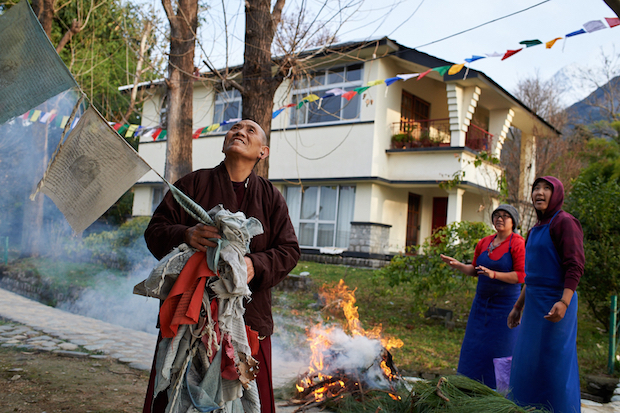
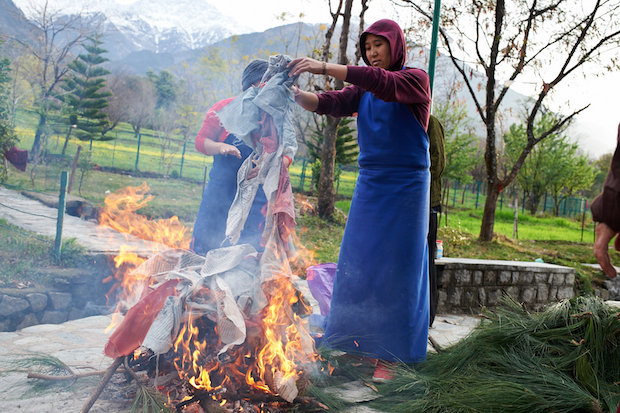
Tibetan nuns at Dolma Ling Nunnery in India remove and burn old prayer flags and set up new ones to mark Losar, Tibetan New Year. Photo courtesy of Olivier Adam

Prayer flags are made of block-printed fabric using traditional printing techniques going back hundreds of years. The Tibetan Buddhist nuns at Dolma Ling Nunnery in India have been making prayer flags for many years. We sell these specially blessed objects through our online store and the revenue helps provide food, health care, shelter, and education for the over 230 nuns who live at the nunnery, as well as to help support around 500 nuns at six other nunneries in India.

Some people have asked whether it is appropriate for non-Buddhists to display Tibetan prayer flags. Yes, it is fine for non-Buddhists to display Tibetan prayer flags.

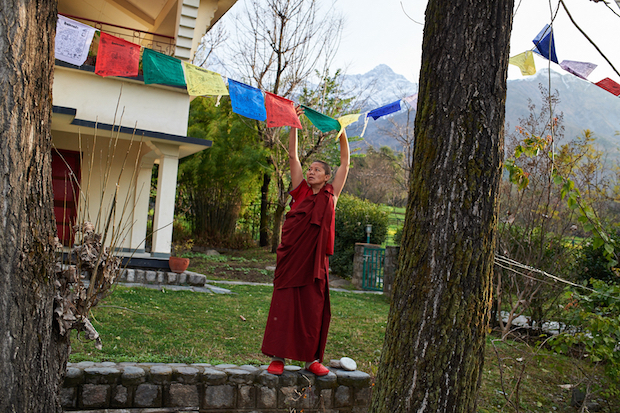
When raising prayer flags it is important to have a good motivation. One should not have selfish or limiting thoughts. When hanging prayer flags one should wish that all beings everywhere will benefit and find happiness.
prayer flags, burning prayer flags, Tibetan Nuns Project, how to dispose of old prayer flags

Being careful not to let the old prayer flags touch the ground, a Tibetan Buddhist nun burns the flags while wishing to end the suffering of all sentient beings. Photo courtesy of Olivier Adam

Tibetan tradition considers prayer flags to be holy. The flags contain sacred texts and symbols and should be treated respectfully. They should not be placed on the ground or put in the trash.

When disposing of old prayer flags one should burn them so that the smoke may carry their blessings to the heavens. Do not let prayer flags touch the ground as they are burned.

As you are burning the prayer flags, you should try to remember the intentions with which the prayer flags were made and blessed and have compassion for all sentient beings.
hanging new prayer flags, Tibetan prayer flags, Tibetan Nuns Project

A Tibetan Buddhist nun at Dolma Ling Nunnery hangs new prayer flags at Losar, Tibetan New Year. Traditionally, prayer flags are hung outside so the wind can carry the prayers to the world for the benefit of all sentient beings. Photo courtesy of Olivier Adam.

You may also choose to let your old Tibetan prayer flags fade and disintegrate naturally, hanging new prayer flags up with old ones. The contrast between old and new prayer flags is a reminder of impermanence and the continuing cycle of birth and death.

The traditional cotton prayer flags, like those made by the nuns at Dolma Ling and sold in our online store, fade more quickly than synthetic ones and may be safely burned. The fact that they do not last is part of their nature and is a reminder of the central Buddhist teaching of impermanence.

Traditionally, Tibetan prayer flags come in sets of five, with one flag in each of five colors, left to right in this specific order: blue, white, red, green, and yellow. The five colors represent the elements: blue symbolizes the sky and space, white symbolizes the air and wind, red symbolizes fire, green symbolizes water, and yellow symbolizes earth.

Another question that we’ve received about Tibetan prayer flag protocol is whether it is OK to disassemble them and use them separately, or do they have to be displayed together in a row so that all the elements are represented. We would suggest that it is better not to take apart the set of prayer flags. They are meant to represent the five elements in balance and it is not really appropriate to the purpose or culture to separate them.

You can buy Tibetan prayer flags through the Tibetan Nuns Project online store. They come in a variety of types and sizes of prayer flags as follows:
Windhorse Tibetan prayer flagsWindhorse Prayer Flags

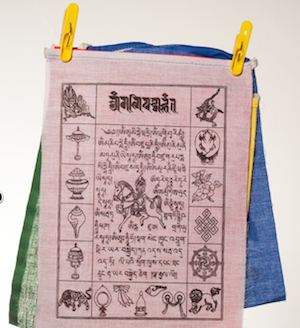
The Wind Horse or Lung-ta is the most prevalent symbol used on prayer flags. In the center of the prayer flag is a powerful horse (lung-ta) bearing three flaming jewels on its back. These jewels represent the Buddha, the Dharma (Buddhist teachings), and the Sangha (Buddhist community) which are the three cornerstones of Tibetan philosophical tradition. The horse (Ta) is a symbol of speed and the transformation of bad fortune to good fortune. Surrounding the Lung ta are mantras and Buddhist sacred symbols. In the corners of the prayer flags are images of four powerful animals, also known as the Four Dignities: the dragon, the garuda, the tiger, and the snow lion. Windhorse prayer flags made by the nuns are available in three sizes. Buy Windhorse Prayer flags here.
Tara Tibetan Prayer flagsTara Prayer Flags

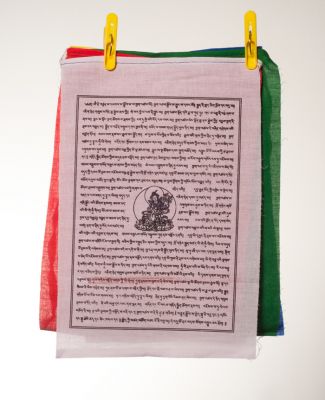
Tara represents virtuous and enlightened action. It is said that her compassion for living beings is stronger than a mother’s love for her children. She also brings about longevity, protects earthly travel, and guards her followers on their spiritual journey to enlightenment. The Tara prayer flags have a lovely image of Tara in the center.  You can order Tara prayer flags in three sizes here.
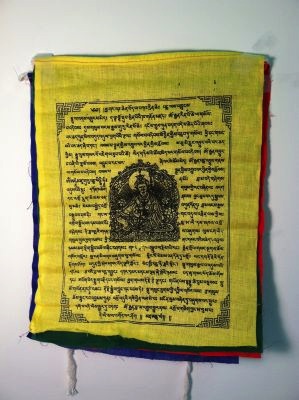
Guru Rinpoche prayer flagsGuru Rinpoche Prayer Flags

Padmasambhava, the renowned saint of the eighth century, was a central figure in shaping Buddhism’s history in Tibet. Revered as the second Buddha, Guru Rinpoche (Precious Guru) conquered the local deities and demons of Tibet and bound them by oath to become guardians of Buddhism. Purchase Guru Rinpoche prayer flags in three sizes here.
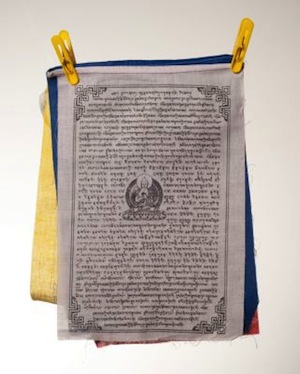
Gyaltsen Tsenpo Tibetan Prayer flagsGyaltsen Tsenpo Prayer Flags

This is a common prayer flag, especially at New Year, symbolizing new ventures and beginnings. Gyaltsen Tsenpo prayer flags are printed with sutras bestowed by Lord Buddha to Indra, king of the gods to overcome his enemies and achieve victory. Order Gyaltsen Tsenpo prayer flags in three sizes here.

How you are helping accomplish great things at Dolma Ling Nunnery

In the spring of 2016, we launched a campaign called “Sustaining Dolma Ling Nunnery” that outlined six projects that the nuns at Dolma Ling Nunnery asked for help with.

projects at Dolma Ling NunneryDolma Ling is a non-sectarian nunnery in northern India near Dharamsala that is home to about 250 Tibetan Buddhist nuns.

Although the nunnery has a number of income-generating initiatives like the nuns café and the nunnery shop, like other religious communities around the world, the nuns rely on the generosity of a caring community.

Today we’d like to report back to you on progress on all six of the Sustaining Dolma Ling projects. We’re happy to report that three of the six are fully funded and another two are nearly funded.

We really hope that all six can been fully funded and completed by the end of March 2017.

1. Butter Sculpture Workshop

Tibetan butter sculpture, Tibetan Nuns Project, butter sculptureONLY $167 NEEDED TO COMPLETE THE PROJECT
We are almost there! Only $167 is needed to complete the funding to create a workshop room where the nuns can learn how to make butter sculptures, a sacred Tibetan art that has been practiced in Tibet for over 400 years. Like so much of Tibetan culture, the practice of making butter sculptures is under threat. The nuns at Dolma Ling have an excellent teacher, but they’ve been using a makeshift space. Please help us complete this project.
Make a Donation

2. New Cow Shed

PROJECT FULLY FUNDED – THANK YOU!
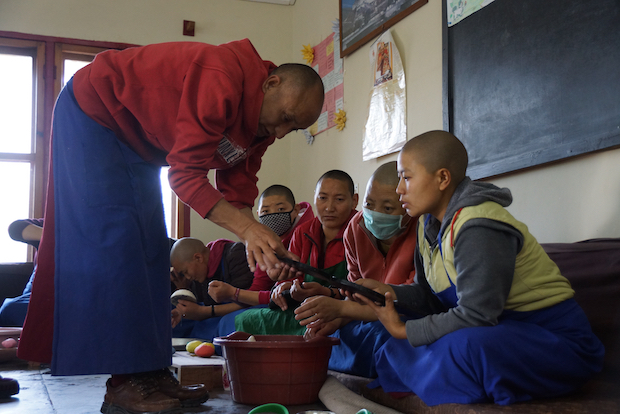
The nuns at Dolma Ling Nunnery and Institute have kept cows for the past 20 years and currently have 14 cows in their small herd. The cows provide the nunnery with milk and also manure for the gardens. Prior to the completion of this project, there wasn’t enough space for all the cows to be protected when the weather was too harsh for them to be out grazing, such as during the torrential monsoon rains. Thanks to five generous donors – Alix, Anna, Bob, Cindy, and Stuart – the cow shed is now complete. See the full report and more photos here.

3. Clean Water Project

clean water project, Tibetan nuns, Dolma LingPROJECT FULLY FUNDED – THANK YOU!
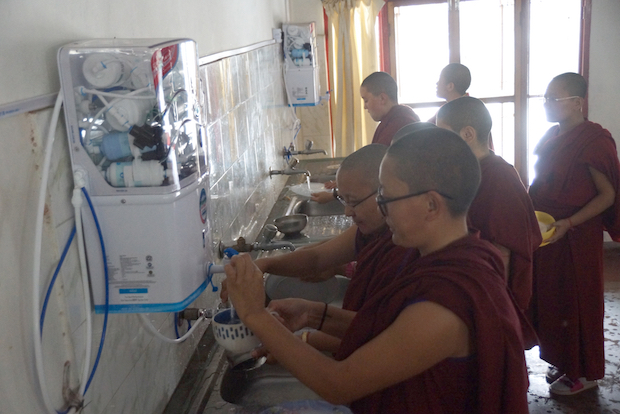
Twenty-one generous donors came forward to support this project to increase the amount of clean drinking water at the nunnery. Thanks to our global family of supporters, the nuns have now been able to purchase and install three additional water filtering machines at different parts of the nunnery to provide safe, clean drinking water for over 280 nuns and staff residing at the nunnery, as well to build a simple shed to provide hot boiled water. The nuns have made a short video showing the new water boiler in action.

4. Painting Dolma Ling Nunnery

Dolma Ling Nunnery, Tibetan Nuns Project$7,150 NEED TO COMPLETE THE PROJECT
This is a huge project that the nuns really need help with. This year they need to paint the main prayer hall, one of the nuns’ housing wings and the staff quarters. Dolma Ling Nunnery is a large complex of buildings, like a monastic university, that needs repainting every five years. The harsh climate in this part of northern India take its toll on the nunnery buildings and it is essential to regularly repaint and maintain the buildings to avoid more costly repairs in the future.
Make a Donation

5. Tables and Stools

tables, Dolma Ling NunneryPROJECT FULLY FUNDED – THANK YOU!
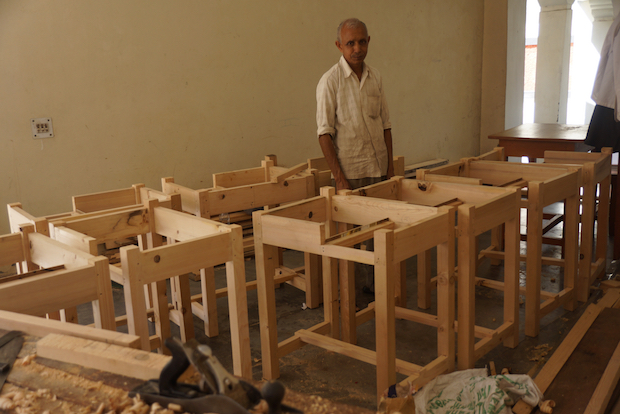
Thanks to seven generous donors, we have fully funded the project to provide 15 tables and 2 stools for the nuns’ rooms at Dolma Ling Nunnery and Institute in northern India. View more photos and our full report here.

6. Furnishing and Equipping the Kitchen

$1,668 NEEDED TO COMPLETE THIS PROJECT

Last year a new kitchen was constructed at the nunnery because the nunnery population had more than tripled since the nunnery kitchen was built and the nuns had outgrown the space. Now the nuns need help to equip and furnish the new space including these items:

  • An enclosed vegetable storage and chopping area to keep birds and animals out.
  • Environmentally responsible sorting bins for recyclables, compost, waste food suitable to feed to the cows and trash.
  • A large pot rack for heavy pots, steamers and utensils
  • A heavy-duty and hygienic wall drainer for washing up
  • A wall-mounted utensil rack, and
  • Large metal storage containers for grains such as rice and flour.

If you can help support the completion of the kitchen, we would be very grateful.

Make a Donation

THANK YOU SO MUCH FOR YOUR SUPPORT!

Clean water project completed at Dolma Ling Nunnery

In the spring of 2016, the 223 nuns at Dolma Ling Nunnery in northern India asked for help with a project to provide more clean drinking water at the nunnery.

Twenty-one generous donors came forward to support this $2,750 project. Today we’re delighted to report back to you on it and to share photos of the water filters and the water boiler in action.

nuns using water filter, clean water

Nuns at Dolma Ling Nunnery using one of the three new water filters purchased and installed thanks to our generous community of supporters.

When Dolma Ling Nunnery was built a water filter was installed. However, that single filter was no longer sufficient because the number of nuns has so greatly increased. Thanks to the support of our 21 project donors, the nuns have been able to purchase and install three additional water filtering machines that will be enough for over 280 nuns and staff residing at the nunnery.

water filter Dolma Ling Nunnery, clean water

Here’s another photo of one of the three new water filters in action at Dolma Ling Nunnery. Experts say that unsafe drinking water and lack of sanitation cause 80% of all the sickness and disease in the world.

The filters are located in three different places in the nunnery so that the nuns can more easily access safe drinking water — one in the nuns’ dining hall, one in the staff mess, and one in the cafeteria where most of the nuns come for refreshment. Continue reading

Tibetan Butter Sculpture

The art of making sculptures out of butter has been practiced for over 400 years by monks in the monasteries in Tibet. This highly revered artistic tradition is now being preserved by monks and nuns in living in India as refugees.

Tibetan nuns making butter sculptures for Losar

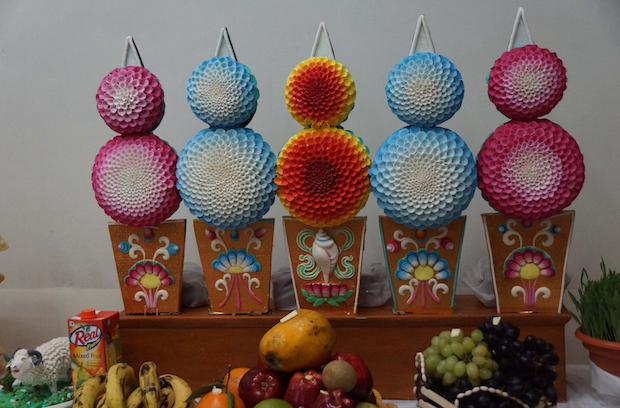
Tibetan nuns decorate a traditional offering box for Tibetan New Year or Losar with colorful butter sculptures.

Butter sculptures can be huge and impressive or tiny and intricate. They are used as offerings or as part of elaborate rituals and celebrations, particularly during Losar, Tibetan New Year.

Tibetan butter sculpture

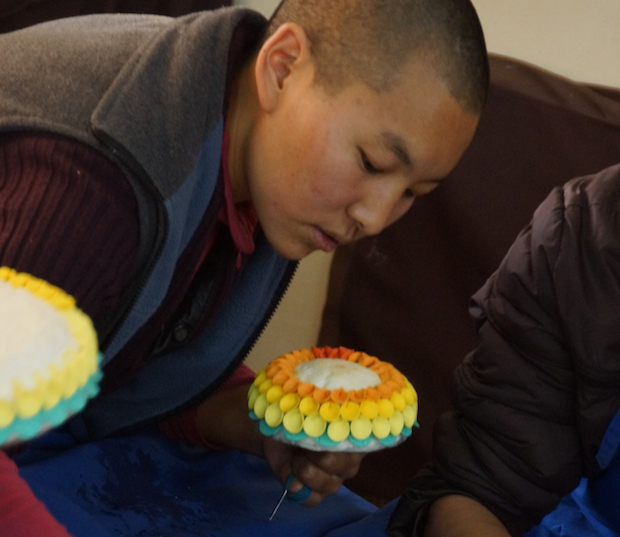
A nun at Dolma Ling Nunnery in India makes an elaborate colored flower out of butter.

It is the practice in Buddhism to offer flowers as a tribute to Buddha statues on altars. However, in winter when no fresh flowers can be found, flowers sculpted from butter are made as an offering.

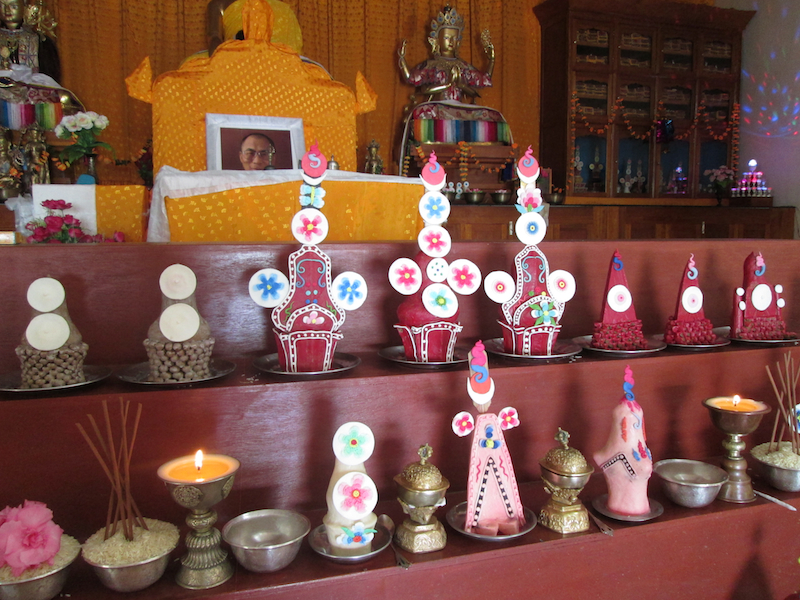
butter sculptures, Tibetan New Year, Losar, chemar bo

Elaborate and colorful butter sculptures of flowers and Buddhist sacred symbols decorate an offering table for Losar or Tibetan New Year. These sculptures were made by the nuns at Dolma Ling Nunnery in northern India. In the lower left, you can see a sheep or ram made of butter.

Butter has always been highly valued in Tibetan culture. Its availability and its malleable quality in the cold climate of the Tibetan plateau and the Himalayas made it an ideal material for sculpting.

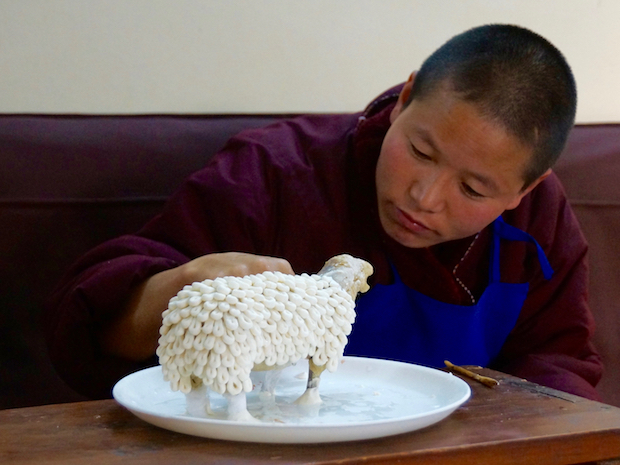
Tibetan butter sculpture sheep or ram

A Tibetan Buddhist nun creates a sheep out of butter as she learns the ancient art of making Tibetan butter sculptures.

Making butter sculptures requires painstaking skill, learned from an excellent teacher and through years of practice. Like the famous Tibetan sand mandalas, butter sculptures are a unique Tibetan sacred art that is handed down from teacher to student.

The increasing shortage of well-trained and skilled butter sculptors in Tibet means that it is crucial that in India the nuns learn this religious art as part of their course of studies in order to keep it from dying out.

Tibetan nuns at Dolma Ling learning how to make butter sculpture

Tibetan nuns at Dolma Ling learning how to make butter sculpture

At Dolma Ling Nunnery and Institute in India, nuns have been learning how to make butter sculptures from their excellent teacher Gen. Karma-la. He carefully takes them through all the steps and the significance of each butter sculpture technique. He says the nuns make excellent students, with their keen sense of color and design, their nimble fingers, and their endless patience.

The Need for a Butter Sculpture Workshop

Creating butter sculptures in the hot climate of India is, as you can imagine, problematic. The workshop room must be cool and have access to cold water in which to lay the butter and cool the nuns’ fingers.

Until now, the nuns at Dolma Ling Nunnery have been using a makeshift space at the nunnery that gets very hot. They are only able to make sculptures during the very coldest months. Now a suitable space has been located in the nunnery that, with renovations, will be ideal.

materials for Tibetan butter sculpture

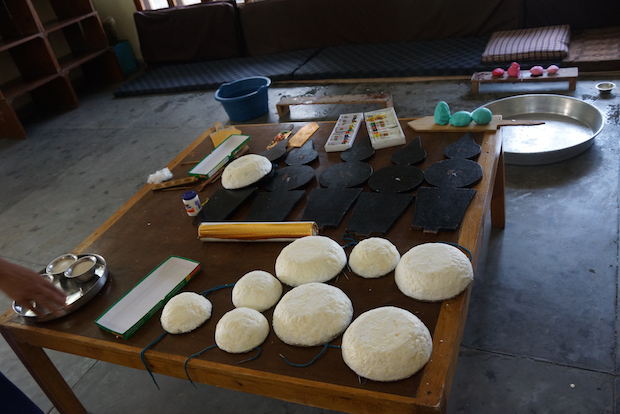
Rounds of butter, dyes, and other tools for making butter sculpture are laid out in preparation for making butter sculptures for Tibetan New Year at Dolma Ling Nunnery.

The Tibetan Nuns Project is raising funds to help create a butter sculpture workshop at Dolma Ling Nunnery. The total cost of the project is US $2,500, but at the time of posting this blog $500 dollars had been raised, so only $2,000 is needed to fully fund the workshop.

To support the creation of the butter sculpture workshop you can:

  1. Make a gift online at https://tnp.org/butter-sculpture-workshop/
  2. Call our office at 1-206-652-8901
  3. Mail a check to:
    The Tibetan Nuns Project
    815 Seattle Boulevard South #216
    Seattle, WA 98134 USA

Thank you for your help in preserving this ancient art that, with the occupation of Tibet, is so under threat.

Tibetan Chöd practice – cutting through the ego

Every Sunday night, the nuns of Shugsep Nunnery and Institute in northern India practice a special ritual called Chöd (pronounced chö) also known as “The Beggars Offering” or “Cutting Through the Ego.”

Chöd, which literally means “cutting through”, is a spiritual practice that aims at cutting through the hindrances or obscurations of self-cherishing thought and ignorance, the greatest obstacles on the path to enlightenment.Chod, Buddhist nun, Tibetan Nuns Project, Brian Harris, Shugsep Nunnery, nun prayers

The tantric practice of Chöd originated in India but was greatly developed in Tibet by the great female practitioner or yogini of the 11th century, Machig Labdrön. She originated a new lineage of the practice that is the only tantric Buddhist practice that was introduced back to India from Tibet.

Shugsep Jetsun Rinpoche (1852–1953), Abbess of Shugsep Nunnery in Tibet, was also an exemplary practitioner of Chöd and was a recognized incarnation of Machig Labdrön.

In the Chöd ritual, practitioners visualize symbolically offering their own bodies, for the sake of others, as a tantric feast to sentient beings. This is a brave way to exchange oneself for others and develop compassion, and a quick method to realize emptiness.Chod ritual at Shugsep Nunnery
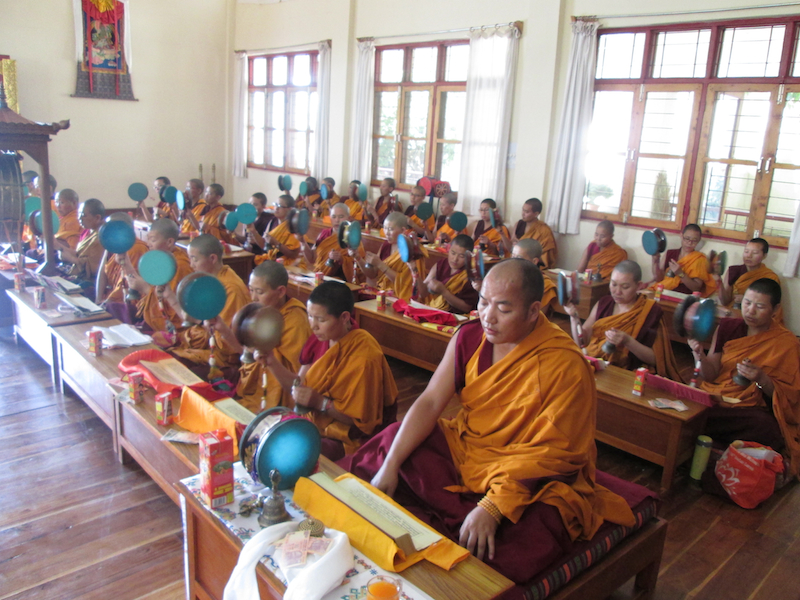
During the ritual, the nuns immerse themselves in a combination of chanting, music, prayer and visualizations. It is said that by engaging every aspect of one’s being this practice can effect a “powerful transformation of the interior landscape.”

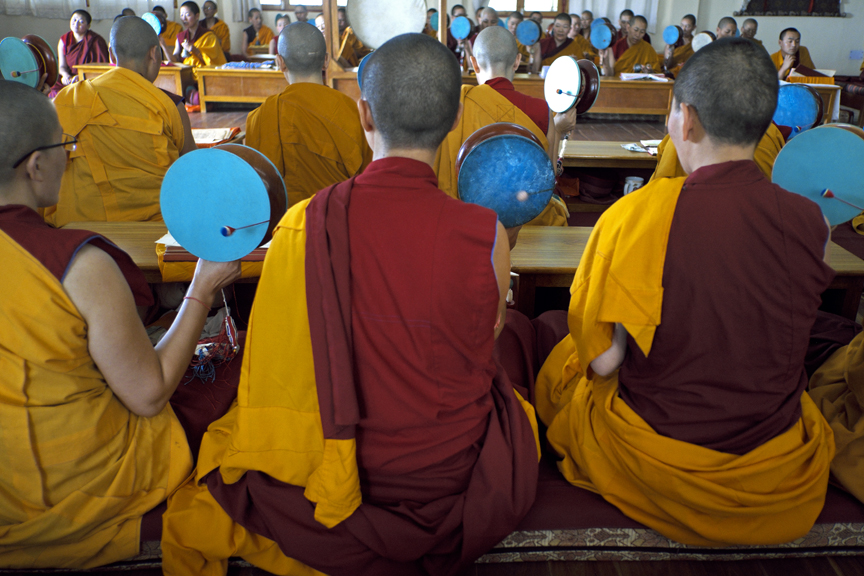
While reciting the Chöd rite the nuns are accompanied by the sound of several Tibetan instruments: the damaru or hand drum, the kangling, a reed instrument, and the Chöd drum, which is larger than the hand drum.

There are both simple and elaborate forms of the practice. In the elaborate form, the Chöd practice is accompanied by offerings of ritual barley cakes, fruit, and other foods, and also involves a special Chöd dance performed as an offering to the spiritual teachers, deities, dakinis, and dharma protectors.chod altar at Shugsep photo TNP
This special dance is sometimes performed during funeral processions and involves visualizations of dakinis leading the spirit of the deceased person to a pure realm. This ritual is felt to remove the inner, outer, and secret obstacles of the deceased person.
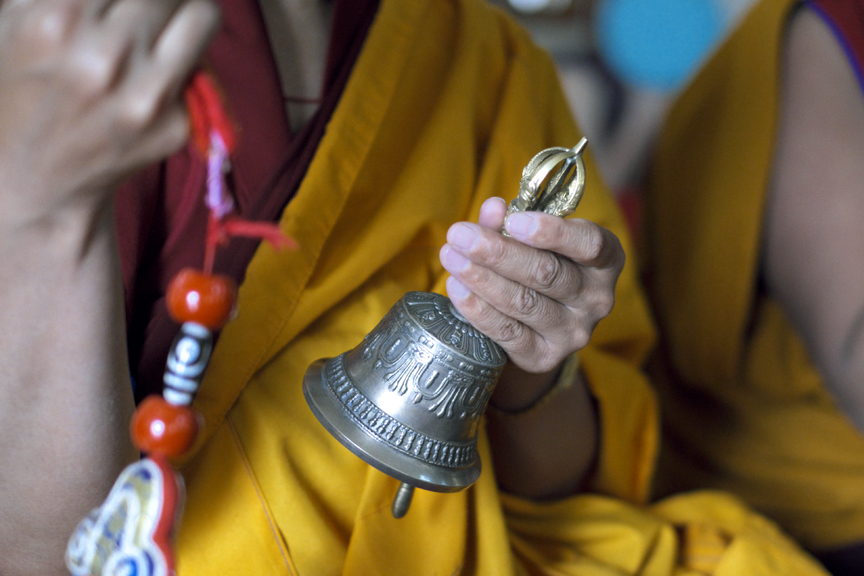
Chod practice, Shugsep, Buddhist nun, prayer, chanting, Tibetan bell, Brian Harris, Tibetan Nuns Project

About Shugsep Nunnery

Shugsep Nunnery and Institute in northern India is one of the two nunneries built and fully supported by the Tibetan Nuns Project. Many of the nuns now in India came from the original Shugsep Nunnery in Tibet. They had been expelled by Chinese authorities for their political activities on behalf of Tibet and escaped over the Himalayas to practice their religion in India.

Shugsep Nunnery was re-established in India in 1992 and the newly built nunnery was inaugurated by His Holiness the Dalai Lama on December 7 2010.

This important Nyingma nunnery traces its rituals and practice to some of the most illustrious female practitioners in Tibetan history. In the 20th century, Shugsep Nunnery in Tibet was home to one of the most famous teachers of her time, Shugsep Jetsunma.

Following the Chinese Cultural Revolution in 1959, the nuns were forced to leave Shugsep Nunnery in Tibet and the nunnery was completely destroyed. Although the nunnery was partially rebuilt in the 1980s by the nuns themselves, the nuns faced frequent harassment by Chinese authorities.

Daily Life of Tibetan Buddhist Nuns: Part 2

The other day we published Part 1 of Daily Life of Tibetan Buddhist Nuns.

Since we had so many great photos, we decided to do Part 2 to give you a better idea of the many tasks that the nuns do in addition to their studies and practice.

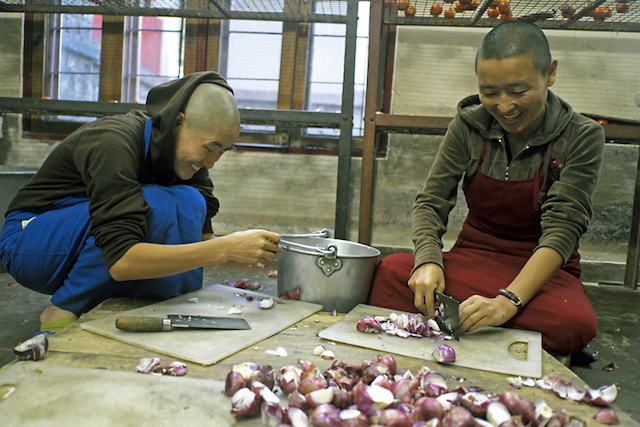
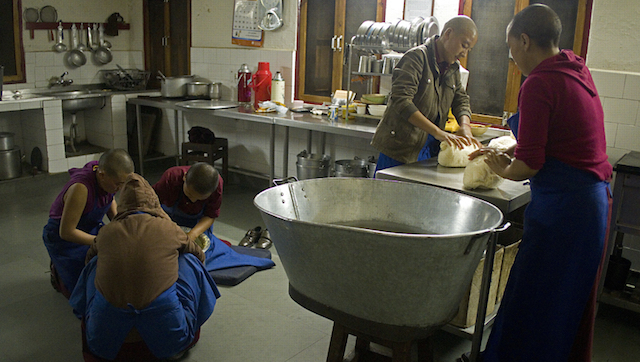
As we said in Part 1, nunneries are complex institutions requiring a lot of hands-on work by the nuns to function smoothly. As you will see from the photos below, the nuns take an active role in running the nunneries. For instance, at Dolma Ling Nunnery, the largest of the 7 nunneries supported by the Tibetan Nuns Project and home to almost 250 nuns, there is a nuns’ committee that oversees the various aspects of nunnery life.

Geden Choeling Nunnery exams

Nuns at Geden Choeling Nunnery in Dharamsala taking exams. In addition to their studies and Buddhist practice, Tibetan Buddhist nuns perform many other tasks to keep their nunneries running smoothly.

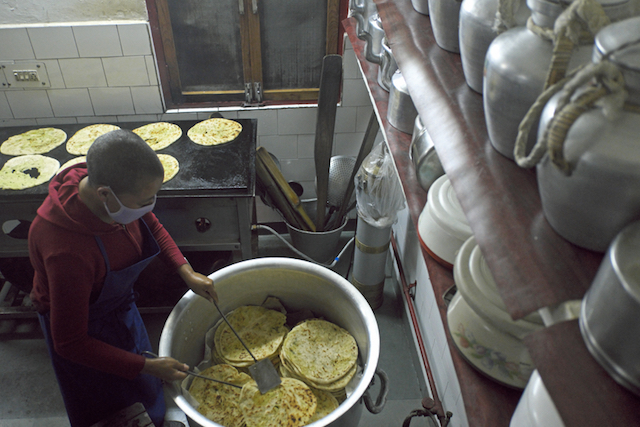
These leadership roles include kitchen managers who do the purchasing for the kitchen and are often directly involved in cooking; treasurers who are responsible for nunnery finances, running the nunnery store, and making purchases for the nunnery; and the keeper of the temple who makes the daily water offerings, lights the butter lamps, escorts visitors, and keeps the temple clean.

Buddhist nuns handicrafts

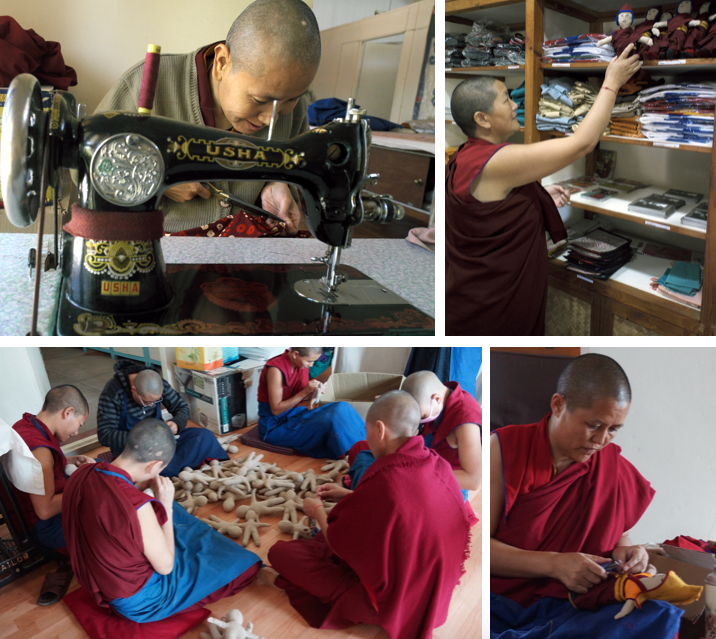
Collage of photos showing some of the handicrafts and the shop at Dolma Ling Nunnery.

One of our goals at the Tibetan Nuns Project is to help the nuns achieve more self-sufficiency through skill building and income-generating projects. The nuns at Dolma Ling make a range of handicrafts such as prayer flags and malas for sale in the nunnery shop and through our online store. In spite of the various self-sufficiency projects, the nunneries still need outside support. The nuns are not in their own country. They are refugees and do not have access to major sources of revenue within India.

Tibetan Buddhist nuns shovel snow from the nunnery roof

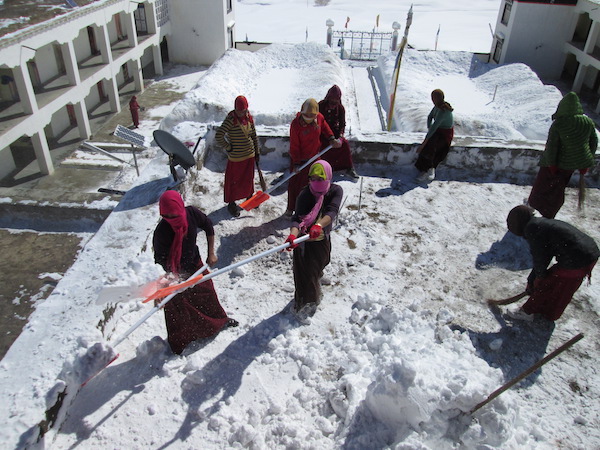
Tibetan Buddhist nuns at Sherab Choeling Nunnery in Spiti shovel snow from the nunnery roof.

At Sherab Choeling Nunnery in the remote region of Spiti in the Indian Himalayas, the nuns must often shovel the snow in winter. This photo shows them shovelling the nunnery roof. During the winter of 2014/15, the weather was so severe that the nunnery ran out of cooking gas. For over two months the nuns had to rely solely on firewood to cook. The heavy snowfalls in the area meant that the nuns were unable to get supplies and all the local villages were cut off. In order to fetch water from the nearby village, the nuns had to clear a path through waist-deep snow. Continue reading

Daily Life of Tibetan Buddhist Nuns: Part 1

What do the nuns do every day? The nuns do much more than study and pray.

The seven nunneries in India that the Tibetan Nuns Project supports through our sponsorship program are complex institutions that require a lot of work to run smoothly. The largest of them, Dolma Ling Nunnery and Institute, functions like a non-sectarian monastic university and is home to almost 250 nuns plus staff. Just feeding that many people each day is a challenge.

This blog post is a photo essay showing some of the many tasks that the nuns at the various nunneries do in addition to their studies and their Buddhist practice.

Tibetan Buddhist nuns collecting fodder

Nuns with fodder for the cows.

Buddhist nun milking a cow

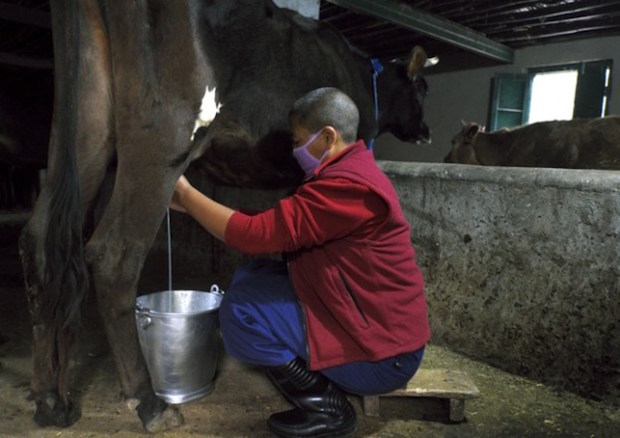
Milking time at Dolma Ling Nunnery near Dharamsala. Photo courtesy of Brian Harris.

The nuns at Dolma Ling Nunnery and Institute have been keeping cows for the past 20 years. The nuns have 7 milking cows, as well as five calves and two older cows. The cows provide milk to meet Dolma Ling’s daily needs. Many of the nuns grew up as nomads in Tibet, so daily milking presents no problem.

Buddhist nun working in greenhouse

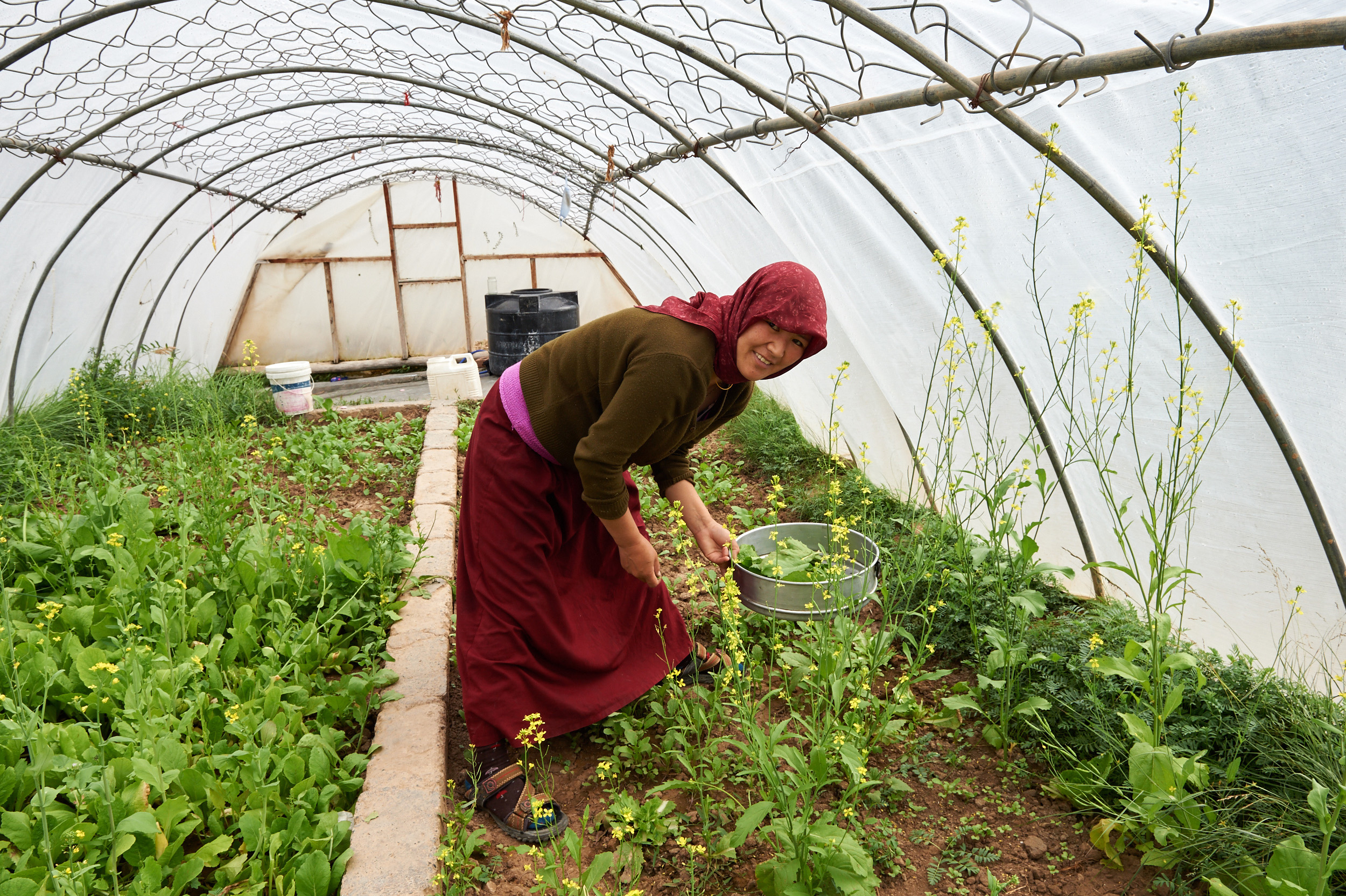
Growing food at Sherab Choeling Nunnery in Indian Himalayas. Photo courtesy of Olivier Adam.

At  Sherab Choeling Nunnery in the remote Spiti Valley, the nuns work hard during the summer months to grow food for the long, harsh winter. Several years ago, people from the nearby village donated a piece of land to the nuns where they now grow spinach, beans, and potatoes. The nuns have three greenhouses where they mostly grow spinach. The head nun has also donated her share of a field to the nunnery so the nuns have also been able to grow peas and wheat.

making tsampa

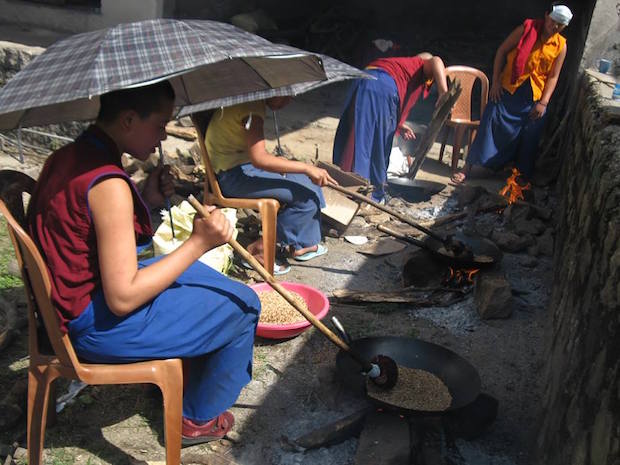
Roasting barley for tsampa.

Nuns from Shugsep Nunnery prepare tsampa by roasting barley and then grinding it into flour. Tsampa is a staple of the Tibetan diet and is mixed with butter tea. There’s a tradition of throwing pinches of tsampa in the air during many Tibetan Buddhist rituals. Continue reading

The Tibetan Buddhist holy month of Saga Dawa

Saga Dawa is a very important month in the Tibetan Buddhist calendar. This year, Saga Dawa, the fourth month of the Tibetan lunar calendar, started on May 7th and runs until June 5th 2016.

The 15th day of the lunar month, the full moon day, is called Saga Dawa Düchen. Düchen means “great occasion” and this day is the single most holy day of the year for Buddhists. This year Saga Dawa Düchen falls on May 21 2016. In other Buddhist traditions it is known as Vesak or is sometimes as Buddha Day. Saga Dawa Düchen commemorates the birth, enlightenment, and death (parinirvana) of Buddha Shakyamuni.

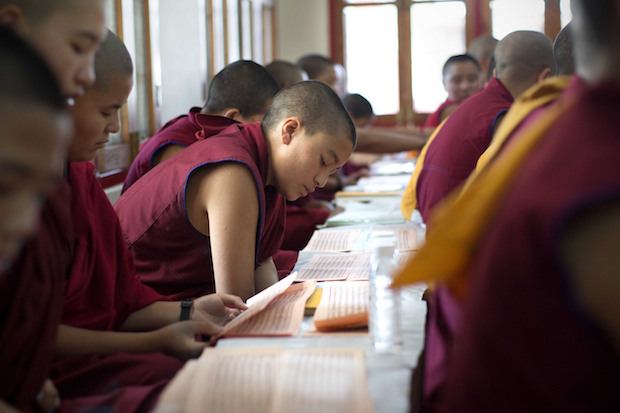
Tibetan nun, Buddhist nun, Tibetan Nuns Project, nun reading scripture, Tibetan Buddhism, Saga Dawa, Dolma Ling Nunnery

A young Tibetan Buddhist nun at Dolma Ling Nunnery reads scriptures to mark Saga Dawa. Photo courtesy of Tenzin Sangmo.

Since 1999, the United Nations has marked this sacred Buddhist day each year with a special message from the UN Secretary General. The UN Vesak page states, “Vesak, the Day of the Full Moon in the month of May, is the most sacred day to millions of Buddhists around the world. It was on the Day of Vesak two and a half millennia ago, in the year 623 B.C., that the Buddha was born. It was also on the Day of Vesak that the Buddha attained enlightenment, and it was on the Day of Vesak that the Buddha in his eightieth year passed away.”

This year’s message from the UN Secretary General highlights the primary role that women can play in promoting peace, justice, and human rights. Continue reading

Behind the scenes at Tibetan Buddhist nunneries

Here’s a chance for you to take a trip behind the scenes at some of the Tibetan Buddhist nunneries in India that are supported by the Tibetan Nuns Project.

Whether the nunnery is large or small, there are many tasks or chores that the nuns must do to ensure that they are as self-sufficient as possible and to make sure that the nunneries function smoothly and are well maintained.

Tibetan Buddhist nuns chores

Collage of some of the many tasks of the nuns at Dolma Ling Nunnery in India, in addition to their studies and prayers.

In terms of regular tasks, one could view a nunnery as something like a cross between a very large household and a university or college. As you can imagine, there’s a lot of chores that need to be done each day, week, month, and year in order to keep everything running like a well-oiled machine. Continue reading

A long journey to an amazing result: one nun’s story

Born into a simple family in eastern Tibet, Lobsang Dolkar, became a nun in her teens. With no opportunity to study, she spent her days in household chores and tending livestock. Being a nun meant reciting mantras and doing prostrations.

Lobsang Dolkar, Tibetan Nuns Project, Buddhist nun, Tibetan nun, Dolma Ling nun

Venerable Lobsang Dolkar, one of the first Dolma Ling nuns

When her brother married, she became free to make a pilgrimage to Lhasa where she made friends with another nun. They decided to go to India to attend
the 1990 Kalachakra being given by His Holiness the Dalai Lama. Caught twice crossing into Nepal and handed back to the Chinese, their third attempt was successful.

Lobsang Dolker had not planned to stay in India, but her friend convinced her it was no use returning to Tibet and they should instead enroll in the newly founded nunnery, Dolma Ling.

She is among the first batch of nuns who entered the study program and at the same time helped with its construction. It was a joyous moment in 1994 when they moved into newly constructed rooms and had a home in India. Sadly she did not see her parents again; they passed away two years ago.

When she began her studies, it was hard for her to grasp what was being taught since she had had no previous education. But she never gave up. She feels that the opportunity to earn the Geshema Degree is very special and is grateful to His Holiness the Dalai Lama for his continuous support of  nuns’ education. Access to this degree encourages nuns to persevere.

Lobsang says that, in the beginning, she was scared to sit the Geshema exams, but she never thought of backing out because she did not want younger nuns to accept failure without trying hard for their degree. In May she successfully passed Year 2 of the four-year exams. All being well, she will be a Geshema in 2017.

Looking back on how far she has come, Lobsang appreciates the importance
of education and is grateful to all the teachers and staff for their dedication to the nuns.

We are looking for more sponsors. You can sponsor a nun for less that $1 a day and help provide food, education, shelter and health care. 100% of your sponsorship gifts go to India. Learn more at https://tnp.org/youcanhelp/sponsor/